The News Effect | The Gen Z Curator: Why Quality News is a North Star

EPISODE TWO //

The Gen Z Curator

Why Quality News is a North Star

Contrary to the myth that younger audiences have checked out of traditional media, Gen Z is proving to be the most discerning and news hungry demographic yet. Lisa Muxworthy, Head of Growth Content for Nine Publishing, breaks down how The Sydney Morning Herald and The Age are meeting this story-first generation.

LisaMuxworthy_IMG_2

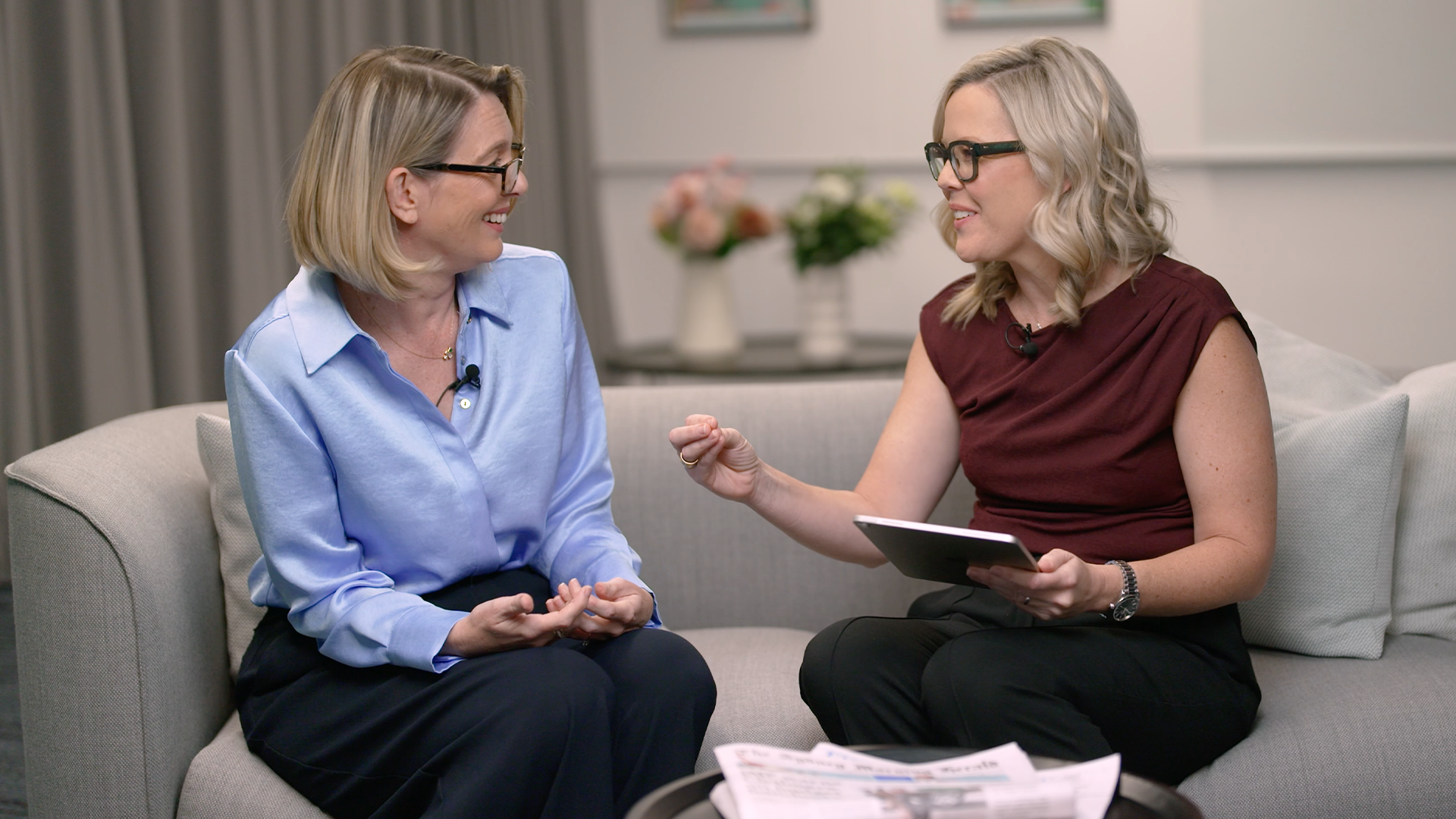
Pictured: Lisa Muxworthy (left) and Ashleigh Thomas (right)

There is a massive misconception that Gen Z has abandoned the news. In reality, the data tells a completely different story. This is a generation of curators who actively manage information from five or more sources simultaneously, and they are the demographic most inclined to pay for a news subscription.

In the second episode of The News Effect series, Ashleigh Thomas is joined by Lisa Muxworthy to discuss how Nine is evolving its distribution to reach this audience without compromising on editorial authority.

From article-first to story-first

To reach an audience that lives across social feeds, Nine has shifted its approach to content delivery. According to Muxworthy, the goal is to meet Gen Z where they are, rather than waiting for them to find a traditional landing page.

“The biggest shift for us has been video – it’s increasingly audience-first,” Muxworthy explains. “When we have a big investigation, it’s not just a long read. It’s a 90-second video giving the behind-the-scenes, and it’s a podcast episode on The Morning Edition featuring the reporter behind the story. It’s gone past being ‘article-first’ to being ‘story-first.’”

The subscription mindset

Gen Z’s willingness to pay for news comes from a place of skepticism. In a digital environment flooded with unverified claims, they are looking for a professional source to act as their personal fact-checker.

“They have a really healthy news diet,” says Muxworthy. “What they want from us is trust and authority. They are seeing things in their social feed fed by an algorithm and using our brands to say, ‘Okay, is this correct or not?’”

As AI-generated content makes it harder to distinguish fiction from fact, the value of having boots on the ground – whether it’s a reporter in a local courtroom or a foreign correspondent in Lebanon – provides a level of validation that an algorithm cannot match.

Breaking the echo chamber

One of the greatest risks of a social-only news diet is the echo chamber effect, where algorithms serve users content that only reinforces their existing beliefs. Muxworthy argues that Gen Z’s habit of consulting multiple sources shows a desire to be challenged – a need that heritage mastheads are uniquely positioned to fill.

“We should all be challenged. We should be hearing both sides of a story,” Muxworthy notes. “Whether it’s balanced reporting or hearing a different opinion that you might not agree with, it makes you think.”

The bottom line for brands

For advertisers, the 'Gen Z Curator' represents a high-value opportunity. This audience isn't passive; they are active, engaged, and willing to invest in quality. By appearing alongside trusted journalism, brands align themselves with the authority and credibility that this generation is actively seeking.

As Muxworthy concludes: “They don’t want AI sludge. They want to pay for a service they can trust. Journalism will be around for many years because of what we are able to give our audiences.”

Watch the full interview with Lisa Muxworthy to learn how the next generation is reshaping the future of news.

Say hello

Let's talk about how Nine's premium publishing ecosystem can elevate your brand's impact.

READY TO CREATE? //

CONTACT //

Nine ad enquiries

This field is for validation purposes and should be left unchanged.

The News Effect | The Verification Layer: Why Trusted News is a Brand’s Greatest Superpower

EPISODE ONE //

The Verification Layer

Why Trusted News is a Brand's Greatest Superpower

In an era of AI-generated content and social media echo chambers, the value of a ‘verification layer’ has never been higher. Jordan Baker, Editor of The Sydney Morning Herald, explores why Australians are turning to heritage newsrooms to fact-check their world and why brands should be standing right beside them.

VerificationLayer_Still

Pictured: Jordan Baker (left) and Ashleigh Thomas (right)

The digital landscape is currently facing a crisis of credibility. As misinformation rises and deepfakes become indistinguishable from reality, the "News Effect" has shifted. It is no longer just about information delivery; it is about authentication.

In the first episode of The News Effect series, Ashleigh Thomas sits down with Jordan Baker to discuss the evolving role of The Sydney Morning Herald as a source of verified media. Recent research from ThinkNewsBrands reveals that two out of five Australians now use news platforms specifically to fact-check what they see on social media.

For Baker, this isn't a new phenomenon, it’s a 195-year-old legacy.

The 195-year-old fact checker

While social media thrives on hot takes and immediate reactions, Baker explains that the Herald’s superpower is its rigorous editorial process.

“We pride ourselves on accuracy foremost,” Baker says. “What you read in the Herald has been checked multiple times. We’ve had subs look at it, people double-checking the maths and the quotes. People know they can’t quite trust what they see on social media, so they come to us to verify it.”

This long-standing history of integrity creates a halo effect for the environment. In a world where audiences don't believe their eyes, the newsroom acts as the ultimate filter, providing a safe harbor for both readers and advertisers.

AI: The tool, not the journalist

As AI becomes a common fixture in content generation, Baker is clear on its role within a premium newsroom: it is an efficiency tool, not a replacement for human intellect.

“AI will never replace the critical cognitive thinking skills of a human journalist,” Baker asserts. “AI is not going to be at a crime scene describing what it sees, or talking to victims in a court case to find out how they feel.”

Instead, the Herald utilises AI to handle laborious data tasks - like roaming through online documents or identifying subject matter experts - freeing up journalists to do the boots-on-the-ground work that builds trust. For brands, this ensures that the content they appear alongside is produced with human nuance and ethical oversight.

The power of the engaged mindset

A common misconception among some advertisers is that hard news is a restrictive environment. However, Baker highlights that the Herald’s audience engagement is holistic. A reader may arrive to verify a political story, but they stay to engage with lifestyle, travel, and culture.

“People might come to check what’s going on overseas with Trump, but they might stay to look at which restaurants are the hottest in town or where to go for a drink,” Baker says.

By avoiding news environments, brands risk missing out on a highly engaged, emotionally connected audience. “Our readers are reading about heartbreaking news, but they are also reading beautiful stories about relationships or sport,” Baker adds.

The bottom line for brands

The message for marketers is clear: proximity to truth matters. If a brand wants to be trusted, it must be present in environments where trust is the primary commodity.

As Baker concludes: “If you stay away from news, you are missing an element that is emotionally connecting with readers. You’d be missing a very big and very engaged audience.”

Watch the full interview with Jordan Baker to learn more about the Verification Layer and the News Effect.

Say hello

Let's talk about how Nine's premium publishing ecosystem can elevate your brand's impact.

READY TO CREATE? //

CONTACT //

Nine ad enquiries

This field is for validation purposes and should be left unchanged.

State of the Nation: The News Effect

The Verification Layer

EPISODE ONE //

In conversation with the editors of our mastheads and our talented journalists – on The Sydney Morning Herald, The Age and The Australian Financial Review – we pull back the curtain on how they curate news for the modern reader, anchored in the latest ThinkNewsBrands 'News Nation' data.

Hear from Nine Publishing's Managing Director Tory Maguire and Commercial Director Ashleigh Thomas as they run through what to expect.

Episode One //

The Verification Layer

With Jordan Baker – Editor, The Sydney Morning Herald

With the continued rise of misinformation and social platforms acting as echo chambers, is it becoming impossible to differentiate fiction from fact?

Prefer to read?

Episode Two //

The Gen Z Curator

With Lisa Muxworthy – Head of Growth Content

There’s a massive misconception that Gen Z has "checked out" of traditional news, but the ThinkNewsBrands data tells a completely different story. They are, in fact, the demographic most inclined to pay for a news subscription.

Prefer to read?

Episode Two //

The Gen Z Curator

With Lisa Muxworthy – Head of Growth Content

There’s a massive misconception that Gen Z has "checked out" of traditional news, but the ThinkNewsBrands data tells a completely different story. They are, in fact, the demographic most inclined to pay for a news subscription.

Prefer to read?

Episode Three //

The Context Dividend

With Cosima Marriner – Editor, The Australian Financial Review

If you’re a brand who has been avoiding the headlines out of caution, you might be missing your biggest opportunity yet. It turns out news journalism isn’t just safe for brands, it’s actually a superpower.

ComingSoon3_Cosima
ComingSoon3_Cosima copy
ComingSoon4_Rigas
ComingSoon4_Rigas copy

Episode Four //

The Attention Economy

With Aimie Rigas – Director, Audience Growth

Imagine your brand being remembered six times more effectively than it is right now. It sounds extreme, but the recent ThinkNewsBrands data says it's the result of ‘The News Effect’.

Episode Four //

The Attention Economy

With Aimie Rigas – Director, Audience Growth

Imagine your brand being remembered six times more effectively than it is right now. It sounds extreme, but the recent ThinkNewsBrands data says it's the result of ‘The News Effect’.

ComingSoon4_Rigas
ComingSoon4_Rigas copy

Episode Five //

The Misinformation Counterweight

With Luke McIlveen – Executive Editor, Metro Mastheads

In 2026, influence is everywhere, but integrity is rare. With Australians now flagging influencers as a significant misinformation risk, brands are starting to ask: are we building reputation on solid ground, or shifting sand?

ComingSoon5_Luke copy
ComingSoon5_Luke copy 2

Responsible Journalism

At Nine, we champion truth, depth and integrity to connect with an engaged, high-value audience. For advertisers, responsible journalism is a business advantage - explore our news brands and get in touch today.

Say hello

Let's talk about how Nine's premium publishing ecosystem can elevate your brand's impact.

READY TO CREATE? //

CONTACT //

Nine ad enquiries

This field is for validation purposes and should be left unchanged.

State of the Nation with Genevieve Quigley, Editor, Sunday Life

Nine Publishing

Independence  |  stories that matter  |  commercial with integrity

PublishingLogos_Updated
SOTN

Genevieve Quigley - Editor, Sunday Life

Our mission is simple: to elevate our readers’ day. We do that through a curated blend of style and substance. Whether our readers are diving in over a morning coffee or winding down on Sunday night with a glass of wine, Sunday Life is their ultimate passport to ‘me-time’. We don’t just report on the lifestyle, we define it.

Say hello

Let's talk about how Nine's premium publishing ecosystem can elevate your brand's impact.

READY TO CREATE? //

CONTACT //

Nine ad enquiries

This field is for validation purposes and should be left unchanged.

A Wealth of Knowledge – AFR’s Cosima Marriner and Lucy Dean

Nine Publishing

Independence  |  stories that matter  |  commercial with integrity

PublishingLogos_Updated
SOTN

A WEALTH OF KNOWLEDGE//

AFR's Cosima Marriner and Lucy Dean

Join Editor Cosima Marriner and Wealth Reporter Lucy Dean as they analyse the forces shaping 2026. From the "Australian Dream" being redefined by a $3.5 trillion wealth transfer to the impact of AI on national productivity, Cosima and Lucy provide a roadmap for decision-makers. Plus, all will be revealed about a pivotal story the AFR is watching this year - one that will define the "State of the Nation."

CosimaMarriner_HS

Cosima Marriner

Editor, The Australian Financial Review

LucyDean_HS

Lucy Dean

Wealth Reporter, The Australian Financial Review

THE EXPERT LENS//

Navigating the New Australian Economy

EVOLUTION OF THE MASTHEAD//

Leadership and the Modern The Australian Financial Review

“For over 70 years, The Australian Financial Review has been the 'record of truth' for the Australian establishment, historically a very male-dominated space. How are you ensuring the masthead reflects a 2026 Australia that is more diverse in its wealth and leadership than ever before?”

Cosima: For a long time, the positions of power in Australian society were occupied by men, and the AFR reflected that both in the way it covered things and in terms of its audience. But luckily, more women are now taking up leadership positions in society, and we’re to covering the key leaders across all facets of society. This ranges from our day-to-day reporting, ensuring we seek out female voices, recognise their success and highlight the challenges they still face, to more high-level initiatives such as our Women in Leadership Awards that recognise the success of women at the top echelons of Australian society.   

We’re also continuously focused on improving the gender balance in our newsroom. Most of our senior editors and key columnists are women, and the economics correspondent. We’ve also hired a new batch of smart young, talented trainees. All of this ensures that we have many more fresh perspectives coming into our newsroom and helping to shape our reporting.   

Another key focus for the Financial Review is broadening our offering to appeal to more people. With a big proportion of our audience always coming for our core topics of business, finance and politics, they’ll now stay for the other content – wealth, lifestyle, cultural offerings. And similarly, that breadth of offering attracts a new cohort of readers that hopefully then become real core AFR types.  

“The AFR has moved from being a traditional daily newspaper to a multi-platform powerhouse. In 2026, what does a Financial Review reader look like? Is it still the C-Suite, or has the net broadened to a younger, more activist investor class?”

Cosima: Definitely has. The traditional AFR audience was the C-Suite and those aspiring to be in it. But in the last decade that has really shifted, as the younger generations are much more entrepreneurial. I’m proud that the AFR audience is evenly spread across all the age brackets, from young people starting out in their careers, seeking advice on how to get ahead in the workplace and how to grow their wealth, to retirees who are looking at protecting savings while still having a great lifestyle.

And while our audience is becoming more diverse, there’s a core tenet that unites them. They’re all very performance oriented. They are looking to the AFR to help them succeed in all facets of their life. whether it’s making them smarter, advancing their career, building their wealth, or enhancing their well-being and fitness.

As our new campaign says, it’s not for everyone. But for those people who want to get ahead in life, the AFR is absolutely for them.

“Cosima, you have taken the helm during a period of intense economic transition. What is the one structural or cultural shift you’ve implemented at the paper that you feel best prepares us for the next decade of Australian business?”

Cosima: I don’t think it’s going to surprise you when I say the key trend that’s going to shape Australian business over the next decade is artificial intelligence, the adoption of it, the use of it, and how that plays out across society in terms of the jobs people do and the way people run their lives. The AFR is an unashamedly digital-first masthead. Our audience are mad early adopters of technology and we see that with artificial intelligence as well.

Likewise, our journalists are very interested in how AI can help them work more efficiently and augment their journalism, and we encourage that curiosity and investigation.

Our journalism will always be created by a human and produced by a human, but there are ways that AI can help when you’re doing your journalism.

Whether it’s using AI to synthesise large amounts of data or research material, or write those pesky SEO headlines that a machine can do way better than many humans.

THE GREAT WEALTH TRANSFER//

A $3.5 Trillion Handover

“Lucy, you’re reporting on the $3.5 trillion transfer suggests we are standing on a precipice. How do you see this massive movement of capital rewriting the ‘Australian Dream’ in 2026, particularly for those who aren’t on the receiving end of an inheritance?”  

Lucy: One of my best read stories last year was where I took two hypothetical 24- year-old-graduates. They graduate and get well-paying jobs. But in this scenario we gave one graduate a $100,000 gift from the “Bank of Mum and Dad”, and the other graduate didn’t get anything. We tracked them over the course of their lives. The first graduate got into the property market in about two years. The second graduate got in about eight years later. By the time they were 65 the first graduate was worth about $11 million. The second about $9 million. They both did well, but that’s still a $2 million difference that came from a $100,000 gift from their parents.

The fact that this article did so well told me there’s a huge amount of interest both from the parents who are navigating how to pass down wealth, and from the people who aren’t expected to receive anything, wondering how do they build wealth in a world where the property market is really difficult now to enter if you don’t have that family support.

What we’re seeing, in terms of that “Australian Dream” story, is that people are investing more in ETFs and cryptocurrency, and redefining what it means. But to what extent are they redefining it with hope? And to what extent are they being forced to redefine it because the things that they actually want, they just cannot achieve anymore?

“We often focus on the numbers, but what about the values? Are you seeing a fundamental shift in how the next generation wants to use their wealth compared to the Post-War and Boomer generations who built it?”

Lucy: There isn’t a lot of comprehensive data in terms of the way younger people are thinking about inheritances. But anecdotally, they have a real focus on the idea of building intergenerational wealth.

They seem to really understand the value of what they’ve been given, perhaps due to an emotional element, where they are looking to structure it so their children can benefit.

We also know Baby Boomers and Gen X receive inheritances, and they are receiving the bulk of the money at this stage, with about 65 per cent flowing to women, due to “the eldest daughter effect”, where the eldest daughters are often lumped with responsibility and often are custodians of the money. We know women tend to be more interested in philanthropy and investing in female-backed businesses, and they’re more interested in bringing their family members along for the journey.

“Inheritance is often a private family matter, but at this scale it’s a national economic issue. How should the government be looking at this transfer in terms of productivity and the ‘State of the Nation’?”  

Lucy: Looking at AFR’s James Thompson’s article from November 2025, at the inheritocracy and the Rich List, he found that of the 161 billionaires on the list, 40 had inherited the business from their parent or had a parent on the Rich List.

Speaking to Alan Schwartz on the concept of “Creative Destruction”, which is the idea that innovative technologies will eventually replace inefficient ones, Schwarz is worried that as more wealth is held in the hands of people who got it from their parents, there’s all this infrastructure built around keeping that wealth in those families. So the likelihood of creative destruction occurring and new businesses being built that oust the old businesses starts to deteriorate, and we end up in a society where hard work isn’t as rewarded as it once was – that dynamism isn’t taking place, that innovation isn’t happening. It’s a bit of a depressing way of looking at it, but I think there is something to it.

So we need to be thinking seriously about the way this wealth transfer is taking place and what it’s incentivising in terms of ideas, work ethic, and where we’re putting our money.

Collage real estate selling or rental banner. Halftone hand holds house keys and giving, receiving golden coins from other hand. Collage design. Concept of real estate agent. Vector.

THE 2026 STATE OF THE NATION//

Dynamic Exchange on the Australian Landscape

“If you had to pinpoint the biggest challenge facing the Australian economy in 2026, one that perhaps the general public isn't talking about enough, what would it be?”

Cosima: Our biggest challenge is lifting productivity. That might sound like a bit of a boring, dry economic term, and the average person might think “productivity” and shut their ears off, but they know what that means when they see their living standards going backwards. Making the economy more productive is key to growing the prosperity of Australia and lifting everybody’s living standards.

Making the economy more productive is key to growing the prosperity of Australia and lifting everybody’s living standards.

Now the government has belatedly acknowledged that we’ve got a productivity problem, and they’re promising a big package of reform in the budget in May to improve this. We’ll wait and see if that happens.

“With the wealth transfer comes a transfer of influence. Do you think 2026 marks the year where Gen Z and Millennial priorities finally start to override the traditional political and economic agenda?”

Lucy: I hope so, as a Millennial, but I’m not sure. I wrote a story a couple of years ago where I spoke to Paul Bassat and Danielle Wood, about where there is a shift in the conversations we’re having. You know, a Boomer might say “You got to pull yourself up by your bootstraps and have a go”, but what’s happening now is that those baby boomers are realising their kids can’t afford to live near them, if we don’t do something about the housing market. This could start to shape some of the appetite among the electorate for actual reform.

We’re talking about the CGT discount now as Treasury is considering reducing it. If property investment becomes less lucrative there are fewer property investors, and maybe first home buyers have a bit more of a crack at getting into the market. It will be interesting to see what happens with that in the federal Budget.

But young people are ambitious, they want to achieve a lot, and they’re engaging with our content on investing and side hustles. They’re not giving up.

But there is a sense that the political debate isn’t matching the urgency of the problem.

“Cosi, as Editor you have a bird’s-eye view of the country’s productivity and policy. If you had to describe the mood of Australia in 2026 in three words, what would they be? And does the AFR have a role in shifting that mood?”

Cosima: Polarised, uncertain, and short-term.

Polarised means a fracturing of social cohesion, that people aren’t feeling united in their circumstances in life, in the things they believe in. They’re uncertain because they feel like we’ve had a really great past and they’re uncertain that their future will be as positive. That uncertainty is leading to short-termism in the way people think about things because they are trying to cling on to their prosperity.

The AFR definitely has a role to play in shifting that mood. Our readers are key decision makers with their hands on the levers of the economy and society. While part of our job is to highlight the challenges we face as a country and to hold policy makers accountable on poor decisions, an equally important role is for us to chart a path forward, and to come up with solutions for the country's challenges.

“You’re looking at the ‘Great Wealth Transfer’, but we’re also in the middle of a ‘Great Digital Transfer’ with AI. How do you think the intersection of massive inheritance and AI-driven finance will change the ‘State of the Nation’ for the average Australian worker?”  

Lucy: There are two massive trends intersecting and it can go two ways. The first one, which Danielle Wood from the Productivity Commission also believes, is that AI will be a great thing for productivity and will allow a whole lot of young people who can’t build businesses or build wealth through property to get a start.

The other side of it is what happens to those entry-level jobs, the unglamorous, hard-yakka stuff you must learn how to do to get into the room and pick up the skills and figure out what it means to have a full-time job and how to deal with people. I think a lot of those jobs are going to disappear. So there’s a big conversation to be had around making sure that young people have the opportunities they need to meet people, to be paid, and to build careers. That first rung is starting to splinter a bit.

THE AFR BREAKS A PIVOTAL STORY//

Defining the "State of the Nation" this year

What is the one story the AFR will break this year that defines the "State of the Nation" more than any other? 

Cosima: I don’t know what that story will be yet. At the end of the year, I would love to sit here and reflect on the government making some big important economic reforms that boost our living standards, redress the intergenerational inequality that people are experiencing, and secure Australia’s long-term prosperity.

Lucy: I can talk about what we’ll be tracking closely, intergenerational wealth transfer and the way that intersects with opportunity and hope. Referencing an ANU study, its annual social cohesion report where they ask people, “To what extent do you agree that Australia is a land of economic opportunity where hard work brings a better life?” In 2013, the percentage of people who said “yes”, was 82 per cent. But by 2024, that had fallen to 61 per cent.

The biggest story would be the one about a meaningful suite of reforms that actually that give younger generations a bit more hope that they can have a go.

Say hello

Let's talk about how Nine's premium publishing ecosystem can elevate your brand's impact.

READY TO CREATE? //

CONTACT //

Nine ad enquiries

This field is for validation purposes and should be left unchanged.

State of the Nation with Lauren Sams, Editor, Fin Magazine

Nine Publishing

Independence  |  stories that matter  |  commercial with integrity

Logos_2
SOTN

Lauren Sams - Editor, Fin Magazine

Here at Fin, we create trends, we have influence, and we lead the pack. We think of Fin like a fabulous dinner party, where every guest brings something bold, cool and different to the table. We can’t wait to unpack how your brands can connect with our affluent and influential audiences through the luxury bible pages of Fin magazine this year.

Say hello

Let's talk about how Nine's premium publishing ecosystem can elevate your brand's impact.

READY TO CREATE? //

CONTACT //

Nine ad enquiries

This field is for validation purposes and should be left unchanged.

State of the Nation with Melissa Stevens, Editor, Good Weekend

Nine Publishing

Independence  |  stories that matter  |  commercial with integrity

Logos_2
SOTN

Melissa Stevens - Editor, Good Weekend

Good Weekend is long-form journalism at its best, delivering content with detail and depth to an audience who turn to us for the definitive pieces about the people or issues which are part of the national conversation. In 2026, Good Weekend has debuted a new format with all the crowd favourites returning, plus a brand-new column, Life Lessons, giving sharp and smart solutions to some of the nation’s daily dilemmas.

Say hello

Let's talk about how Nine's premium publishing ecosystem can elevate your brand's impact.

READY TO CREATE? //

CONTACT //

Nine ad enquiries

This field is for validation purposes and should be left unchanged.

State of the Nation with Amanda Upton, Client Director, Luxury & Travel

Nine Publishing

Independence  |  stories that matter  |  commercial with integrity

Logos_2
SOTN

Amanda Upton - Client Director, Luxury & Travel

The future of travel is incredibly dynamic. While print remains core, the shift towards data-driven insights will continue to play a crucial role.

We’ve harnessed this to personalise campaigns and shape our content, as seen with the launch of the highly successful AFR Magazine's ‘Highflyer’ franchise – and there is more launching this year.

Say hello

Let's talk about how Nine's premium publishing ecosystem can elevate your brand's impact.

READY TO CREATE? //

CONTACT //

Nine ad enquiries

This field is for validation purposes and should be left unchanged.

Nine Publishing – Responsible Journalism

HeaderImage_01

In a world overwhelmed by misinformation, audiences are searching for trusted, independent journalism. At Nine, we don’t just chase clicks. We champion truth, depth, and integrity, creating a premium environment to connect with engaged, high-value audiences in moments that matter.

For advertisers, responsible journalism isn’t just an ethical choice, it’s a business advantage. Our premium news platforms provide a trusted context that enhances effectiveness, with audiences more receptive to messaging when it’s delivered within credible content.

Intro Image2
Tory Circle

A NOTE FROM //

Tory Maguire

Managing Director, Publishing - Nine

Our unwavering commitment to truth, accuracy and integrity ensures we deliver balanced, trustworthy journalism that holds the powerful to account. We prioritise stories that matter over those that simply drive traffic, delivering commercial outcomes with integrity. Journalism is both our responsibility and our privilege - one that earns the trust of our audiences every day.

AT THE HEART OF EVERYTHING WE DO //

Nine’s commitment to responsible journalism is built on 3 core pillars that set us apart

Independence

We are committed to fearless independent journalism that upholds accuracy, fairness and balance across print and digital.

Stories that matter

Australians turn to us for trusted news, sharp analysis and expert opinion – cutting through the noise in moments that truly matter.

Commercial with integrity

Our integrity ensures a trusted environment for both audiences and advertisers. We prioritise credibility over commercial influence, fostering meaningful brand connections that resonate with engaged readers.

A legacy of trust

Proven impact

An audience that matters

Marketing with integrity

Ads within news content are 60% more trusted and deliver 2x the engagement of social platforms

Source: AdTrust 2019, News MediaWorks and NewsWorks Trust Report 2023, Future of News Report, Stagwell 2024.

EFFECTIVENESS //

Our multi-platform approach amplifies effectiveness

Print

High impact placements in The Sydney Morning Herald, The Age and The Australian Financial Review provide a premium attention-driven experience with deep audience trust.

Digital

Our online platforms drive scale and precision, from immersive native storytelling to high-impact digital takeovers, ensuring maximum visibility and engagement.

CASE STUDIES //

Responsible journalism in action

At Nine, responsible journalism creates the perfect foundation for responsible advertising – a space where brands can engage, persuade, and drive action with confidence.

A help company

Let's stop it at the start

FINANCIAL FITNESS

Capturing the Ultra-Luxury Traveller

Say hello

Let's talk about how Nine's premium publishing ecosystem can elevate your brand's impact.

READY TO CREATE? //

CONTACT //

Nine ad enquiries

This field is for validation purposes and should be left unchanged.

Inside Nine’s Travel Trends Index: Empowering brands with data-driven insights

TravelxToday
headshot

Inside Nine's Travel Trends Index: Empowering brands with data-driven insights

In the ever-evolving landscape of travel, understanding the preferences and behaviours of Australian travellers is crucial for delivering content that resonates far and wide. To get to the heart of these insights, Nine recently launched the Aussie Travel Trends Index – a survey meticulously crafted to explore the travel habits and aspirations of Australians.

9Travel Editor, Kristine Tarbert, gives us an in-depth look at how this survey was conducted, the key findings, plus what it means for content creators and marketers alike.

The method behind the insights

The Aussie Travel Trends Index stems from a robust survey conducted across Nine's diverse audience - spanning TV, digital, print, and radio platforms. Highlighting the breadth of respondents and with a focus on understanding the heartbeat of Australian travel, Kristine explains:  

With over 1,100 respondents, the survey was carefully weighted to ensure a nationally representative sample of Australians aged 18 and over. We asked a range of questions - everything from spending habits, to favourite travel spots and beaches as well as honeymoon and camping destinations.

The goal was twofold: firstly, to ensure our content aligns with the top interests of our readers, and secondly, to equip our commercial team with data-driven insights to facilitate more informed conversations with our partners. By understanding what excites our audience, we can better serve both their needs and the interests of our advertisers.

Shaping content with purpose: How insights drive cross-platform synergy

The ability to craft content that resonates on a broad scale, while still being finely tuned to specific audience segments, is a testament to Nine’s cross-platform capabilities. This is especially crucial in today’s media landscape, where delivering tailored content that truly resonates with audiences is key to maintaining high engagement.

“The survey insights are instrumental in shaping the content across Nine's platforms, particularly for 9Travel and the Today Show. By identifying the destinations and types of holidays our audiences are interested in, we can tailor our content to provide them with the inspiration and information they most need and want. 

Whether a detailed guide to a trending destination or tips for planning a perfect camping trip, our content is perfectly aligned with our audience's travel plans.” 

Diverse audiences, unique preferences

The results showcased a clear appetite for travel in Australia, with Eastern Seaboard locations amongst the most popular, and Tasmania a surprise winner across various categories. Delving into the differences between the 9Travel and Today Show audiences, Kristine revealed some fascinating distinctions.

“While there are similarities, each audience has its own unique appetite for travel. 9Travel visitors, for example, showed a greater interest in camping and are willing to spend a bit more on their adventures. Meanwhile, Today Show viewers show a stronger preference for classic destinations like the Gold Coast, especially those under 45. 

Internationally, the USA, Hawaii, and Fiji were popular choices for Today Show viewers, while Europe remained the top choice overall for Nine’s audience.” 

The most significant takeaway

In a challenging economic climate, one thing remains clear: Australians passion for travel is unwavering.

Despite the current cost of living pressures, travel remains front of mind, and in fact a priority for many. The growth we’ve seen in 9Travel’s audience since we launched in February, having hit over 1 million users in June, is a testament to this. Our ability to stay on top of trends, and truly understand what our readers are interested in is second to none.” 

Leveraging the Travel Trends Index for campaign success

For brands looking to connect more deeply with their target audience, the insights from the Travel Trends Index are a goldmine. Whilst informing Nine’s content strategy across platforms like 9Travel and the Today Show, we can also equip brands with the knowledge needed to craft effective campaigns that truly align with the current travel landscape. Whether it’s tapping into growing interest in domestic travel or aligning with the top international destinations, these insights empower brands to make more informed decisions.


Source: Ipsos iris Online Audience Measurement Service July 2024, Age 14+, PC/laptop/smartphone/tablet, Text only, Brand Group, Travel (News Only) Tier 2 Category, Audience (000s), Avg Mins PP, Page Views (000s).

Looking to connect with Nine's travel enthusiasts? We'd love to hear from you.

  • This field is for validation purposes and should be left unchanged.