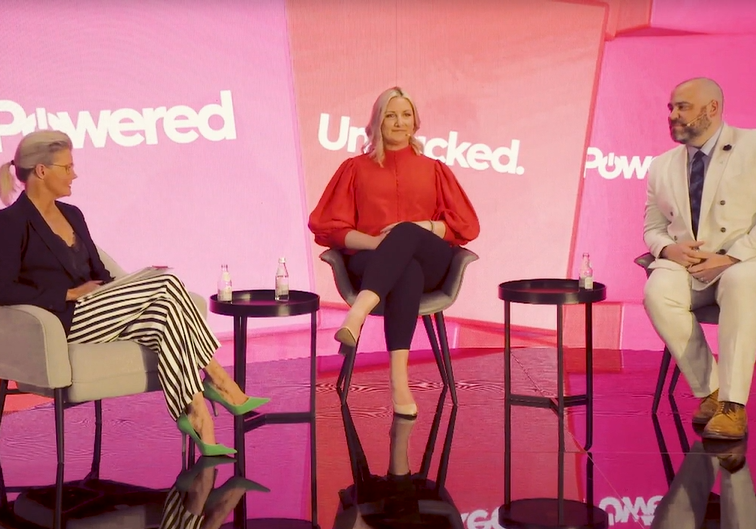
Powered Unpacked: emerging travel trends marketers need to know

Powered Unpacked

The Future of Travel: Are you Ready?

9Powered_Logo_Heat

‘Riches to be made’ in sustainable, niche travel, extended remote working holidays: Four key post-COVID travel trends marketers should understand.

Australians’ travel habits have irrevocably changed, as a 40 per cent remote workforce realises it can work from anywhere. But “Wandering Workers” are just one of the trends identified in Nine’s State of the Nation Travel report for 2022. There are “New Frontiers” and deeper levels of expertise Australians are searching for to spend tens of billions of travel dollars each year. One expert’s take? “Regenerative Travel” is where the riches are to be made.

Cultural shifts and emerging travel trends

At the peak of Australia’s COVID lockdowns it was possible to imagine a future of roving digital nomads, a large workforce that didn’t need to be in an office but could work from anywhere at any time. That hasn’t exactly happened.

Instead, travel experts at Nine and from the industry say, the cultural shifts have been more subtle – but they have nonetheless fundamentally changed how Australians roam and holiday around the world. It’s worth understanding them to understand how to reach those people.

Nine partnered with The Future Laboratory to take a closer look into the future of travel with detailed analysis and strategic insight, combining data from Nine audience intelligence with The Future Laboratory’s expert trends intelligence.

There were eight key trends identified as emerging in travel across Australia and the world – below are four of them.

Wandering Workers

Last year 40 per cent of Australia’s workforce were remote and mobile, The Future Laboratory’s Barry Mowszowski said. Those people are realising they can work from anywhere, too. “They’re not just people schlepping around the world avoiding going to an office from nine to five. How do we cater to that ecosystem of needs from a holistic travel point of view?” he asked. “It’s much more complex in terms of understanding their needs than people just booking a one-way ticket to a destination.”

But interestingly, the large digital nomad population hasn’t appeared. What has happened instead is the extended holiday. “Even just before the pandemic, the idea was that there was this group of people who didn’t have offices and who could travel around the world and work as they go,” Ben Groundwater, Nine Publishing travel writer and podcast host, said.

“Those people exist. But maybe they’re not going to be permanent digital nomads moving around the world their entire lives. It might mean that they can take six weeks rather than two weeks and go to another destination with their family, with their friends, just by themselves, and have a holiday, but also work at the same time.”

Those ones are the Wandering Workers.

Regenerative Travel

More Australian travellers are conscious of their footprint, both environmentally and financially, when they arrive at their destination. In fact, the idea of being conscious of their footprint was the second most important consideration after the destination itself, per Airbnb and studies by The Economist, Mowszowski said. “The whole idea is that you have a reduced footprint.” There’s a fashion brand in Portugal, for example, ISTO, that offers travellers tours of its factory to educate them on the supply chain and manufacturing process. “It’s really interesting when you think about regenerative travel through a holistic proposition of what’s happening globally,” Mowszowski said. “Because that’s where the riches are to be made from a travel sector point of view to cater to that appetite within Australia and globally.”

It’s “a bit of a reset”, Groundwater added. “The pandemic gave everyone two years to basically sit back and consider the way they travel and the way they want to travel in future, and the effect that their travel has been having in the past on the world,” he said. “It’s driven by the brands at the moment, by travel companies, by tour companies, by media as well. This is becoming very important as we look towards the future.”

New Frontiers

There are some wild adventure holidays and experiences out there. A new one that’s coming is the ultra-luxury, ultra-wealthy blimp ride. OceanSky cruises, for US$210,000 dollars (A$301,000), offer multi-day expeditions to the North Pole – without a carbon footprint. “But juxtapose that with space travel. So at the Kennedy Space Centre there is an air balloon lift. For US$120,000, slightly cheaper, you can join one of 300 people going into space from 2024,” Mowszowski said. It’s part of the New Frontiers trend, which is changing the idea of luxury from a high-end place to a niche experience.

Oceansky

“Although those high-end luxury experiences do tend to hog the headlines and really sound amazing, for everyday travellers, there’s all sorts of stuff you can do out there that will cater to exactly what you want to achieve and experience,” Groundwater said.

“If you look at your social media feed right now, everyone’s in Italy or France. We’ve realised that our opportunities to travel are finite and that we may not have the chance to go to these incredible places, to go to Machu Picchu, to Antarctica, to the Galapagos.”

Educated Expertise

With new frontiers, more sustainable, regenerative experiences and wandering while working comes a need to understand places in more depth – Educated Expertise. There’s been a shift away from artificial intelligence and chatbots, Mowszowski said, towards “travel strategists” – another term for travel agents – and deep research.

“There’s so much emotion that goes into travel for people. This is something that you plan for and save up for years, and you want to get it right, and you want to enjoy yourself,” Groundwater said.

“That human interaction is just invaluable, really.”

Click here for more research from
Nine's State of the Nation Travel event

View more marketing insights from Powered By Nine

Contact us for more information on how your brand can leverage the power of Nine to deliver real business outcomes.

  • This field is for validation purposes and should be left unchanged.

Tourism NT x Powered

Powered_by

How Tourism NT leveraged a high-impact, cross-media partnership with Nine, to bring Aboriginal culture to the forefront of travel.

In 2022, Tourism NT briefed Nine to drive a connection between our audience and the cultural landscape of the Northern Territory, with key events such as the Darwin Festival, Barunga Festival, Desert Mob and Desert Song Festival at the forefront of the campaign.

The objective was to encourage an audience interested in arts, music and culture to consider travelling to the NT, by harnessing the power of Nine’s ecosystem to excite them about the opportunities.

Powered by Nine’s Kath Solly, Group Creative Solutions Manager, and Bradley Johnston, Content Producer, developed a high-impact, cross-media approach to allow Tourism NT to reignite Australia’s appetite for travel and appreciation for the Northern Territory’s rich Aboriginal history.

Over the last few years Australia’s tourism industry, along with the rest of the world, has been struggling to stay afloat. With back-and-forth border closes, restriction changes and last-minute cancellations now a thing of the past, getting back into travelling has never felt so good.

Today, more than ever, tourism bodies are fighting for audience and visitors to encourage them to take their saved-up annual leave and spend travel budgets to visit somewhere on their doorstep – in Australia.

The key challenge is being heard above all the noise. Travel-related advertising is EVERYWHERE right now, with international and interstate tourism bodies flooding the media with enticing offers and experiences to put their destinations on the map in 2022.

Kath_Headshot

Kath Solly,
Group Creative Solutions Manager,
Powered by Nine

Brad_Headshot

Bradley Johnston,
Content Producer,
Powered by Nine

How did Tourism NT stand out in such an over-saturated travel market?

In 2022, Tourism NT and Nine, in partnership with Atomic212, joined forces to bring Australian Aboriginal culture to the forefront. Tourism NT focused less on reaching travel intenders and those looking for a holiday destination and more on culture, art, music and event lovers, by making a trip to the NT a key drawcard.

The Northern Territory’s events have something totally different to offer than any other destination in Australia. The campaign proposition to the culture seeking audience explores how it is entertainment but not as you know it. Because events in the Territory allow you to connect with your passions on a deeper level. From art and music to food and cars, the Territory puts on events like nowhere else. Here you can get closer to, touch and immerse yourself in your passions, forming a deeper connection with arts and culture. There will be an overarching message that these events are all unique to the NT and different in every sense.

Publishing - NT Tourism

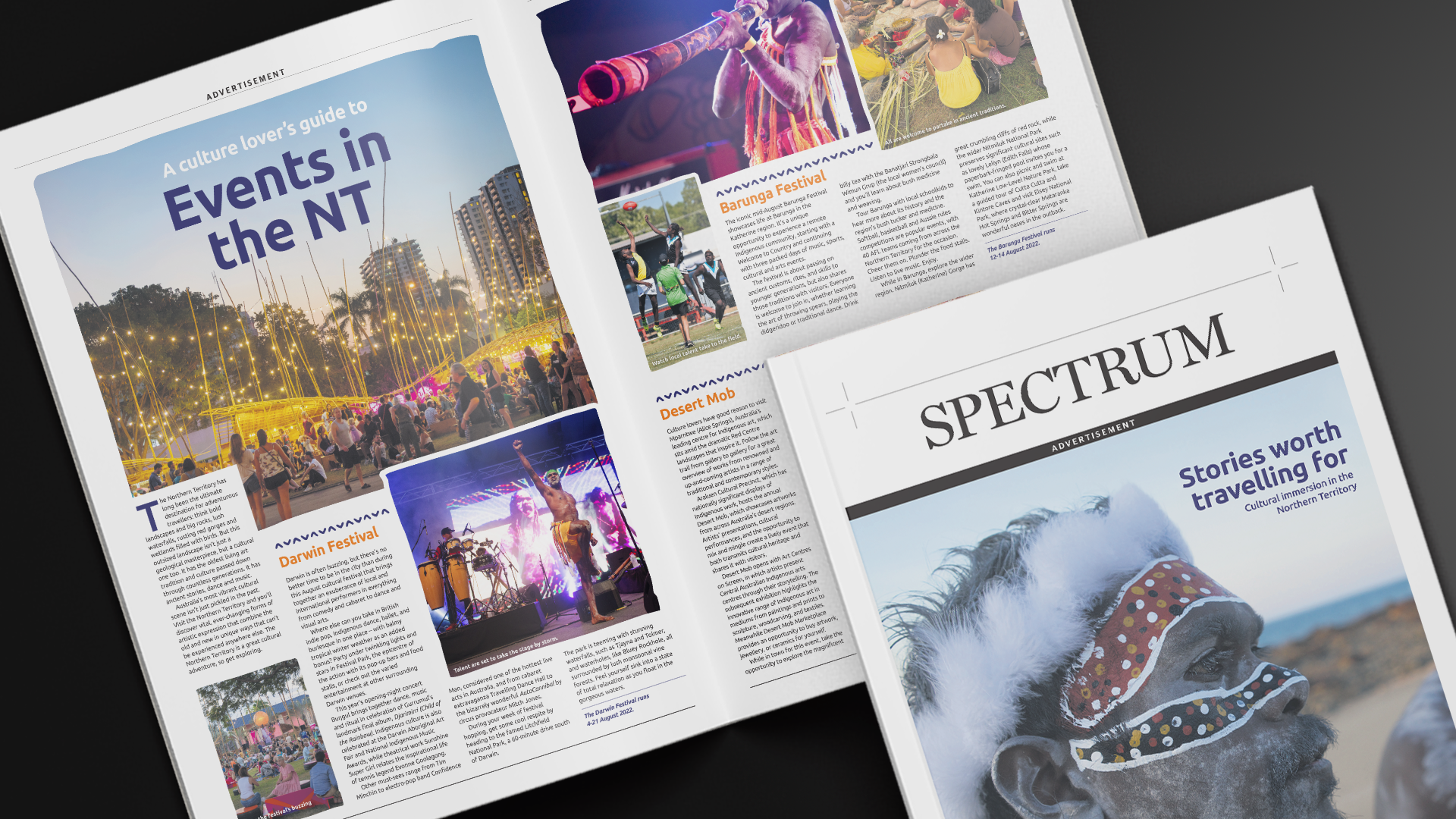
We wanted to ensure that the cultural and artistic preciousness of the Northern Territory was brought to life across all our assets. With that in mind we created a cross-platform campaign employing Nine’s Total Audio and Total Publishing platforms to drive cut-through and reach with unique creative executions. The campaign shone a light on “Stories Worth Travelling For”, putting the rich culture of the Northern Territory at the forefront of every content piece.

The power of audio came to the fore. By harnessing the scale and reach of Nine Audio, aligned to the beautiful sounds of the Northern Territory, Nine created audio-immersive content that spoke directly to the key events in the NT to entice our culture-loving audience.

These immersives were peppered with the rich sounds of music and nature that are so special to the Northern Territory. All you have to do is close your eyes and listen to these audio clips to feel instantly immersed in the culture of the place.

Alongside radio, a high-impact campaign spanning digital and print ensured that culture, art and music was the main feature of the campaign. Tourism NT wrapped Nine’s art-focused, newspaper-inserted Spectrum magazine with powerful imagery putting Aboriginal culture at the forefront of the campaign and reminding our audience of Australia’s rich cultural heritage.

Digital - NT Tourism

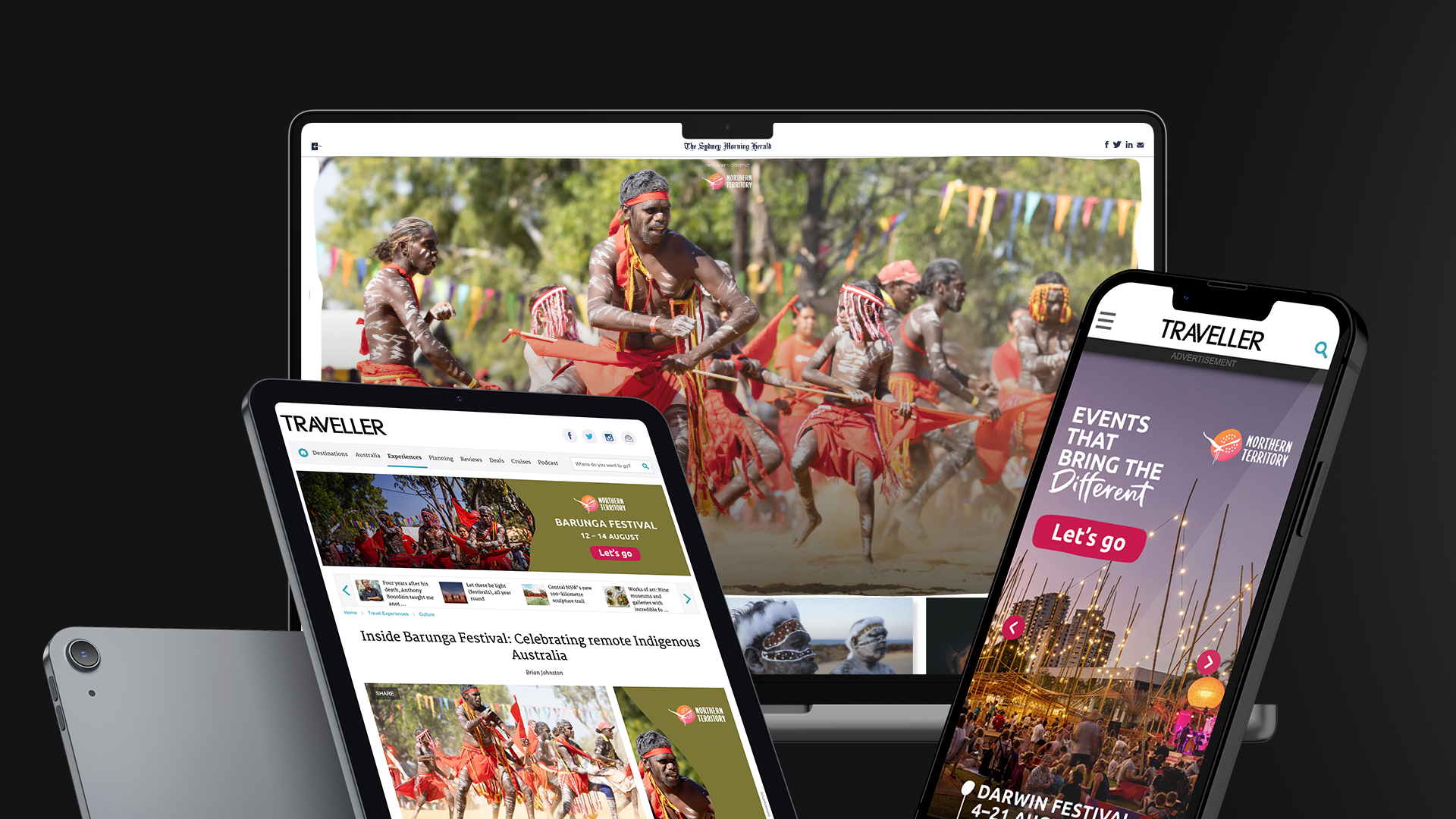
Through further online immersive and native content with Traveller, our Powered Studios team produced content that highlighted the beautiful imagery and dreamy landscape of the NT. Content across Traveller was aimed directly at the discrete culture-loving audience, while also appealing to the older travel-intender audience with art and culture in mind when planning their travel destinations.

The campaign started a month prior to the program of events to drive ticket sales and long-weekend travel planning to the Northern Territory.

Headshot Tony
“Tourism NT can’t outshout and outspend other destinations in the highly competitive tourism advertising market, to cut through we have to be innovative and rely on media partners who share our vision to make the NT the premiere destination for Aboriginal cultural experiences and to be truly ‘Different in every sense'. Nine is one of those partners who consistently support our messaging and provide return on investment that grows the value of the holiday market in the Northern Territory.”

- Tony Quarmby, Executive Director Marketing, Tourism NT
NT x Powered

View more marketing insights from Powered by Nine 

Contact us for more information on how your brand can leverage the power of Nine to deliver real business outcomes.

  • This field is for validation purposes and should be left unchanged.

TODAY: Australia’s most talked about breakfast show

Today_Talent

Australia's most talked about breakfast show

TODAY sets the agenda right across Australia, providing viewers with a trusted source for journalism and entertainment every weekday from 5.30am – 9.00am. Bringing Australia the latest in news, sport, weather, finance, entertainment, health and lifestyle from Australia and around the world.  

Row triangle Shape Decorative svg added to top
58Percent

57% Female | 43% Male

60Percent

63% are Main Grocery Buyers

TodayNewStats

People 18-59 make up 48% of the TODAY Show audience ​

TODAY engages the audience you need to reach most

Source: OzTam Metro Data, 5 City Metro, 'Today,' 2023 YTD up to 14/08/2023, Simple Audience Profile, Consolidated 7

CH99NOW_Lockup_White

Our morning TV audience is growing across all screens

Reaching over 6.4 Million people in 2022

No.1 Breakfast Show in 2022 along the East Coast Metro in Total People

No.1 Breakfast Show in 2022 across all key demos Syd, Melb & Bris

Live BVOD grew by 56% Year-on-Year

Source: OzTam Metro data, 5 City Metro + Markets, Total People, P25-54, P16-39 & GS + Child, 2022 CY v 2021 CY, ‘Today’, v ‘Sunrise’, ‘Toda 05:30-09:00’, v ‘News Breakfast 06:00-09:00, ‘Monday-Friday’​. OzTAM Live VPM, Today Show, 1 Jan - 31 Dec 2020 & 2021, includes coviewing on connected tv devices

"As Australians morning routines evolve, TODAY is with them at every step. On linear TV, 9Now and all social channels, TODAY welcomes people in their living rooms, joins them on their commute and entertains them on their phones long after the program is over. TODAY's 24/7 Total TV, digital and social strategy ensures viewers never miss the latest news, sport, entertainment and weather, and are always part of the conversation."

​Alexander Needs
Director - Partnerships & Strategy​
News & Current Affairs  ​

Tody_Alexander-Needs

A powerful ecosystem - TODAY reaches audiences wherever they consume their content

Total TV Audience 299,100

276,000
Overnight

100
Timeshift

23,000
BVOD

Source: OzTAM Live VPM, Today, 2/1/23 - 11/8/23, includes coviewing on connected tv devices. Source: OzTAM Metro + Regional Data, 5 City Metro + Combined Agg Markets, Total People, 'Today,' 2023 YTD up to 11/08/2023, Overnight + Timeshift to 7, Average Audience

Website

11M
Page Views

6M
Unique Visitors

Source: Adobe Analytics, Today Show Site, 2/1/23 - 31/7/23, unique visitors, page views  

A powerful ecosystem - TODAY building a community on social media

Facebook

2.4M followers (+13% YoY)
61% female vs 39% male

Average 17M video views per month

Average 945K engagements per month

Instagram

331K followers (+4% YoY)
76% female vs 24% male

13% audience from Sydney & 10.5% from Melbourne

Average 2.6M video views per month

Average 195K engagements per month

TikTok

202K followers (+65% YoY) our fastest growing social community
52% female vs 48% male

Average 2.6M video views per month

Source: @thetodayshow Instagram, TODAY Facebook, @thetodayshow TikTok - 14 August 2023.

Start your brands day the right way, by partnering with TODAY

TODAY offers a powerful marketing platform speaking to an engaged, loyal community in both a trusted and brand safe environment. From seamless integrations to moments that surprise and excite, TODAY has you covered. TODAY can help elevate your brand and deliver your message to consumers every morning, every day of the year – executed by the most respected journalists and presenters in the business. From groundbreaking stories, sport up close and personal, finance for real people and ground-breaking tech, there’s an exciting and unique way in for each and every brand – through content that delivers real business results.

Check out how we've helped brands realised their big ideas by connecting with Australian communities far and wide

Row triangle Shape Decorative svg added to top

Today Show's ultimate car giveaway

Chery-Logo-white

Chery Motors, a prominent automobile manufacturer, aimed to make a significant impact in the Australian market by reintroducing the OMODA 5, with an accompanying campaign to launch the brands return to Australia. 

To generate hype around the launch of OMODA 5, Chery Motors turned to Australia’s most talked about breakfast show, TODAY, to reach an engaged audience at scale. 

In one of the biggest stunts ever seen on Breakfast TV, six contestants battled it out to see who could keep their hand on the car longest, with the winner walking away with a brand-new Chery OMODA 5.

"...This comprehensive approach led to an impressive 40 million PR impressions, alongside the capture of data from over 10,000 competition entrants. Additionally, the competition period saw a notable increase in website traffic, underscoring the positive impact of the partnership on Chery's online presence and potential to generate sales leads. Additionally, a number of our customers have also mentioned having seen the car on TODAY Show prior to purchasing via one of our dealerships...“

Andrew Haurissa
Marketing Director
Chery Motors

CM_ClienttestimonialHeadshot_TODAYLOOK

Endless opportunity, fit for any category

AUTO
FMCG
TRAVEL
HEALTH
TECH
FINANCE

Amplify your brand story by aligning with TODAY

ConsumerPromotions

The TODAY Show loves to engage directly with viewers through fun and exciting consumer promotions. With the cost of living placing pressure on households all over Australia, put your brand front and center by giving back to Aussies through a TODAY Consumer Promotion.

WeatherCrosses

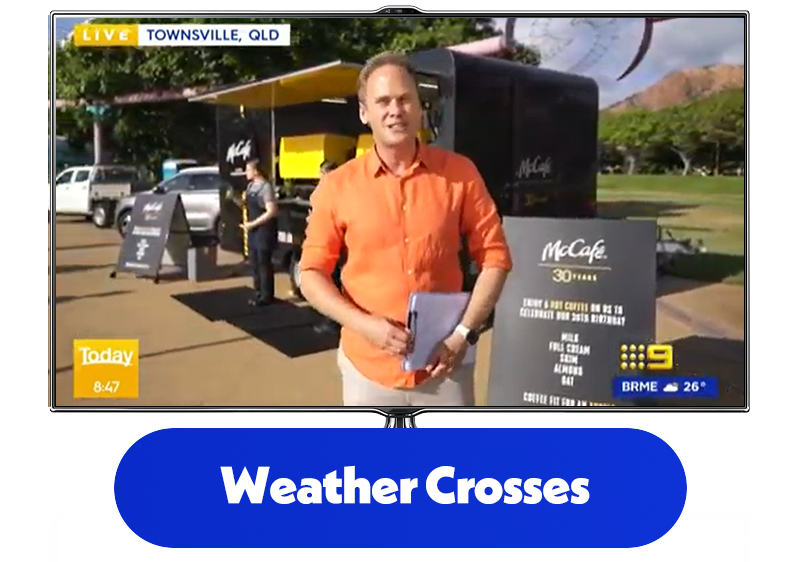
The TODAY weather host broadcasts live from different events and locations around Australia and abroad, and across the morning showcases these for our viewers. This is the perfect opportunity for brands with an event, activation or special location to showcase.

SegmentSponsors

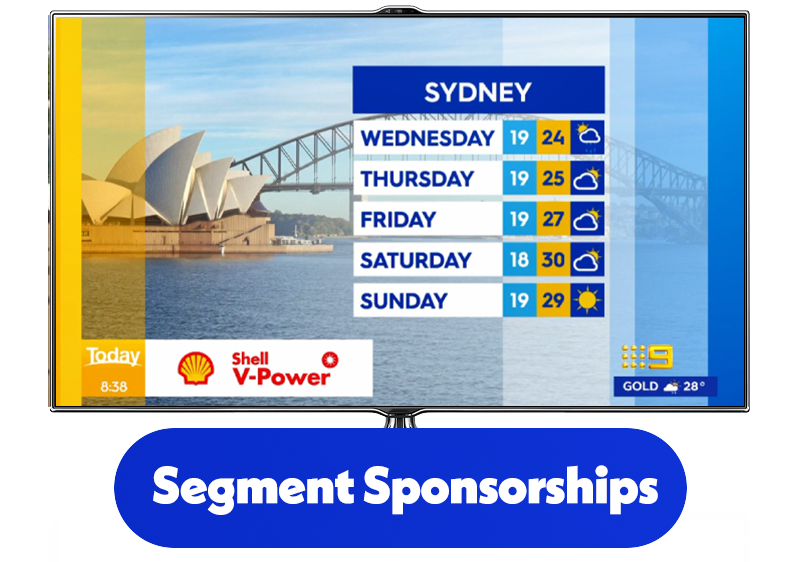
Align your brand to TODAY's most loved regular segments. I.e. Weather, Sport, Entertainment, Your Money, Tech, Property and more!

SegmentIntegration

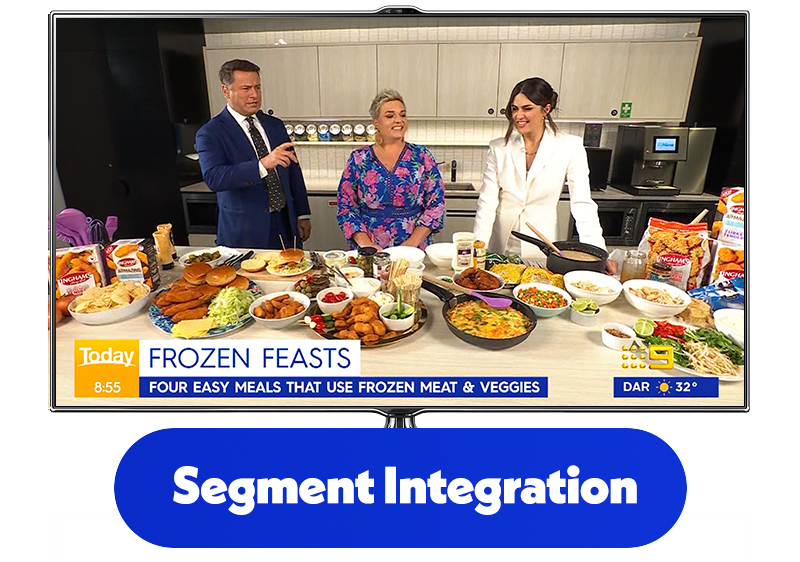
Integrate your brand within a Sponsored Editorial Segment. TODAY creates tailored integration opportunities to meet brand objectives and align with campaign goals. The best opportunities exist when aligning to contextual news or calendar events.

Our premium morning TV offering doesn't stop there

Row triangle Shape Decorative svg added to top
TodayExtra_White

The TODAY EXTRA team covers everything from entertainment, celebrity interviews, news, to practical lifestyle content such as fashion, beauty, parenting and relationships, health and nutrition. Hosted by David Campbell and Sylvia Jeffreysairing nationally Monday to Friday 9.00-11.30am and Saturday 10.00-12.00pm.

ExtraHosts
TodayShowHostsWeekend
TodayWeekend_White

Join the TODAY Weekend team as they bring you the latest in news, weather, current affairs, sports, politics, entertainment, fashion, health and lifestyle. Airing nationally on Saturday and Sunday from 7am-10am, hosted by Australia’s most respected journalists Clint Stanaway and Jayne Azzopardi.

To find out what your brand can achieve with morning TV, request a tailored response to help realise your marketing objectives. 

Request more information - GENERIC

  • This field is for validation purposes and should be left unchanged.

Powered Unpacked: the new wave of wealth

Powered Unpacked

Millennials set to defy the economic roller coaster and build their wealth

9Powered_Logo_Heat

Most Millennials consume finance media but not confident about money, despite a $3.5 trillion inheritance coming – brands can help

There’s an unfair image of Millennials out there that paints them as poor financial managers, economics journalist Jess Irvine says. But they’re hungrier for information and advice than any generation before them. Despite this, a new survey from Nine has found that they’re becoming less sure of themselves. And with more than seven million Australians aged 18 to 39 set to inherit $320,000 each over the next 20 years – that’s $3.5 trillion in total – the brands that share smart information that doesn’t oversimplify things can help these Millennials – and themselves.

The new wave of wealth

Australia’s biggest and most valuable cohort, the seven million 18-to 39-year-olds known as Millennials, are unsure about how to invest their money but hungry for information, presenting huge opportunities for brands.

A new study from Powered by Nine, in partnership with The Lab, interviewed people in that cohort and conducted social listening and quantitative research through Nine’s Consumer Pulse audience panel to understand Millennials’ approach to finance.

The proportion who feel “extremely confident” about their financial skills has plummeted to just 14 per cent – down from 20 per cent a year ago. Seventy-two per cent listen to business and money podcasts, while 28 per cent follow a “finfluencer” online.

“These audiences are still incredibly ambitious, they are progressive and they're diverse, but ultimately what they see as success is being redefined, and it's probably different to what it was with their predecessors,” Nine’s Client Director for Finance, Tech and Telco, Ben Thomas, says.

Hunger for information

“They're looking to other things than purely financial success, such as job satisfaction, but they're still incredibly focused on growing long-term wealth and setting themselves up for retirement. So actually, in that sense, they’re not that different.”

Jess Irvine is the Senior Economics Writer for The Sydney Morning Herald and The Age, and she reckons the 18-to 39-year-olds have some of the deepest “hunger for information”.

“But as for getting access to trusted information that is credible, that is looking at your whole financial situation, I think that's a real gap in the market,” she said.

“People are so scared, but money is really quite simple - it hasn't changed. You earn an income, you spend less than you earn, and then you have some savings to nurture you when you are in retirement and you can't work anymore.”

Finding new pathways to wealth

Nine’s research found that Millennials will inherit $3.5 trillion over the next 20 years as a massive intergenerational wealth transfer takes place. That’s $320,000 per person. Yet there’s a sense that Millennials are not necessarily good with money – too busy eating smashed avocado to save it – that is inaccurate, Irvine says.

“There's a real boomer hate session happening with Millennials and I think it's completely unfair,” Irvine said.

“Younger Australians in this demographic are caught in some tectonic shifts in our economy. Housing affordability is a huge challenge - it is just so much harder to save a deposit and get on the home ownership pathway. At the same time, ultra-low interest rates have meant that it's very hard to save, to get a return on your money in the bank.”

And so those younger people have done the logical thing, which is to investigate other investment areas – like the share market and cryptocurrencies. Finance brands can take lessons from the “finfluencers” to make smart, helpful information available to them.

“The reason that finfluencers have had such a fast rise in profile is because they're relatable, and provide easy-to-access information in the channels and platforms where this audience  already is,” Ben Thomas said.

“For brands, that doesn't mean oversimplifying things. I think that's the key thing as we work through this for brands. What's the right tone? What can they bring to the conversation which really adds to what this new wave of wealth is looking for?”

Click here for more research from
Nine's State of the Nation Finance event

Contact us for more information on how your brand can leverage the power of Nine to deliver real business outcomes.

  • This field is for validation purposes and should be left unchanged.

Mid-Year Ratings 2022

NINE IS NO.1 IN 2022

99NOW

Nine is again the number one network in all key metrics at the halfway point of 2022.

We have dominated the national conversation with the era-defining Ash Barty win at the Australian Open to the record-breaking season of Married At First Sight and top-rating local drama in Underbelly: Vanishing Act.

We continue to be the place where Australians share in the moments that matter. Nine is number one in 25-54's, 16-39's and Total People.

9Now also leads the BVOD space with over 50% share in demos across the commercial FTA's and 49.7 in Total People.

Row triangle Shape Decorative svg added to top

9Network Mid-Year Ratings Report

FREE-TO-AIR NETWORK SHARES: 2022 CALENDAR YEAR

18:00-MN
P25-54 31.7% 27.3% 22.1% 12.2% 6.6%
P16-39 31.5% 28.4% 21.9% 12.1% 6.2%
GS+CH 32.2% 27.3% 21.0% 13.0% 6.5%
Total People 29.2% 28.4% 16.9% 16.7% 8.8%
Source: OzTAM Metro 5 City, 2022 Calendar YTD (up to 25/06/2022), Share to FTA, S-S Primetime 1800-2359, Key Demos and TP, Consolidated 28.

FREE-TO-AIR PRIMARY CHANNEL SHARES: 2022 CALENDAR YEAR

18:00-MN
P25-54 23.4% 19.3% 14.7% 6.9% 2.8%
P16-39 23.9% 20.2% 14.7% 6.3% 2.4%
GS+CH 24.3% 20.0% 14.1% 6.7% 2.8%
Total People 21.2% 19.8% 11.0% 11.5% 4.9%
Source: OzTAM Metro 5 City, 2022 Calendar YTD (up to 25/06/2022), Share to FTA, S-S Primetime 1800-2359, Key Demos and TP, Consolidated 28.

FREE-TO-AIR NETWORK SHARES: 2022 RATINGS SURVEY PERIOD

18:00-MN
P25-54 30.8% 28.0% 22.0% 12.7% 6.5%
P16-39 30.2% 29.0% 21.9% 12.8% 6.1%
GS+CH 31.7% 27.8% 20.9% 13.3% 6.3%
Total People 28.5% 29.1% 16.7% 17.1% 8.7%
Source: OzTAM Metro 5 City, 2022 Survey YTD (up to Sat 25/06/2022), Share to FTA, S-S Primetime 1800-2359, Key Demos and TP, Consolidated 28.

FREE-TO-AIR PRIMARY CHANNEL SHARES: 2022 RATINGS SURVEY PERIOD

18:00-MN
P25-54 22.8% 19.9% 14.6% 7.2% 2.8%
P16-39 23.1% 20.7% 14.8% 6.7% 2.5%
GS+CH 24.1% 20.5% 14.0% 7.0% 2.8%
Total People 20.6% 20.3% 10.8% 11.9% 4.9%
Source: OzTAM Metro 5 City, 2022 Survey YTD (up to Sat 25/06/2022), Share to FTA, S-S Primetime 1800-2359, Key Demos and TP, Consolidated 28.

BVOD COMMERCIAL SHARES: 2022 CALENDAR YEAR

LIVE + VOD
People 25-54 50.7% 34.1% 15.2%
People 18-39 52.1% 33.6% 14.4%
Total People 49.7% 35.1% 15.3%
Source: CYTD: OzTAM Live + VOD VPM, CFTA Only, 1 Jan - 23 June 2022, metric minutes, includes coviewing on connected TV devices.

BVOD COMMERCIAL SHARES: 2022 RATINGS SURVEY PERIOD

LIVE + VOD
People 25-54 49.5% 35.8% 14.7%
People 18-39 50.6% 35.6% 13.8%
Total People 48.3% 36.9% 14.8%
Source: SYTD: OzTAM Live + VOD VPM, CFTA Only, 6 Feb - 9 April & 24 April - 23 June 2022, metric minutes, includes coviewing on connected TV devices.

Hamish Turner, Director 9Now and Programming, said: “We are proud to be the home of unique, genre-defining content that challenges, excites and engages millions of Australians. 2022 delivered Ash Barty’s historic win at Rod Laver Arena. With 3.835 million viewers it is the highest rating program of the year and the highest rating Australian Open Women’s Final of all time. Nine is home to the most watched series in the country in Married At First Sight and the most popular reality series in Lego Masters. And we have only just begun, with family favourite Australian Ninja Warrior launching tomorrow night and The Block: Tree Change set to air in the coming months. Not to mention two more exclusive State of Origin matches and the NRL Grand Final.”

Row triangle Shape Decorative svg added to top

Loved by Aussies
Made for Brands

From Australian Ninja Warrior, Beauty and the Geek to the State of Origin, US Open and much more still to come, there’s plenty of opportunity available to harness the power of great Australian content in 2022 with Nine.

9Blue_9NOW_EF_BUG_Template_On_LGE

For further information, please contact:
Terry Stuart - Nine Communications Manager
tstuart@nine.com.au

Contact us for more information on how your brand can leverage the power of premium content on Nine to deliver real business outcomes.

  • This field is for validation purposes and should be left unchanged.

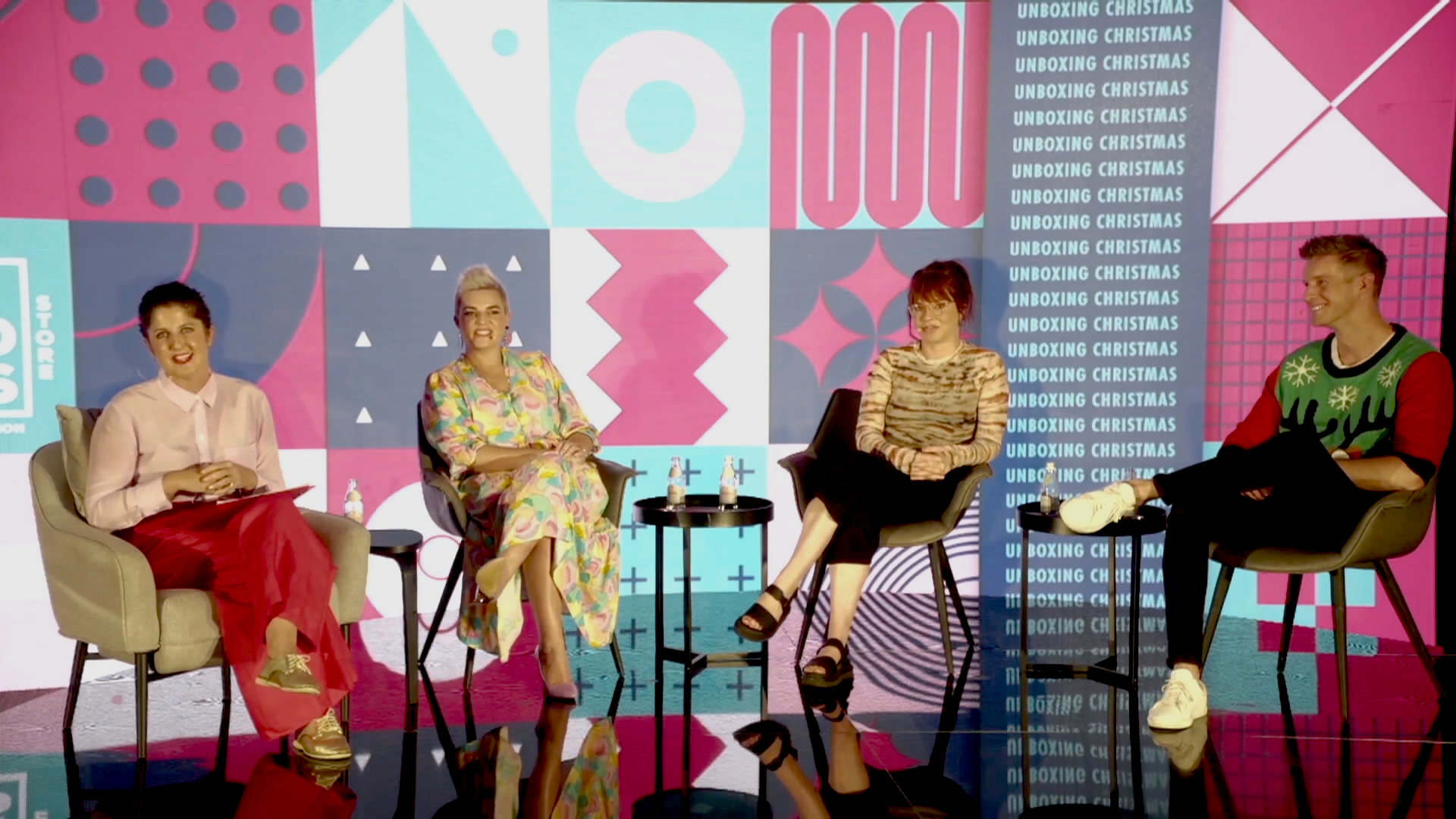
Cultural Conversation Series; Unboxing Christmas 2022

Powered Unpacked

Cultural Conversation Series;
Unboxing Christmas

9Powered_Logo_Heat

Black Friday eclipses Boxing Day sales, and different marketing approaches now required – but 79% of Australians think brand Christmas ads off the mark

Brands are missing the mark on Christmas advertising, with four in five Australians calling for more reflective ads, not just diversity-washing. Meanwhile, Black Friday sales in November have eclipsed Boxing Day sales – and marketers need to rethink the kind of products they are promoting as a result. 


Black Friday versus
Boxing Day

Latest research from Nine shows the cultural and commercial tides are turning, and the balance of power between pre and post-Christmas sales has flipped.

“Perhaps the biggest shift we’re seeing in spending is the momentum behind Black Friday as the premium sales event of the season. 58 per cent of Australians bought during Black Friday sales versus 56 per cent during the Boxing Day sales last year,” says Toby Boon, Director of Strategy & Insights, Powered by Nine.

“The difference is even greater for people aged 18 to 34. Black Friday is now where the Christmas shopping season kicks off in earnest.”

Boon was speaking at a Nine-hosted panel session at The Big Ideas Store, alongside Lisa Day, Director of Content Partnerships – Publishing, Powered by Nine, Jane de Graaff from Honey Kitchen and the Today Show, Steph Winkler, Director with Nine research partner Crowd DNA, and Jack Bavin, Nine Melbourne’s Head of Strategy.

Changing Christmas climate

The research underlines how Christmas spending is changing. “Australians spent roughly $23.9 billion last festive, equivalent to a 38 per cent increase on the previous year,” says Boon.

“It’s not just how much money we’re spending, but how we are spending it. We are being influenced by broader cultural considerations like climate change and sustainability.

“80 per cent of Australians are concerned about the amount of waste in gifting, and 68 per cent believe that sustainable gifting is increasingly important, so we’re finding ways to approach the traditional in modern ways,” says Boon, pointing to surging sales of sustainable Christmas crackers, “bon bons”, in recent years, with plastic trinkets now firmly out of favour.

Rethinking the strategy

Black Friday versus Boxing Day: Different product approaches required

Honey Kitchen’s Jane de Graaff believes marketers must now rethink product promotion strategies, adopting different approaches for Black Friday versus Boxing Day.

“Black Friday sales are positioned before the season, so people tend to get in earlier, thinking ‘This is going to make my Christmas easier, so I’ll buy it now’,” she says. “Not that the Boxing Day sales are redundant, but I think the timing of Black Friday changes what people are looking for. We buy a lot more practical stuff at Black Friday time,” she says, citing things like kitchen products or items children will need for school.

“Then Boxing Day is more about, okay, I got through that period, what’s my reward? What do I want as opposed to what do I need?”

Christmas ads missing the mark

While brands globally and locally traditionally reserve a significant chunk of media budgets for the big Christmas campaign, Nine’s research suggests marketers may in fact be risking unintended consequences.

“In line with society more broadly, Christmas is becoming more inclusive. The extended Christmas period is being embraced by all Australians as a universal time of celebration – and we want to see that show up in comms,” says Boon.

“Just 21 per cent of us see our Christmas experience reflected in advertising and 71 per cent of Aussies want to see a more honest depiction of what Christmas really looks like.

“More than half of Australians believe that Christmas advertising needs more diverse cultural representations. Australians don’t want tokenism. They simply want to see people like themselves reflected through marketing and messaging.”

But that doesn’t mean “shoving as many diverse characters as possible into a 30-second ad,” says Nine Melbourne’s Jack Bavin.

“Our research shows that if advertisers do that, it has a negligible impact on building brand equity and short-term sales lift. So in other words, it does nothing. You’re ticking a box, sure, but you’re not actually doing much for your business.

“Yet if you show those under-represented groups in a positive way, a more engaging, more meaningful, more deliberate way – and probably a more long-form way – it has a huge uplift on both of those metrics. So marketers need to get that right.”

Click here for more!

Contact us for more information on how your brand can leverage the power of Nine to deliver real business outcomes.
  • This field is for validation purposes and should be left unchanged.

Cultural Conversation Series; We are Family – a call for brands to represent modern Australia

Powered Unpacked

Cultural Conversation Series; We are Family

9Powered_Logo_Heat

The nuclear parent trap: 54% of Aussies say brands failing to reflect modern families, pushing traditional mum, dad, 1.8 kids over reality; Maltesers, Target nailing it

The marketing and advertising sector is alienating a quarter of Aussies by primarily showing traditional – mum, dad and two children – families, new research shared by Nine shows. One in four people feel their family is poorly represented, and even though single parents make up 10 per cent of our population, only 12 per cent of the public recognise one adult and a child as a family. What brands should focus on is honesty, realism and rawness, Nine’s Toby Boon says.

The Australian family

Marketers are using an outdated model of the Australian family in advertising, sticking with a mum, dad and two kids, and alienating vast swathes of the public, new research from Nine and cultural insights agency Fiftyfive5 reveals.

More than half of Australians – 54 per cent – feel that brands are failing to reflect the reality of family life in their marketing, while one in four people believe their own family is poorly represented in advertising. The concept of mum, dad and 1.8 kids has been “a really, really powerful shortcut”, Nine’s Director of Strategy and Insights, Toby Boon, told a session of Powered by Nine’s Big Ideas Store.

“But the reality is that Australia is shifting.  We’re quite conservative in the way that we portray family groups in some ways. There are big changes in the ways that families are showing up,” he said. 

Realism required

Families make up 71 per cent of households, but they’re comprised of traditional families, same-sex families, unmarried couples, blended families, co-habiting parent families and grandparent families. Dr Klara De Wit, Fiftyfive5 consultant, said portraying different types of families was an important way to improve representation and public perceptions.

“There was quite a sad percentage where only 12 per cent of people recognise one adult and a child as a family, but in reality, single parents make up 10 per cent of Australia's population,” Dr De Wit said.  

“What Australian consumers love to see when it comes to families and parenting is realism and acknowledgement of what it means to be an Australian family today, and the difficulties and the hardships of that as well.”

Maltesers, Target get it right

The Massive Overshare campaign by Maltesers, which published intimate thoughts from mothers about motherhood, was one example that resonated, as did a Target ad that showed men and women doing chores with children around in a non-congratulatory way.

“It wasn’t necessarily about family life. It wasn’t necessarily talking overtly to a mother’s experience or a father’s experience, it was just showing a family home,” Dr De Wit said.  

“There was a dad vacuuming with a baby strapped to his chest, and they loved it because there was no glorifying and ‘Oh, wow, you’re doing such a great job.’ Or, ‘Oh, look at the dad. He’s babysitting his kids.’ It was just assumed to be normal.”

Almost nine in 10 mums (89 per cent) want brands to show more honesty about the challenges of family life.

But it's a tightrope for brands

There is a tightrope to walk, however. The research found that 46 per cent of Australians want brands to represent traditional family dynamics.

“There was a really interesting piece that came through in the research that compared the amount of time dads spent with their kids per day to the 1960s,” Boon said. “I can't remember at the top of my head what the number is today, but I know the average amount of time that fathers spent with their children in the ’60s was something like 16 minutes a day. Anything’s got to be an improvement on that.” 

The answer, according to Boon, is to listen to the audience and understand their purchase cycle and habits.

“One of the really interesting developments for me has been around the involvement of grandparents,” he said. “We know from research we’ve done previously that obviously older Australians are active for longer, are working for longer, are more involved for longer. And grandparents are one of these groups that are now super, super-actively involved in helping to support bringing up children.”

Which is why the smart brands are now reflecting grandparents in their family-focused campaigns – and recognising their influence on big-ticket purchases. Explore

Contact us for more information on how your brand can leverage the power of Nine to deliver real business outcomes.
  • This field is for validation purposes and should be left unchanged.

What makes a million dollar ad?

The past year has been a rollercoaster ride for Australia’s production companies, media agencies and clients and creatives. Set amidst a backdrop of a global pandemic, natural disasters from floods to fires, border closures, and a talent desert, many held on for dear life.

But in amongst the uncertainty, Australia’s creative industry continued to reflect the country’s culture, mood and humour.

As we edge closer to the return of Australia’s richest advertising prize, The State of Originality – Nine’s way of encouraging brand owners and their agencies to bring their best for a chance to win $1 million of inventory across Nine’s vast ecosystem – this Big Ideas Store session takes a deep-dive into what it takes to make an ad a piece of art.

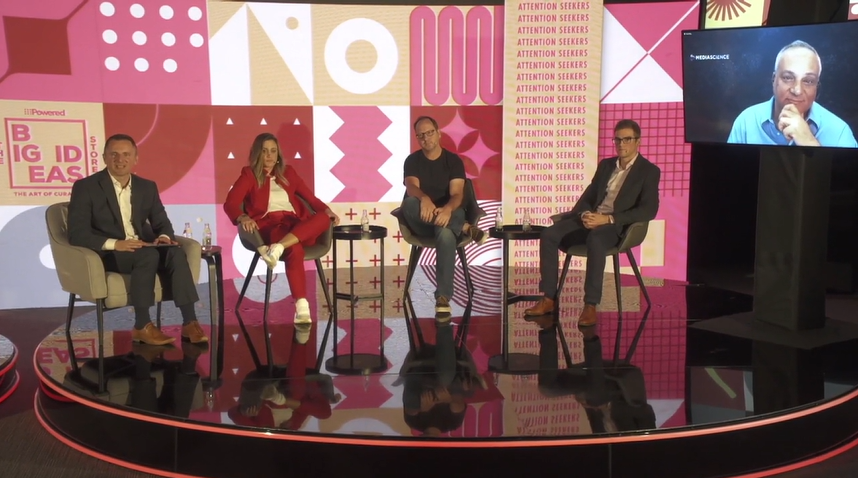
Four great minds in the industry, who are also judges of The State of Originality, join Powered Director Liana Dubois to show and talk us through their favourite ads, giving an insightful commentary into what makes a million dollar advert.

Cindy Gallop, Advertising Consultant and founder of MakeLoveNotPorn; Tara Ford, Chief Creative Officer of The Monkeys; Paul Chappell, Strategic Partner and co-founder of Brand + Story; and Josh Whiteman, Director and co-founder of Brand + Story reveal their thoughts on what it takes to fulfil the six categories to win the prestigious prize – originality, simplicity, strategy, branding, emotion and execution.

“Creativity flourishes with constraint,” said Gallop, a former Advertising Woman of the Year recipient in the US. “I haven’t seen any drop in quality or calibre of advertising even with all the tragedy and very difficult times all around us.”  

How a giraffe gets attention but stacking hamsters doesn’t add up

Attention in advertising is often the industry’s elephant in the room. With no single metric or industry standard, it’s a jungle out there to try to measure the perfect way to reach an audience and have their brand memorised.

But a ground-breaking study by Nine and research company Amplified Intelligence has revealed new clarity on why attention is so important – and the best explanation may be found by looking at two unlikely animals: a giraffe and hamsters.  

Before we go on safari through the attention animal kingdom, however, Nine’s Director of Effectiveness Jonathan Fox explains why attention is a hot topic.
“Attention is important because of its strong links to business outcomes and it measures the effectiveness of an advert,” said Fox. “Advertisers want more of it, agencies want to find out exactly where it is, and media owners want to make sure they’re selling it at the right price.”

Nine conducted a study with attention research company Amplified Intelligence, which measured three different types of attention: active attention (eyes on screen); passive attention (in proximity but eyes not on screen) and non-attention (not in proximity of the screen).

The study was conducted in 200 households, with a camera placed beneath their televisions and phone cameras accessed to measure 9Now.

“We wanted to see what we could learn scientifically about the quality of our advertising, content, promos and integration across Nine’s assets,” said Fox. “The one thing I want to stress is that this attention study was done with people in the comfort of their own homes and not in a lab.”

The findings discovered that attention all comes down to the environment the viewer is experiencing.

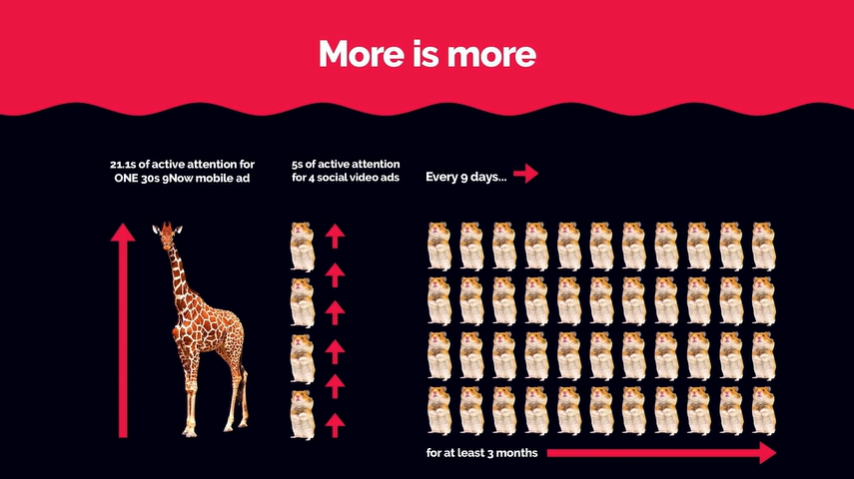
“We found high levels of active attention across 9Now and our TV ad formats,” said Fox. “A 30 second ad on 9Now took out the top spot with a whopping 21.1 seconds of active attention. The exciting news for us is that these high levels of active attention deliver a big impact in both the short term and the long term.”

Amplified Intelligence has found that an ad requires at least three seconds of active attention to access memory and for each additional second beyond this it stays in the memory for about three days. So while social video places brands in the memory for days, TV and BVOD places brands in the memory of consumers for months.

“Nine’s linear TV and 9Now deliver long periods of active attention for advertisers,” said Professor Karen Nelson-Field, who led the study. “Based on the link between attention and memory, this keeps brands in consumers’ minds for longer.”

Short term impact is measured by Short Term Advertising Strength (STAS) – which is the increase in those who decided to purchase a product after ad exposure compared with those that chose to purchase that same brand without ad exposure. Those who saw ads on TV on 9Now chose to purchase that brand 79% more than others in the group.

And this is where the giraffe and hamsters should get some attention.

“You need to buy four social video hamsters to deliver the same short-term impact as one 9Now giraffe,” said Fox. “But the four hamsters only last in the memory for a few days, whereas one 30 second ad on 9Now will stay in the viewers memory for about three months.

“So, to achieve the same impact as a 9Now giraffe you need to buy a lot more social hamsters. In fact, every nine days you’d need to buy four more hamsters over three months.

“And that’s why stacking hamsters doesn’t make a giraffe.”

Human behaviour is the reason why the study found different attention was paid to different platforms. For YouTube on mobile or desktop, the participants’ eyes tended to drop down to the skip button. For TV, viewers tend to be on the sofa, and while there may be distractions, at the very least they’re listening to it. And then there’s 9Now on mobile devices when there’s just the viewer, no distractions and a more intimate one-on-one appointment viewing.

The research also found that longer ads on socials don’t give you more active attention, it gives you more wastage. That stands at odds to TV and BVOD, where putting longer ads on does deliver commensurate active attention. This is related to platform functionality and the role it plays in time-in-view.

“Attention is a proxy for ad effectiveness; more attention delivers disproportionately better outcomes in both the short term and long term,” said Fox. “And Nine’s content and viewing experience delivers market leading attention.”

And, just like the giraffe, sits head and shoulders above the rest when it comes to seeking attention. 

Why marketers need to do their research when buying under the influence

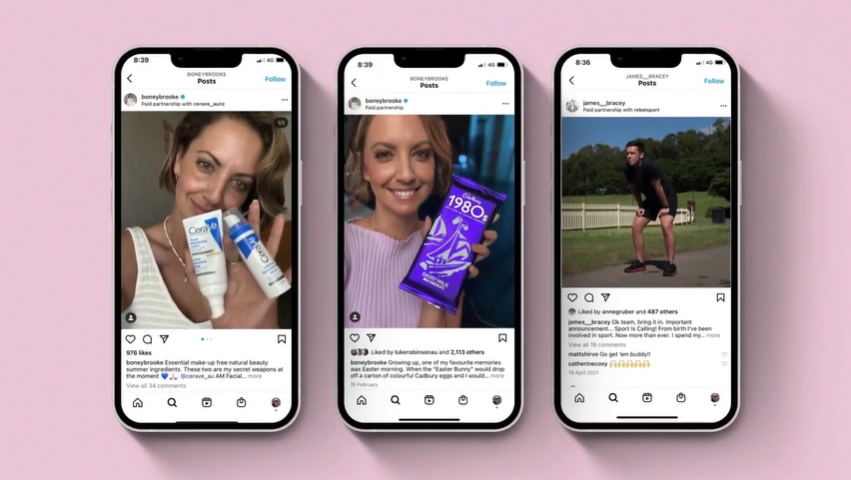
The Influencer market is often derided, but it would be unwise to dismiss their role in today’s marketing ecosystem. From A-list celebrity stars and social media icons to everyday brand fans and micro-influencers, marketers are harnessing the power of digital platforms to find audiences.

But finding the right Influencer is critical for a brand’s campaign to get cut-through. Credibility, authenticity and a firm knowledge of regulatory framework is key. 

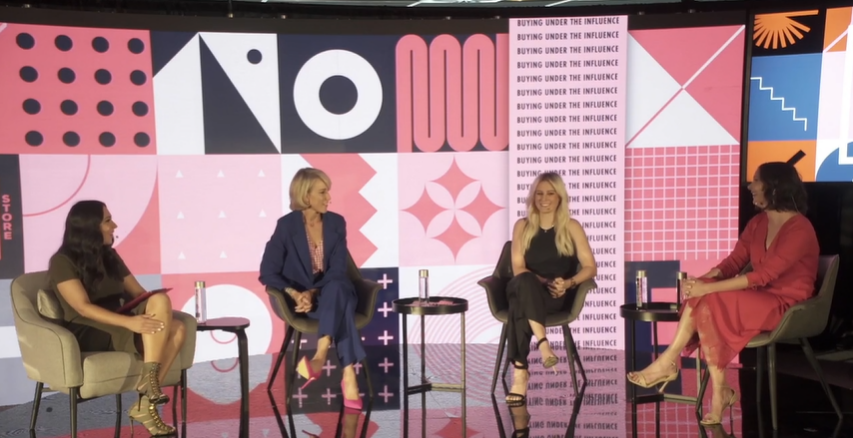
A panel containing some of the most powerful people in Influencer marketing, including founder of Sweaty Betty PR and one of Australia’s original influencers Roxy Jacenko; Sharyn Smith from Social Soup and Chair of Australian Influencer and Marketing Council; Head of Branded Content at Powered Studios Jessica Parry; and General Manager of Powered Studios Anna Quinn, tackled some of the issues facing the industry in a session ‘Buying Under the Influence’ at The Big ideas Store.

With the Australian Securities and Investments Commission (ASIC) recently cracking down on finfluencers — social media influencers who focus on money matters — about their legal obligations around what constitutes financial advice, marketers must do their research on what influencers best suit their brand.  

“We see it as a good thing. More regulation is only going to bring more trust into the industry,” says Sharyn Smith. “Regulation helps build credibility. With ASIC’s [finfluencer crack down], I saw a stat that said a third of all 18 to 21 year olds follow a finfluencer.

“We want to keep financial markets safe and we are working with ASIC to clarify what giving financial advice constitutes. But then…it’s also a good thing that young people can develop financial literacy so we want to find the right way to go about this and I think the industry will evolve and be better for it.”

“The biggest time in influencer marketing is taken up by finding the right influencer; you have to invest the time and money into that, and brand safety comes from if you are in a more regulated environment.”

The relative newness of the category and ongoing changes to regulation can make it a tricky environment to navigate without the expertise. Jessica Parry helps clients navigate through those regulatory areas through her role as Head of Branded Content at Powered and says Influencer marketing is playing catch up to the world of branded content in traditional media.

“We have always abided by regulatory rules in branded content,” says Parry. “We want to work with influencers who understand what they’re talking about, so, yes, great to be an finfluencer but what are your qualifications? How credible are you in the space? We’ll apply the knowledge that we have gained [from branded content], make sure they’re aware of the regulations and then obviously get legal advice if we need it.”

Parry agrees that Influencer selection is key to a successful campaign.

“We look for quality, and if the influencer has 200,000 followers but the content is average that’s not great,” she says. “They have to have quality content, we have to be able to trust that they will produce the content they say they will; engagement is important as is reach obviously, but I think the most important thing for us is to consider the client’s objective.”

For one of Australia’s original Influencers, Roxy Jacenko, ensuring brand safety with the creators she brings on is important – and she offers some sage advice for those wanting to connect with brands.

“There’s been lots of different matters [involving Influencers in media stories] that have come up over the course of the last 24 months, and I think the most important thing to remember as an influencer is to be smart when you’re using social media,” she says.

“I know as someone who employees people, the first thing we do is check on social media to see how they conduct themselves, and how you act on socials is going to affect how you sell yourself into a brand or an agency.”

With consumers demanding authenticity and Influencers that are on the same page as their own ideals and ethics, Sharyn Smith says she is now seeing the rise of the micro-Influencer.

“The smart ones are the ones locking in the brands that they believe in, and that align with their values,” says Smith. “While we all want the bigger Influencers if you want to elevate a brand, the powerhouse is now with the micro-Influencer, which we call the ‘potency’. The potency is in the niche now; we want to move beyond this generalized lifestyle.”

And while Jessica Parry would use micro-Influencers for an FMCG, a recipe or fitness campaign, she says the true power of Influencer marketing can be illustrated through harnessing the power of Nine’s suite of assets.

“I see Nine as the ultimate macro-influencer because we have so many brands that can communicate to different audiences,” says Parry. “We consider our audience, and the client expectation. We have that advantage of taking a soundbite from Instagram and expanding it in such greater detail across our assets. Where applicable we’ll use Nine talent and mix that up with Influencer talent.”