State of the Nation: Trust, Truth, and the Mental Dividend

Nine Publishing

Independence  |  stories that matter  |  commercial with integrity

PublishingLogos_Updated
SOTNLogo_reduced

Insights from Nine's State of the Nation Panel //

Trust, Truth, and the Mental Dividend

April 23, 2026

Panellists

SOTN_NewsEffect_JordanBaker

Jordan Baker

Editor, The Sydney
Morning Herald 

KatieDavies_HS

Katie Davies

Executive Editor,
nine.com.au

KylarLoussikian_HS

Kylar Loussikian

Business Editor, The Australian Financial Review 

The current media landscape presents a striking irony: while information is more abundant than ever, certainty has never felt scarcer.

Earlier this week, Nine Publishing’s Managing Director, Tory Maguire joined industry leaders to unpack the state of the nation, and the critical forces shaping our nation’s future. Between fluctuating interest rates and the AI revolution, for marketers and business leaders, the desire to cut through the "noise" has never been stronger. 

The Flight to Fact: A Transfer of Trust

Ash Thomas, Nine Publishing’s Commercial Director, opened the session by revealing insights from the "News Nation" research by ThinkNewsBrands, and how with the rise of AI-generated content and social media scepticism, 74% of Australians are deeply concerned about misinformation. 

The result? A significant "flight to quality." Trust in national news publishers has climbed to 78%, with two in five Australians now using mastheads like The Sydney Morning Herald, The Age and The Australian Financial Review as a verification layer to fact-check their social feeds. 

"For brands, this provides a massive mental dividend," Thomas noted. "Readers slow down and lean in when they engage with our journalism. Ads in these environments see 6.4 times higher unprompted recall than anywhere else on the web." 

Navigating the Wild Ride of Current News

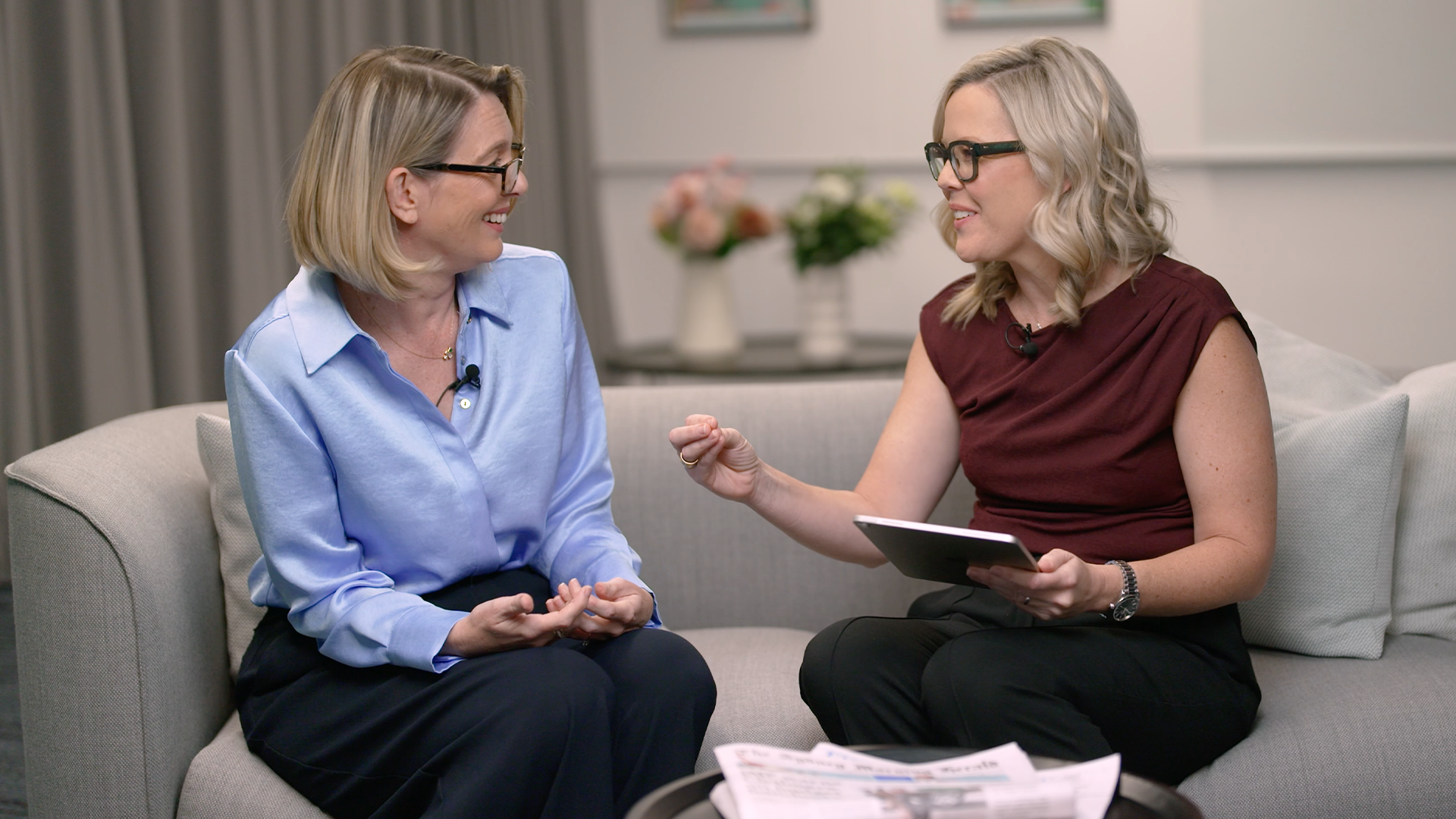
Host and Nine Publishing’s Managing Director Tory Maguire, took the room on a journey of her three-hour morning window, being served updates around global events, and how they can drastically change from moment to moment. Posing to the panel, how do newsrooms manage the sheer volume of global events, and curating desired content for each of their audiences?  

Jordan Baker, Editor, The Sydney Morning Herald, highlighted the success of live blogging, noting that readers are personally invested in global conflicts. “They are fascinated with what we are going to wake up to, as current economic events such as the fuel crisis raises curiosity – will we still be driving our cars in a few months?” The news cycle is treated as both essential information and a high-stakes narrative, and the SMH has adapted by putting significant resources into the live team because the current state of global events is so consequential. 

Katie Davies, Executive Editor, nine.com.au emphasised that in a 24/7 cycle, it’s not about being “first” anymore but being "right", which is essentially the only way to maintain the 10 million-strong audience that relies on Nine’s mass-reach platform and trusted voice. 

Economic Resilience and Structural Shifts

On the economy, Kylar Loussikian, Business Editor, The Australian Financial Review provided a nuanced take on the current "optimism bias" in the markets. Despite the Strait of Hormuz closures and inflationary pressures, the ASX remains resilient. However, Loussikian warned that the full impact of global supply chain disruptions, affecting everything from PVC piping to resin, has yet to fully trickle down to company bottom lines. 

The panel also touched on the growing sense of "intergenerational disenfranchisement." Jordan Baker pointed to the housing crisis and the rising cost of education as drivers for a shifting political landscape, where younger Australians are increasingly seeking immediate change and "plain speaking" from leaders, hence the rise in “grievance parties."

AI: A Tool, Not A Replacement

The conversation concluded with a forward-looking discussion on Artificial Intelligence. The consensus across Nine’s mastheads was clear: while AI is a powerful labour-saving tool for data analysis and research, it cannot replace "boots on the ground." 

"AI can’t go to a crime scene, and it can’t have background conversations with sources to find the real story," Baker said. The panel noted that as AI becomes more prevalent, the value of "soft skills" – EQ, relationship building, and critical thinking – will become the most sought-after traits in the workforce. 

Key Takeaways

Verification Matters: Australians are hungrier than ever to validate the "truth" of what they see on social media. The role of responsible journalism in Nine’s newsrooms, and being the trusted voice for the nation, will remain at the core of everything we do.

High Engagement: Cost-of-living and practical "help" content (from budget winners to value-tested products) are driving record engagement across all brands.

The Trust ROI: Partnering with Nine Publishing brands delivers an average ROI of $3.90 for every $1 spent, driven by the "transfer of trust" from journalism to advertising.

For more insights, Nine has launched The News Effect, a five-part video series exploring the impact of premium news environments on brand outcomes.

Consumer Pulse April 2026

ConsumerPulse_TT
IMAGE TILES 3

WHAT'S HOT AND WHAT'S NOT

April 2026

The national mood is predominately negative, with a strong drop in Net Positive Emotions while Net Negative Emotions increase. Despite this, Nine’s audience value their health, life enjoyment, and family security but also show increased importance for a world at peace. While 1 in 3 are feeling a mix of optimistic and cautious due global unrest and rising costs, 1 in 2 are still feeling financially secure; all fuelling opinions and conversations this month.

Portrait of beautiful senior couple on bike ride in autumn nature. Taking break, drinking water from sport bottle and fastening helmet.

3 April - 6 April, 2026

Inside this month’s Consumer Pulse dip

Mood of the Nation

The national mood

The national mood has further declined with a dramatic decrease in positive sentiment while negative sentiment has seen a significant uplift. The net negative mood has reached a record high, even surpassing levels seen during COVID. Australians are feeling frustrated, anxious and unsure, with these emotions seeing an increase month on month, reflecting a shift into a more negative mindset.

NOTE: For the best viewing experience on mobile, please view landscape.

Dominant mood indicators

The top moods are dominated by negative emotions, with only the bottom 3 of the top 10 feelings including the positive sentiment of calm, relaxed and hopeful. Frustrated, anxious and unsure top the list this month as the top 3 feelings. The dominance of negative emotions continues further down the list with pessimistic, annoyed, stressed, and sceptical, occupying the 4th, 5th, 6th and 7th  positions. The heightened negative sentiment across Nine’s audience reflects the escalating global unrest.

NOTE: For the best viewing experience on mobile, please view landscape.

NATIONAL MOOD BREAKDOWN

of the under 45 age group feel stressed

The top 5 feelings overall are dominated by negative emotions, a consistency across all age groups that reinforces the widespread impact of the current climate. However, those under 45 show stronger levels of stress (30%) and anxiety (38%) in comparison to older audiences. Additionally, males report strong levels of frustration (35%) and annoyance (30%), while females are more likely to be anxious (34%).

Burnout, stress and business woman in office feeling pain, exhausted or migraine. Headache, mental health and anxiety of tired female employee overworked, stressed and depressed in company workplace.

BRAND CONSIDERATION

Brands must move beyond mere visibility to provide a stability premium that counters widespread anxiety with reliability and combats demographic-specific frustrations through frictionless, hyper-accessible service.

Australian Values

Australians are secure but still concerned

When it comes to what matters most, health remains the most important value for Australians. This core value, along with enjoying life and family security, has continued to matter most year on year.

Other values have seen some slight shifts, with increased importance placed on a world at peace (up 9 percentage points) and national security (up 3 percentage points), reinforcing that the current global unrest is at the forefront of consumers' minds.

At the same time, the importance of well-being ideals such as mental health, and meaningful relationships through mature love and true friendship have seen a minor decline from the previous quarter.

NOTE: For the best viewing experience on mobile, please view landscape.

Conversation Starters

OUTLOOK ON THE YEAR AHEAD

of Nine's audience are feeling cautious

Outlook on the year ahead differs between demographics with older Australians feeling both optimistic and cautious  

While around 1 in 2 are feeling cautious about the year ahead, 1 in 3 are feeling a mix of optimistic and pessimistic. Younger audiences show a highly cautious outlook, while older audiences express a stronger mix of both optimism and caution. Cautious sentiment stems from global conflicts and instability, as well as increased financial stress due to price increases. Those experiencing a mixed outlook, attribute it to comfort and security within their personal world despite the instability globally, as well as some expressing the perception that the current issues are short term and will pass.

Young woman holding card in a cafe thinking

BRAND CONSIDERATION

To bridge the gap between global instability and personal security, brands should position themselves as reliable anchors that validate the caution of younger consumers through value-driven stability while tapping into the personal world optimism of older audiences by highlighting long-term resilience.

Financial security

of Nine's audience are feeling financially secure

Half of Australians feel financially secure despite global conflicts and rising prices dominating concerns 

Current concerns are dominated by global conflicts and their impact on fuel prices as well as national security (78%), and rising prices for essentials (70%). However, despite these concerns 1 in 2 are still feeling financially secure. Older audiences show less concern than those under 45 for high rent, rising interest rates, ability to buy a home and ability to afford non-essentials (e.g., holidays, dining out), reinforcing that they feel more financially secure and are likely to maintain their current spending habits. Additionally, females show higher concern over the cost of essentials, while males are slightly more concerned about political polarisation / social division.

BRAND CONSIDERATION

To succeed in a market defined by starkly different financial realities, brands must deploy a flexible value proposition that pairs empathetic, cost-conscious messaging for those feeling the squeeze with high-confidence, lifestyle-affirming engagement for the significant portion of the population whose spending power remains resilient.

Midsection of sommelier explaining about wine to smiling couple. Senior man and woman are sitting in restaurant for winetasting. They are spending leisure time.

NEWS CONSUMPTION

of Nine's audience are increasing the time they spend accessing news

Australians news consumption increased for 1 in 5, with Australians prioritising reliable and trusted sources 

In the last month, Nine’s audience expressed being more selective with their news sources (37%) and more reliant on trusted news sources (33%), highlighting the increasing importance Australians are placing on reliability and credibility. Additionally, news consumption has seen an uplift with 1 in 5 increasing the time they spend accessing news. The combination of these behaviours tells us that audiences are engaging more deeply with content they perceive as credible, rather than passively consuming a wide variety of sources.

Older audiences show strong engagement with news in comparison to younger audiences, with those under 45 tiring more so of the Middle East conflict coverage. Additionally, females are looking to counterbalance the prevailing negative mood, with 1 in 4 seeking out good news / lighter news stories.

A man holding a newspaper while standing outdoors in an urban environment. The image showcases leisure, focus, and information-seeking activities during a typical day in a city.

BRAND CONSIDERATION

In an era of rising news fatigue and heightened discernment, brands must prioritise placement within high-trust, credible environments to capitalise on deeper audience engagement.

GET IN TOUCH

Want to know more?

Contact your Nine representative directly, or fill out the form and we'll be in touch.

  • This field is for validation purposes and should be left unchanged.
AdobeStock_545905211

Tell your story in and around the content we know consumers are engaging with most
 

State of the Nation: The News Effect

This is The News Effect,

a brand-new series as part of our State of the Nation initiative. Episode One launches May 1, featuring Jordan Baker, Editor of The Sydney Morning Herald.

In conversation with the editors of our mastheads and our talented journalists – on The Sydney Morning Herald, The Age and The Australian Financial Review – we pull back the curtain on how they curate news for the modern reader, anchored in the latest ThinkNewsBrands 'News Nation' data.

Hear more from Nine Publishing's Managing Director Tory Maguire and Commercial Director Ashleigh Thomas as they run through what to expect.

Episodes

Episode One //

The Verification Layer

With Jordan Baker – Editor, The Sydney Morning Herald

With the continued rise of misinformation and social platforms acting as echo chambers, is it becoming impossible to differentiate fiction from fact?

ComingSoon1_Jordan
ComingSoon1_Jordan copy
ComingSoon2_Lisa
ComingSoon2_Lisa copy

Episode Two //

The Gen Z Curator

With Lisa Muxworthy – Head of Growth Content

There’s a massive misconception that Gen Z has "checked out" of traditional news, but the ThinkNewsBrands data tells a completely different story. They are, in fact, the demographic most inclined to pay for a news subscription.

Episode Two //

The Gen Z Curator

With Lisa Muxworthy – Head of Growth Content

There’s a massive misconception that Gen Z has "checked out" of traditional news, but the ThinkNewsBrands data tells a completely different story. They are, in fact, the demographic most inclined to pay for a news subscription.

ComingSoon2_Lisa
ComingSoon2_Lisa copy

Episode Three //

The Context Dividend

With Cosima Marriner – Editor, The Australian Financial Review

If you’re a brand who has been avoiding the headlines out of caution, you might be missing your biggest opportunity yet.
It turns out news journalism isn’t just safe for brands, it’s actually a superpower.

ComingSoon3_Cosima
ComingSoon3_Cosima copy
ComingSoon4_Rigas
ComingSoon4_Rigas copy

Episode Four //

The Attention Economy

With Aimie Rigas – Director, Audience Growth

Imagine your brand being remembered six times more effectively than it is right now. It sounds extreme, but the recent ThinkNewsBrands data says it's the result of ‘The News Effect’.

Episode Four //

The Attention Economy

With Aimie Rigas – Director, Audience Growth

Imagine your brand being remembered six times more effectively than it is right now. It sounds extreme, but the recent ThinkNewsBrands data says it's the result of ‘The News Effect’.

ComingSoon4_Rigas
ComingSoon4_Rigas copy

Episode Five //

The Misinformation Counterweight

With Luke McIlveen – Executive Editor, Metro Mastheads

In 2026, influence is everywhere, but integrity is rare. With Australians now flagging influencers as a significant misinformation risk, brands are starting to ask: are we building reputation on solid ground, or shifting sand?

ComingSoon5_Luke copy
ComingSoon5_Luke copy 2

Responsible Journalism

At Nine, we champion truth, depth and integrity, creating a premium environment to connect with engaged, high-value audiences in moments that matter.

For advertisers, responsible journalism is a business advantage. Explore our premium news brands and get in touch today.

Say hello

Let's talk about how Nine's premium publishing ecosystem can elevate your brand's impact.

READY TO CREATE? //

CONTACT //

Nine ad enquiries

This field is for validation purposes and should be left unchanged.

Automating the Admin to Reclaim the Art

Automating the Admin to Reclaim the Art

KarenCamus_headshot

Karen Camus

Director of Digital Ad Operations

13th April, 2026

In 2026, the AdOps mandate is to kill the grunt work and get back to the strategy

For years in this industry, we’ve worn "manual" like a badge of honor. We told ourselves that in the world of direct-sold media "hand-held" service meant high-touch, premium quality. But let’s be honest: there is nothing premium about a brilliant digital specialist spending four hours squinting at VAST tags or chasing a broken creative asset through a fragmented email chain.

At Nine, I oversee the execution of campaigns across a massive, complex, media footprint. My team is made up of some of the sharpest minds in the business. And yet, for too long, the industry has hired young guns only to turn them into data entry clerks.

We must recognise that true premium execution isn’t defined by the volume of effort required to check a creative spec, transcode tags, or traffic a line item.

We’ve been confusing manual labor with value, and it’s time to stop.

AI Learnings: Why Automating the Right Thing Starts with the Human

Real sophistication lies in a seamless pathway for digital execution that is wired directly to the advertiser’s goal: speaking meaningfully to our audience. That is the premium standard our clients expect, and it’s time we used technology to protect it.

The admin is the noise, filled with repetitive spec QA and fragmented email chains. This is where the operational friction hits hardest. When we use AI to handle the grunt work of direct sales, such as instant, automated creative validation the moment a file is uploaded, we are protecting the advertiser’s right to a flawless launch.

By offloading these mechanical checks to AI agents, we gain something far more valuable than time: cognitive headspace. This shift allows my team to move from being traffic wardens to delivery strategists.

The future of AdOps is about automating the admin so we can finally reclaim the art.

From Data Gathering to Intelligent Orchestration

The complexity of today’s digital landscape has outpaced the spreadsheet. A single direct-sold campaign at Nine now breathes across a sophisticated ecosystem: the massive reach of 9Now, the high-impact environments of The Sydney Morning Herald, The Age, and The Australian Financial Review, and the premium streaming of Stan and HBO Max.

Historically, simply glimpsing campaign performance across these silos was a manual marathon, hours spent extracting, cleaning, and organising data just to understand the baseline. Today, automating the right thing means moving to intelligent orchestration. AI removes the manual burden of tracking delivery and replaces it with a unified, ‘full picture’ view. This allows us to ensure an advertiser’s relevance is maintained, whether a viewer is immersed in a live cultural sporting moment like the Australian Open, streaming a primetime tentpole, or engaging with a breaking news exclusive.

The Humanity Moat

However, let’s be clear: AI operates in a vacuum. It can validate a technical spec in milliseconds, but it cannot understand the "why" behind a brand’s legacy or the subtle nuance of a breaking news cycle. In direct-sold advertising, clients are buying impressions; but they are also buying our judgment. They are buying the right to have an expert say: “The data suggests a pivot, but my contextual understanding of this premium environment says we stay the course.”

The New AdOps Mandate

The goal of automation at Nine is to sharpen the mind. We are building a future where our specialists aren't masters of platform user interfaces, but masters of the machine. By using AI to receive the right information at the right speed, we allow our people to do what they do best: lead with empathy, think with context, and own the craft of advertising that resonates human-to-human.

Read More From Our Digital Experts

DuaneHatherly_FeatureIMG

OPINION

The Privacy Pub Test: Nine, WPP & FreeWheel on AdTech Evolution

Duane Hatherly, Head of Editorial - Mediaweek

StephDrabble_FeatureIMG

OPINION

The Great Decoupling: Navigating the Post-Click Era of Search

Stephanie Drabble, Director of Digital Product Commercialisation & Strategy

Looking for more efficient, effective and transparent ways to grow your business? Enquire today.

  • This field is for validation purposes and should be left unchanged.

State of the Nation with Genevieve Quigley, Editor, Sunday Life

Nine Publishing

Independence  |  stories that matter  |  commercial with integrity

PublishingLogos_Updated
SOTN

Genevieve Quigley - Editor, Sunday Life

Our mission is simple: to elevate our readers’ day. We do that through a curated blend of style and substance. Whether our readers are diving in over a morning coffee or winding down on Sunday night with a glass of wine, Sunday Life is their ultimate passport to ‘me-time’. We don’t just report on the lifestyle, we define it.

Say hello

Let's talk about how Nine's premium publishing ecosystem can elevate your brand's impact.

READY TO CREATE? //

CONTACT //

Nine ad enquiries

This field is for validation purposes and should be left unchanged.