A Wealth of Knowledge – AFR’s Cosima Marriner and Lucy Dean

Nine Publishing

Independence  |  stories that matter  |  commercial with integrity

PublishingLogos_Updated
SOTN

A WEALTH OF KNOWLEDGE//

AFR's Cosima Marriner and Lucy Dean

Join Editor Cosima Marriner and Wealth Reporter Lucy Dean as they analyse the forces shaping 2026. From the "Australian Dream" being redefined by a $3.5 trillion wealth transfer to the impact of AI on national productivity, Cosima and Lucy provide a roadmap for decision-makers. Plus, all will be revealed about a pivotal story the AFR is watching this year - one that will define the "State of the Nation."

CosimaMarriner_HS

Cosima Marriner

Editor, The Australian Financial Review

LucyDean_HS

Lucy Dean

Wealth Reporter, The Australian Financial Review

THE EXPERT LENS//

Navigating the New Australian Economy

EVOLUTION OF THE MASTHEAD//

Leadership and the Modern The Australian Financial Review

“For over 70 years, The Australian Financial Review has been the 'record of truth' for the Australian establishment, historically a very male-dominated space. How are you ensuring the masthead reflects a 2026 Australia that is more diverse in its wealth and leadership than ever before?”

Cosima: For a long time, the positions of power in Australian society were occupied by men, and the AFR reflected that both in the way it covered things and in terms of its audience. But luckily, more women are now taking up leadership positions in society, and we’re to covering the key leaders across all facets of society. This ranges from our day-to-day reporting, ensuring we seek out female voices, recognise their success and highlight the challenges they still face, to more high-level initiatives such as our Women in Leadership Awards that recognise the success of women at the top echelons of Australian society.   

We’re also continuously focused on improving the gender balance in our newsroom. Most of our senior editors and key columnists are women, and the economics correspondent. We’ve also hired a new batch of smart young, talented trainees. All of this ensures that we have many more fresh perspectives coming into our newsroom and helping to shape our reporting.   

Another key focus for the Financial Review is broadening our offering to appeal to more people. With a big proportion of our audience always coming for our core topics of business, finance and politics, they’ll now stay for the other content – wealth, lifestyle, cultural offerings. And similarly, that breadth of offering attracts a new cohort of readers that hopefully then become real core AFR types.  

“The AFR has moved from being a traditional daily newspaper to a multi-platform powerhouse. In 2026, what does a Financial Review reader look like? Is it still the C-Suite, or has the net broadened to a younger, more activist investor class?”

Cosima: Definitely has. The traditional AFR audience was the C-Suite and those aspiring to be in it. But in the last decade that has really shifted, as the younger generations are much more entrepreneurial. I’m proud that the AFR audience is evenly spread across all the age brackets, from young people starting out in their careers, seeking advice on how to get ahead in the workplace and how to grow their wealth, to retirees who are looking at protecting savings while still having a great lifestyle.

And while our audience is becoming more diverse, there’s a core tenet that unites them. They’re all very performance oriented. They are looking to the AFR to help them succeed in all facets of their life. whether it’s making them smarter, advancing their career, building their wealth, or enhancing their well-being and fitness.

As our new campaign says, it’s not for everyone. But for those people who want to get ahead in life, the AFR is absolutely for them.

“Cosima, you have taken the helm during a period of intense economic transition. What is the one structural or cultural shift you’ve implemented at the paper that you feel best prepares us for the next decade of Australian business?”

Cosima: I don’t think it’s going to surprise you when I say the key trend that’s going to shape Australian business over the next decade is artificial intelligence, the adoption of it, the use of it, and how that plays out across society in terms of the jobs people do and the way people run their lives. The AFR is an unashamedly digital-first masthead. Our audience are mad early adopters of technology and we see that with artificial intelligence as well.

Likewise, our journalists are very interested in how AI can help them work more efficiently and augment their journalism, and we encourage that curiosity and investigation.

Our journalism will always be created by a human and produced by a human, but there are ways that AI can help when you’re doing your journalism.

Whether it’s using AI to synthesise large amounts of data or research material, or write those pesky SEO headlines that a machine can do way better than many humans.

THE GREAT WEALTH TRANSFER//

A $3.5 Trillion Handover

“Lucy, you’re reporting on the $3.5 trillion transfer suggests we are standing on a precipice. How do you see this massive movement of capital rewriting the ‘Australian Dream’ in 2026, particularly for those who aren’t on the receiving end of an inheritance?”  

Lucy: One of my best read stories last year was where I took two hypothetical 24- year-old-graduates. They graduate and get well-paying jobs. But in this scenario we gave one graduate a $100,000 gift from the “Bank of Mum and Dad”, and the other graduate didn’t get anything. We tracked them over the course of their lives. The first graduate got into the property market in about two years. The second graduate got in about eight years later. By the time they were 65 the first graduate was worth about $11 million. The second about $9 million. They both did well, but that’s still a $2 million difference that came from a $100,000 gift from their parents.

The fact that this article did so well told me there’s a huge amount of interest both from the parents who are navigating how to pass down wealth, and from the people who aren’t expected to receive anything, wondering how do they build wealth in a world where the property market is really difficult now to enter if you don’t have that family support.

What we’re seeing, in terms of that “Australian Dream” story, is that people are investing more in ETFs and cryptocurrency, and redefining what it means. But to what extent are they redefining it with hope? And to what extent are they being forced to redefine it because the things that they actually want, they just cannot achieve anymore?

“We often focus on the numbers, but what about the values? Are you seeing a fundamental shift in how the next generation wants to use their wealth compared to the Post-War and Boomer generations who built it?”

Lucy: There isn’t a lot of comprehensive data in terms of the way younger people are thinking about inheritances. But anecdotally, they have a real focus on the idea of building intergenerational wealth.

They seem to really understand the value of what they’ve been given, perhaps due to an emotional element, where they are looking to structure it so their children can benefit.

We also know Baby Boomers and Gen X receive inheritances, and they are receiving the bulk of the money at this stage, with about 65 per cent flowing to women, due to “the eldest daughter effect”, where the eldest daughters are often lumped with responsibility and often are custodians of the money. We know women tend to be more interested in philanthropy and investing in female-backed businesses, and they’re more interested in bringing their family members along for the journey.

“Inheritance is often a private family matter, but at this scale it’s a national economic issue. How should the government be looking at this transfer in terms of productivity and the ‘State of the Nation’?”  

Lucy: Looking at AFR’s James Thompson’s article from November 2025, at the inheritocracy and the Rich List, he found that of the 161 billionaires on the list, 40 had inherited the business from their parent or had a parent on the Rich List.

Speaking to Alan Schwartz on the concept of “Creative Destruction”, which is the idea that innovative technologies will eventually replace inefficient ones, Schwarz is worried that as more wealth is held in the hands of people who got it from their parents, there’s all this infrastructure built around keeping that wealth in those families. So the likelihood of creative destruction occurring and new businesses being built that oust the old businesses starts to deteriorate, and we end up in a society where hard work isn’t as rewarded as it once was – that dynamism isn’t taking place, that innovation isn’t happening. It’s a bit of a depressing way of looking at it, but I think there is something to it.

So we need to be thinking seriously about the way this wealth transfer is taking place and what it’s incentivising in terms of ideas, work ethic, and where we’re putting our money.

Collage real estate selling or rental banner. Halftone hand holds house keys and giving, receiving golden coins from other hand. Collage design. Concept of real estate agent. Vector.

THE 2026 STATE OF THE NATION//

Dynamic Exchange on the Australian Landscape

“If you had to pinpoint the biggest challenge facing the Australian economy in 2026, one that perhaps the general public isn't talking about enough, what would it be?”

Cosima: Our biggest challenge is lifting productivity. That might sound like a bit of a boring, dry economic term, and the average person might think “productivity” and shut their ears off, but they know what that means when they see their living standards going backwards. Making the economy more productive is key to growing the prosperity of Australia and lifting everybody’s living standards.

Making the economy more productive is key to growing the prosperity of Australia and lifting everybody’s living standards.

Now the government has belatedly acknowledged that we’ve got a productivity problem, and they’re promising a big package of reform in the budget in May to improve this. We’ll wait and see if that happens.

“With the wealth transfer comes a transfer of influence. Do you think 2026 marks the year where Gen Z and Millennial priorities finally start to override the traditional political and economic agenda?”

Lucy: I hope so, as a Millennial, but I’m not sure. I wrote a story a couple of years ago where I spoke to Paul Bassat and Danielle Wood, about where there is a shift in the conversations we’re having. You know, a Boomer might say “You got to pull yourself up by your bootstraps and have a go”, but what’s happening now is that those baby boomers are realising their kids can’t afford to live near them, if we don’t do something about the housing market. This could start to shape some of the appetite among the electorate for actual reform.

We’re talking about the CGT discount now as Treasury is considering reducing it. If property investment becomes less lucrative there are fewer property investors, and maybe first home buyers have a bit more of a crack at getting into the market. It will be interesting to see what happens with that in the federal Budget.

But young people are ambitious, they want to achieve a lot, and they’re engaging with our content on investing and side hustles. They’re not giving up.

But there is a sense that the political debate isn’t matching the urgency of the problem.

“Cosi, as Editor you have a bird’s-eye view of the country’s productivity and policy. If you had to describe the mood of Australia in 2026 in three words, what would they be? And does the AFR have a role in shifting that mood?”

Cosima: Polarised, uncertain, and short-term.

Polarised means a fracturing of social cohesion, that people aren’t feeling united in their circumstances in life, in the things they believe in. They’re uncertain because they feel like we’ve had a really great past and they’re uncertain that their future will be as positive. That uncertainty is leading to short-termism in the way people think about things because they are trying to cling on to their prosperity.

The AFR definitely has a role to play in shifting that mood. Our readers are key decision makers with their hands on the levers of the economy and society. While part of our job is to highlight the challenges we face as a country and to hold policy makers accountable on poor decisions, an equally important role is for us to chart a path forward, and to come up with solutions for the country's challenges.

“You’re looking at the ‘Great Wealth Transfer’, but we’re also in the middle of a ‘Great Digital Transfer’ with AI. How do you think the intersection of massive inheritance and AI-driven finance will change the ‘State of the Nation’ for the average Australian worker?”  

Lucy: There are two massive trends intersecting and it can go two ways. The first one, which Danielle Wood from the Productivity Commission also believes, is that AI will be a great thing for productivity and will allow a whole lot of young people who can’t build businesses or build wealth through property to get a start.

The other side of it is what happens to those entry-level jobs, the unglamorous, hard-yakka stuff you must learn how to do to get into the room and pick up the skills and figure out what it means to have a full-time job and how to deal with people. I think a lot of those jobs are going to disappear. So there’s a big conversation to be had around making sure that young people have the opportunities they need to meet people, to be paid, and to build careers. That first rung is starting to splinter a bit.

THE AFR BREAKS A PIVOTAL STORY//

Defining the "State of the Nation" this year

What is the one story the AFR will break this year that defines the "State of the Nation" more than any other? 

Cosima: I don’t know what that story will be yet. At the end of the year, I would love to sit here and reflect on the government making some big important economic reforms that boost our living standards, redress the intergenerational inequality that people are experiencing, and secure Australia’s long-term prosperity.

Lucy: I can talk about what we’ll be tracking closely, intergenerational wealth transfer and the way that intersects with opportunity and hope. Referencing an ANU study, its annual social cohesion report where they ask people, “To what extent do you agree that Australia is a land of economic opportunity where hard work brings a better life?” In 2013, the percentage of people who said “yes”, was 82 per cent. But by 2024, that had fallen to 61 per cent.

The biggest story would be the one about a meaningful suite of reforms that actually that give younger generations a bit more hope that they can have a go.

Say hello

Let's talk about how Nine's premium publishing ecosystem can elevate your brand's impact.

READY TO CREATE? //

CONTACT //

Nine ad enquiries

This field is for validation purposes and should be left unchanged.

State of the Nation with Lauren Sams, Editor, Fin Magazine

Nine Publishing

Independence  |  stories that matter  |  commercial with integrity

Logos_2
SOTN

Lauren Sams - Editor, Fin Magazine

Here at Fin, we create trends, we have influence, and we lead the pack. We think of Fin like a fabulous dinner party, where every guest brings something bold, cool and different to the table. We can’t wait to unpack how your brands can connect with our affluent and influential audiences through the luxury bible pages of Fin magazine this year.

Say hello

Let's talk about how Nine's premium publishing ecosystem can elevate your brand's impact.

READY TO CREATE? //

CONTACT //

Nine ad enquiries

This field is for validation purposes and should be left unchanged.

State of the Nation with Melissa Stevens, Editor, Good Weekend

Nine Publishing

Independence  |  stories that matter  |  commercial with integrity

Logos_2
SOTN

Melissa Stevens - Editor, Good Weekend

Good Weekend is long-form journalism at its best, delivering content with detail and depth to an audience who turn to us for the definitive pieces about the people or issues which are part of the national conversation. In 2026, Good Weekend has debuted a new format with all the crowd favourites returning, plus a brand-new column, Life Lessons, giving sharp and smart solutions to some of the nation’s daily dilemmas.

Say hello

Let's talk about how Nine's premium publishing ecosystem can elevate your brand's impact.

READY TO CREATE? //

CONTACT //

Nine ad enquiries

This field is for validation purposes and should be left unchanged.

State of the Nation with Amanda Upton, Client Director, Luxury & Travel

Nine Publishing

Independence  |  stories that matter  |  commercial with integrity

Logos_2
SOTN

Amanda Upton - Client Director, Luxury & Travel

The future of travel is incredibly dynamic. While print remains core, the shift towards data-driven insights will continue to play a crucial role.

We’ve harnessed this to personalise campaigns and shape our content, as seen with the launch of the highly successful AFR Magazine's ‘Highflyer’ franchise – and there is more launching this year.

Say hello

Let's talk about how Nine's premium publishing ecosystem can elevate your brand's impact.

READY TO CREATE? //

CONTACT //

Nine ad enquiries

This field is for validation purposes and should be left unchanged.

Nine Publishing – Responsible Journalism

HeaderImage_01

In a world overwhelmed by misinformation, audiences are searching for trusted, independent journalism. At Nine, we don’t just chase clicks. We champion truth, depth, and integrity, creating a premium environment to connect with engaged, high-value audiences in moments that matter.

For advertisers, responsible journalism isn’t just an ethical choice, it’s a business advantage. Our premium news platforms provide a trusted context that enhances effectiveness, with audiences more receptive to messaging when it’s delivered within credible content.

Intro Image2
Tory Circle

A NOTE FROM //

Tory Maguire

Managing Director, Publishing - Nine

Our unwavering commitment to truth, accuracy and integrity ensures we deliver balanced, trustworthy journalism that holds the powerful to account. We prioritise stories that matter over those that simply drive traffic, delivering commercial outcomes with integrity. Journalism is both our responsibility and our privilege - one that earns the trust of our audiences every day.

AT THE HEART OF EVERYTHING WE DO //

Nine’s commitment to responsible journalism is built on 3 core pillars that set us apart

Independence

We are committed to fearless independent journalism that upholds accuracy, fairness and balance across print and digital.

Stories that matter

Australians turn to us for trusted news, sharp analysis and expert opinion – cutting through the noise in moments that truly matter.

Commercial with integrity

Our integrity ensures a trusted environment for both audiences and advertisers. We prioritise credibility over commercial influence, fostering meaningful brand connections that resonate with engaged readers.

A legacy of trust

Proven impact

An audience that matters

Marketing with integrity

Ads within news content are 60% more trusted and deliver 2x the engagement of social platforms

Source: AdTrust 2019, News MediaWorks and NewsWorks Trust Report 2023, Future of News Report, Stagwell 2024.

EFFECTIVENESS //

Our multi-platform approach amplifies effectiveness

Print

High impact placements in The Sydney Morning Herald, The Age and The Australian Financial Review provide a premium attention-driven experience with deep audience trust.

Digital

Our online platforms drive scale and precision, from immersive native storytelling to high-impact digital takeovers, ensuring maximum visibility and engagement.

CASE STUDIES //

Responsible journalism in action

At Nine, responsible journalism creates the perfect foundation for responsible advertising – a space where brands can engage, persuade, and drive action with confidence.

A help company

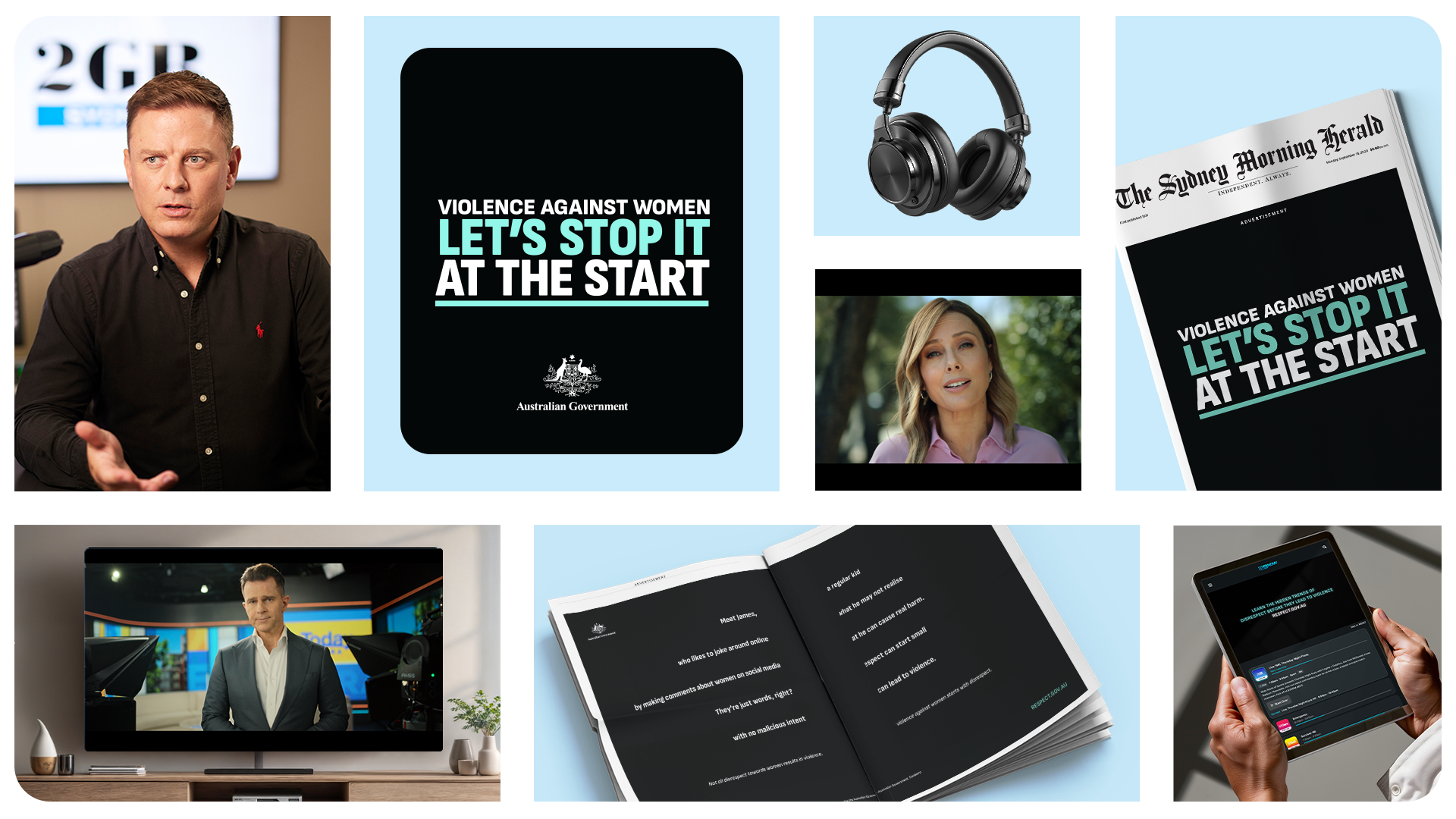
Let's stop it at the start

FINANCIAL FITNESS

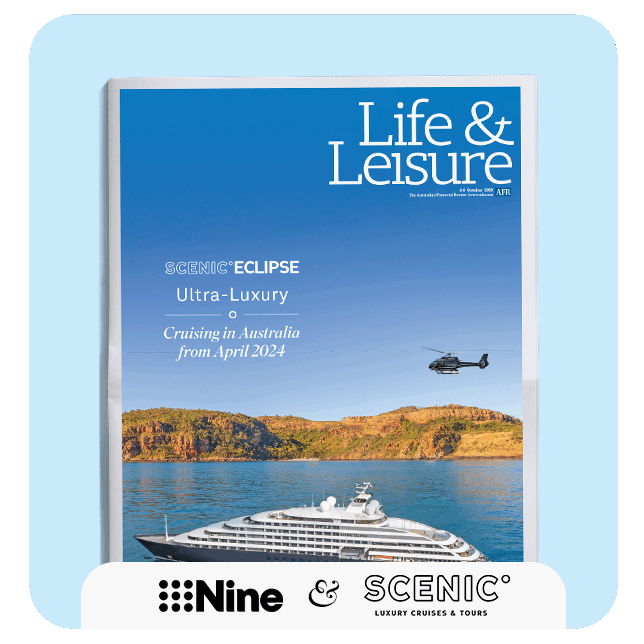
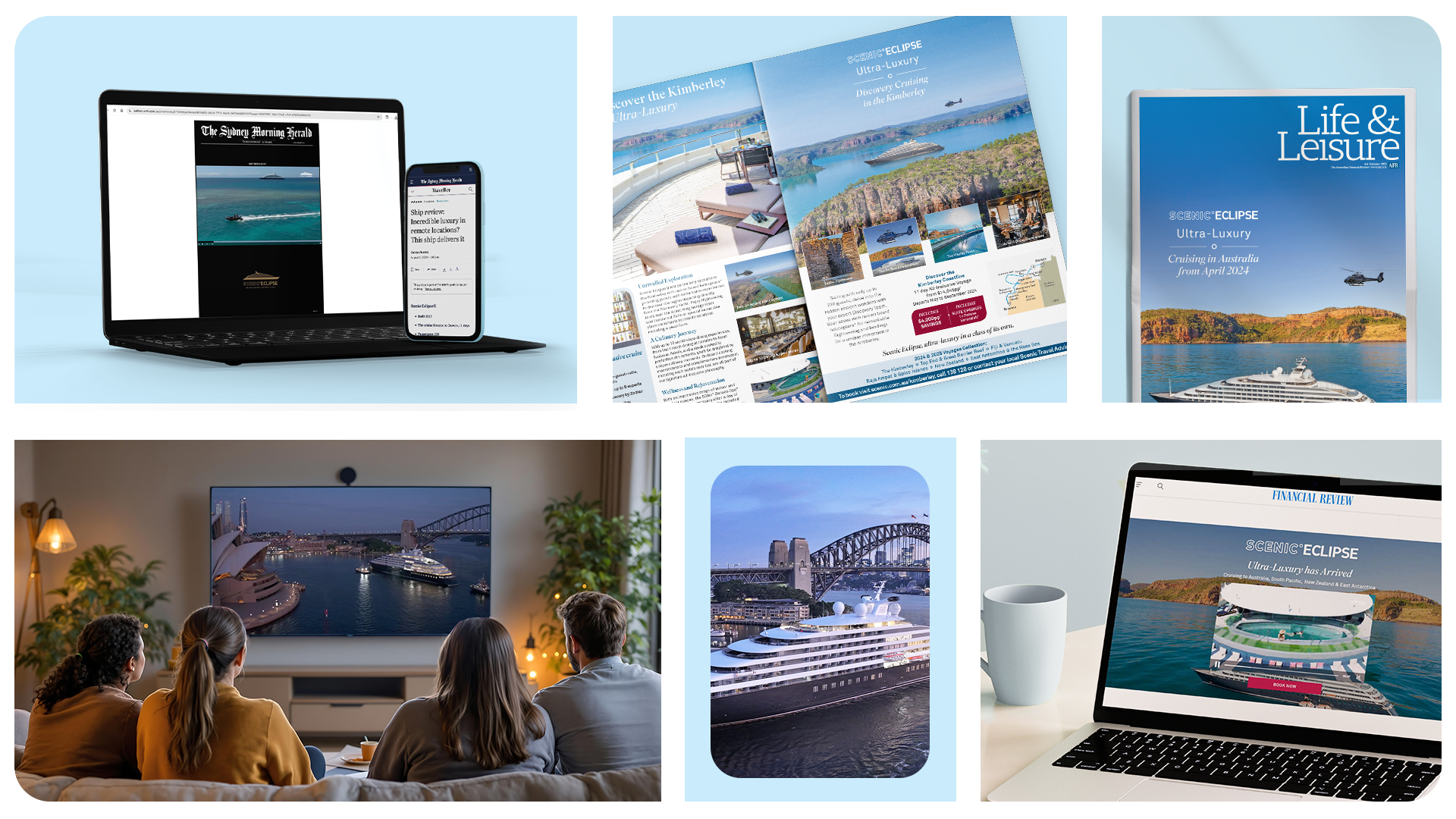
Capturing the Ultra-Luxury Traveller

Say hello

Let's talk about how Nine's premium publishing ecosystem can elevate your brand's impact.

READY TO CREATE? //

CONTACT //

Nine ad enquiries

This field is for validation purposes and should be left unchanged.

Inside Nine’s Travel Trends Index: Empowering brands with data-driven insights

TravelxToday
headshot

Inside Nine's Travel Trends Index: Empowering brands with data-driven insights

In the ever-evolving landscape of travel, understanding the preferences and behaviours of Australian travellers is crucial for delivering content that resonates far and wide. To get to the heart of these insights, Nine recently launched the Aussie Travel Trends Index – a survey meticulously crafted to explore the travel habits and aspirations of Australians.

9Travel Editor, Kristine Tarbert, gives us an in-depth look at how this survey was conducted, the key findings, plus what it means for content creators and marketers alike.

The method behind the insights

The Aussie Travel Trends Index stems from a robust survey conducted across Nine's diverse audience - spanning TV, digital, print, and radio platforms. Highlighting the breadth of respondents and with a focus on understanding the heartbeat of Australian travel, Kristine explains:  

With over 1,100 respondents, the survey was carefully weighted to ensure a nationally representative sample of Australians aged 18 and over. We asked a range of questions - everything from spending habits, to favourite travel spots and beaches as well as honeymoon and camping destinations.

The goal was twofold: firstly, to ensure our content aligns with the top interests of our readers, and secondly, to equip our commercial team with data-driven insights to facilitate more informed conversations with our partners. By understanding what excites our audience, we can better serve both their needs and the interests of our advertisers.

Shaping content with purpose: How insights drive cross-platform synergy

The ability to craft content that resonates on a broad scale, while still being finely tuned to specific audience segments, is a testament to Nine’s cross-platform capabilities. This is especially crucial in today’s media landscape, where delivering tailored content that truly resonates with audiences is key to maintaining high engagement.

“The survey insights are instrumental in shaping the content across Nine's platforms, particularly for 9Travel and the Today Show. By identifying the destinations and types of holidays our audiences are interested in, we can tailor our content to provide them with the inspiration and information they most need and want. 

Whether a detailed guide to a trending destination or tips for planning a perfect camping trip, our content is perfectly aligned with our audience's travel plans.” 

Diverse audiences, unique preferences

The results showcased a clear appetite for travel in Australia, with Eastern Seaboard locations amongst the most popular, and Tasmania a surprise winner across various categories. Delving into the differences between the 9Travel and Today Show audiences, Kristine revealed some fascinating distinctions.

“While there are similarities, each audience has its own unique appetite for travel. 9Travel visitors, for example, showed a greater interest in camping and are willing to spend a bit more on their adventures. Meanwhile, Today Show viewers show a stronger preference for classic destinations like the Gold Coast, especially those under 45. 

Internationally, the USA, Hawaii, and Fiji were popular choices for Today Show viewers, while Europe remained the top choice overall for Nine’s audience.” 

The most significant takeaway

In a challenging economic climate, one thing remains clear: Australians passion for travel is unwavering.

Despite the current cost of living pressures, travel remains front of mind, and in fact a priority for many. The growth we’ve seen in 9Travel’s audience since we launched in February, having hit over 1 million users in June, is a testament to this. Our ability to stay on top of trends, and truly understand what our readers are interested in is second to none.” 

Leveraging the Travel Trends Index for campaign success

For brands looking to connect more deeply with their target audience, the insights from the Travel Trends Index are a goldmine. Whilst informing Nine’s content strategy across platforms like 9Travel and the Today Show, we can also equip brands with the knowledge needed to craft effective campaigns that truly align with the current travel landscape. Whether it’s tapping into growing interest in domestic travel or aligning with the top international destinations, these insights empower brands to make more informed decisions.


Source: Ipsos iris Online Audience Measurement Service July 2024, Age 14+, PC/laptop/smartphone/tablet, Text only, Brand Group, Travel (News Only) Tier 2 Category, Audience (000s), Avg Mins PP, Page Views (000s).

Looking to connect with Nine's travel enthusiasts? We'd love to hear from you.

  • This field is for validation purposes and should be left unchanged.

Upcoming Publishing Features

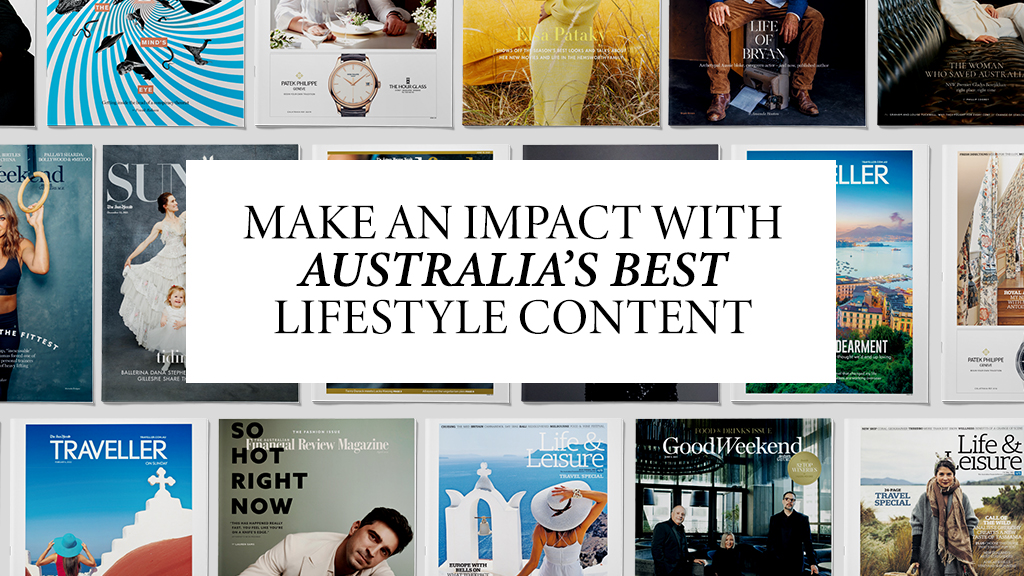
Make an impact with Australia's best lifestyle content

Our readers are primed for indulgence – new opportunities available across Nine’s leading publishing assets

Enrich your marketing campaign with a publishing partnership with Nine.

Our readers are primed for indulgence and ready to spend. Whether it’s styling their seasonal wardrobe, planning a much-needed getaway, making home improvements, finding inspiration in arts and design or immersing themselves in the gourmet food world, there is plenty of opportunity to wrap your brand around our upcoming special issues. 

Across Good Weekend, AFR Magazine, Sunday Life, Traveller, Life & Leisure, Good Food and Fin Magazine, there is an abundance of opportunity to engage our readers with your brand message.

LIFESTYLE & DESIGN

AFR Magazine //

Rich & Rich List Supplement

On Sale: Friday 29th May

This is a magazine that draws upon months of research to track the changing face of wealth in Australia - who has it and what they are doing with it. It's an issue that creates headlines around Australia and is beloved by our readers.

Featuring profiles of the most intriguing and most successful entrepreneurs, and set with AFR Magazine's sumptuous mix of fashion, design, food and travel, this is one of our biggest issues of the year. The Rich List itself will appear in a seperately bound magazine.

Supplement Booking Deadline: Tuesday 7th April
Supplement Material Deadline: Wednesday 22nd April

Main Issue Booking Deadline: Wednesday 15th April
Main Issue Material Deadline: Wednesday 29th April


Rich List Cover

Sunday Life //

Mother's Day Gifting

On Sale: Sunday 3rd May

Mother's Day is an important date on our Sunday Life calendar which is why we give our readers and valued advertisers the chance to double dip.

On May 3, don’t miss our fabulous Mother’s Day Gift Guide. Packed with inspiration, this year will be filled with gorgeous gifts. From the simple to the splendid, you will find the most creative ways to say I love you.

Booking Deadline: Thursday 9th April

Material Deadline: Thursday 23rd April

Sunday Life Mother's Day

Fin //

Winter

On Sale: Saturday 13th June

The winter season isn't just a change in temperature, it's a shift in mindset.

In a world of fast trends, Fin Winter Magazine will provide our affluent readers with the 'why' and 'what' offering a sophisticated lens on the upcoming season across travel, fashion, motoring and luxury, in a world that doesn't stop moving.

Booking Deadline: Thursday 30th April

Material Deadline: Wednesday 13th May

Fin Winter

TRAVEL

Life & Leisure //

Where to from here?

On Sale: Friday 5th & Saturday 6th June

Our writers are columnists travel the world to answer this important question - where to from here? The Life & Leisure Travel special draws on all of L&L's specialities - design, fashion, food, drinks, wellness and culture - and takes them to unexpected places. Printed in gloss, the edition delivers the new hotels, emerging destinations and best itineraries to set the agenda for the next year in travel.
Booking Deadline: Friday 8th May

Material Deadline: Friday 15th May

L&L Travel Cover

TRAVELLER //

Americas

On Sale: Saturday 11th April

There is America, and then there is the Americas. Combined, North, South and Central America make for a powerful, and in parts somewhat overlooked, travel proposition, as illustrated by this special edition of Traveller which coincides with the lead up to the 2026 FIFA World Cup. Of course, joint hosts of the mega event, US, Canada and Mexico, feature prominently in this edition though how can we forget the likes of Argentina, Brazil, Chile and Peru, and the rest of Latin America’s exotic allures?

Booking Deadline: Monday 6th April

Material Deadline: Wednesday 8th April

Travellers Americas

Good Weekend //

Dream Destinations

On Sale: Saturday 23rd May

Australians have long looked to the horizon for inspiration,
and now, the world feels more open and inviting than ever.
In our highly anticipated annual Dream Destinations Issue,
Good Weekend traverses the globe to bring readers the
definitive guide to life beyond our borders.​

​From deeply personal dispatches by our most renowned
writers to breathtaking glimpses of the world’s most
stunning experiences, this issue is a celebration of the
journeys that stay with us long after we return home. It is an
invitation to dream, a prompt to plan, and a testament to the
enduring power of global discovery.

Booking Deadline: Friday 1st May

Material Deadline: Wednesday 13th May

Good Weekend Dream Destinations

DIGITAL

Sunday Life & Good Weekend //

Collections

Collections invites our users to engage in an immersive and enhanced relaxing magazine experience, digitally. Collections at Nine Publishing is a hand-selected curation of content pieces into a series with the ability to integrate client brands into a contextually relevant environment. Brands have the opportunity to own this new lean-in digital 'Collection' experience and align to the premium brands of Publishing at Nine​.

Contact your Nine representative for more information. 

Screens

Find out how your brand can leverage the power of Nine's Publishing assets to drive business outcomes. Request more information.

In Conversation With Kerri Elstub

InConvoKerriTitleHeadshot
nine.com.au_Logo_B&W_white

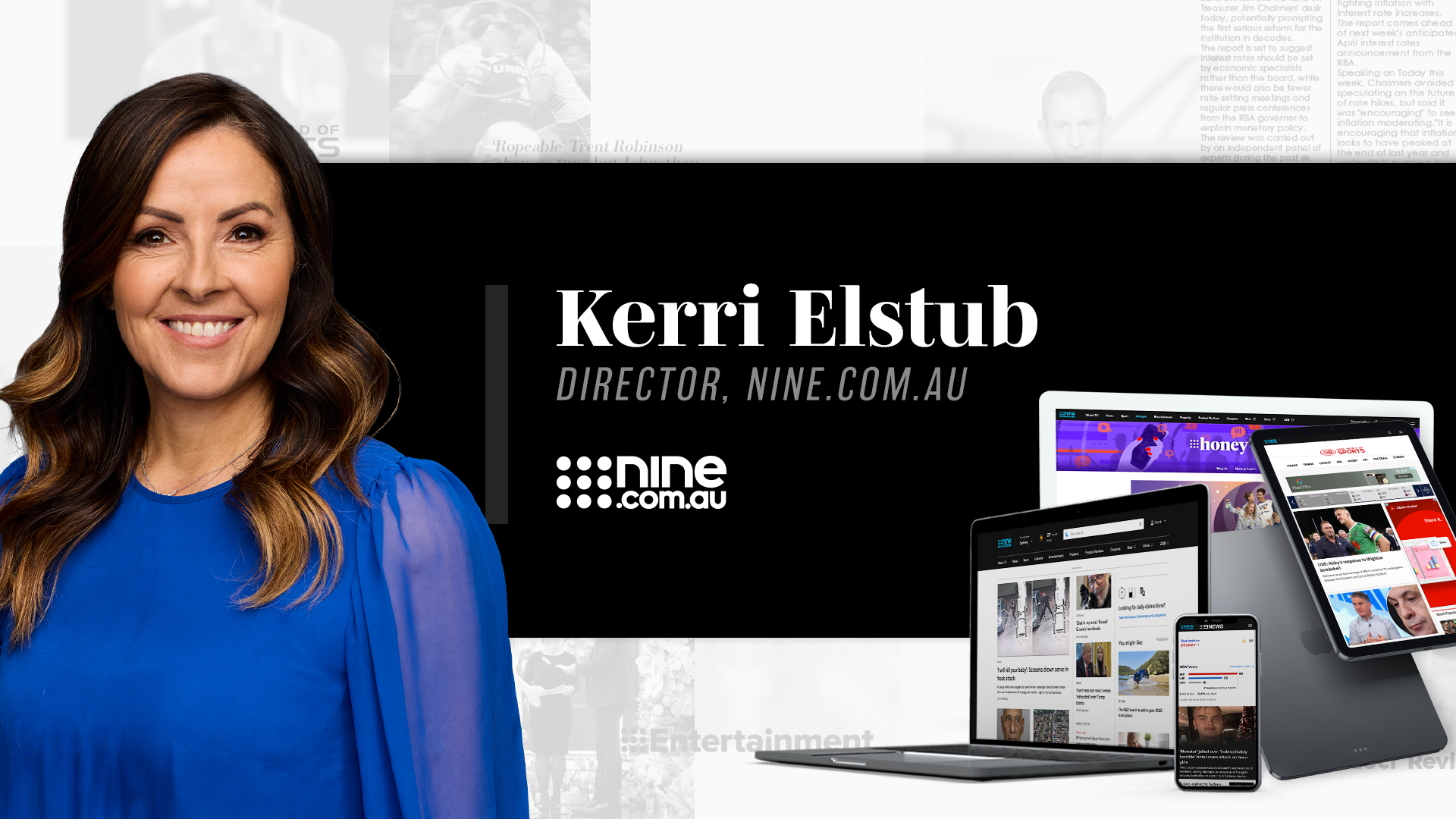
Kerri Elstub is one of the rarest types of employees that can be found in 21st Century Australia: the loyal kind.

Now in her 23rd year at Nine, Elstub cut her teeth for a few years in talkback radio before switching employers for the first and only time in her life.

“I’m a Nine person through and through,” she tells B&T proudly. “I spent about 18 years in television and absolutely loved it. Everything from the TODAY show, Weekend Today, to the Kerri-Anne Show and then A Current Affair.”

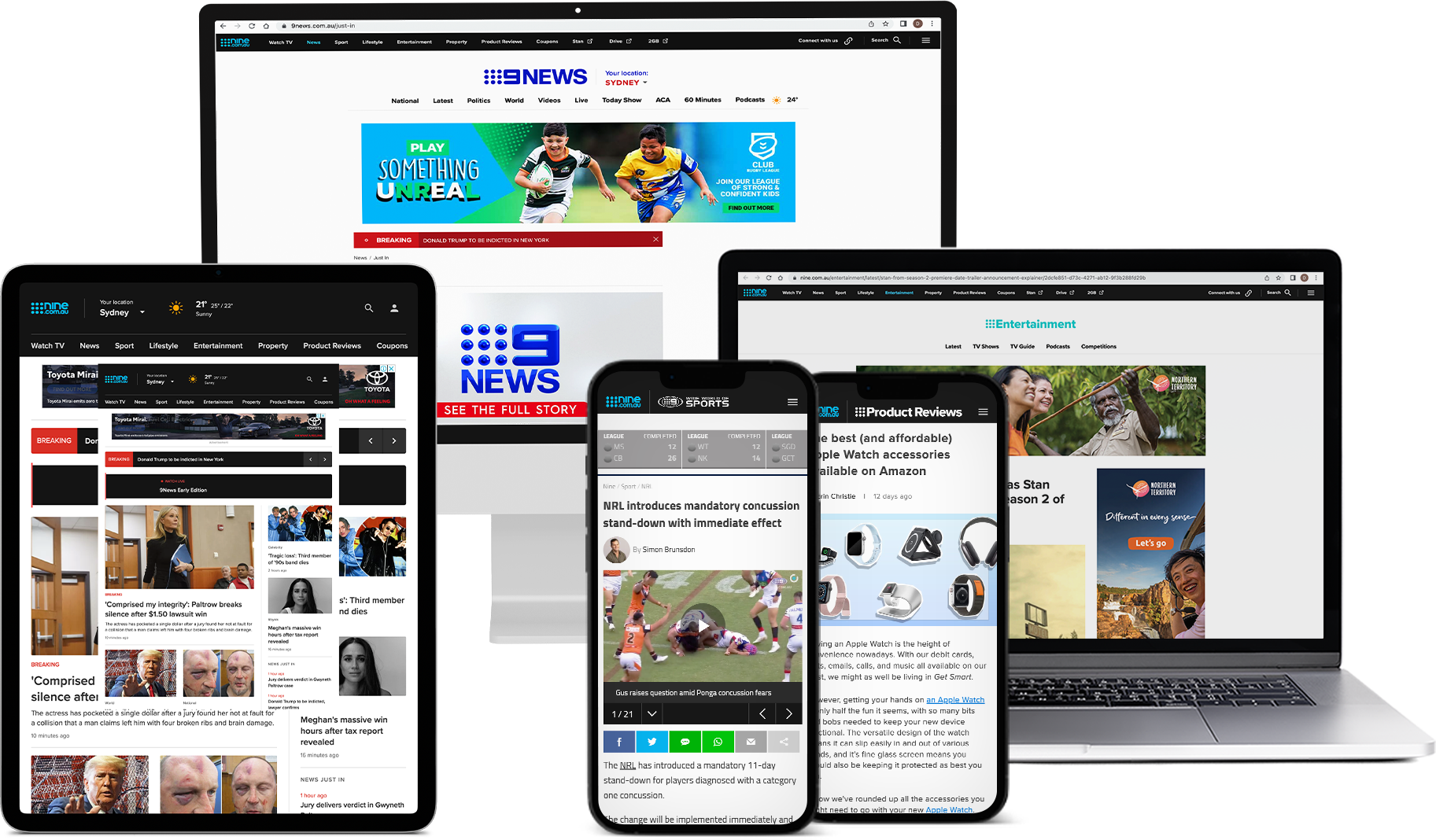
She made the jump to digital six years ago and is currently the Director of nine.com.au, home to Nine’s suite of websites including 9honey.com.au, 9news.com.au, WWOS.com.au and Nine’s TV show sites.

// HOW DID YOU FIND THE SWITCH FROM TELEVISION TO DIGITAL?

I think both are fast-paced, the television world and the digital world.

A Current Affair is truly the best training ground in the world for any journalist. My six years there were some of the best of my life. I think it puts you in really good stead because A Current Affair knows its audience and it knows Australia. I think I was able to bring a lot of that across to digital and put on a different lens – a consumer lens – which I hadn't seen a lot of in digital before.

That is especially so now with interest rate rises and cost of living pressures – issues that are just as valid today as when I started back on A Current Affair 12 years ago.

NINECOM MOCKS

// SIX YEARS INTO NINE.COM.AU, HOW ARE YOU ENJOYING IT?

It’s a privilege to run this part of the business. Digital is such a massive part of what Nine does as a company. It is ever-changing, ever-expanding.

We are sitting in verticals from news to sport, lifestyle to entertainment, property, and now the e-commerce and affiliate marketing sites we run. We touch every part of people’s lives with Nine’s content, so it’s an exciting space to be in. Add the Olympics deal on top and nine.com.au is in a truly unique position to succeed.

// What parts of the broader Nine business do you collaborate with most?

We work with a lot of the broadcast brands such as 9News, TODAY and A Current Affair because we look after their websites and online content. We also work closely with 9Now, Stan, Domain, Drive, and all other parts of Nine.  

Honey Devices

// Nine.com.au has a way to go to catch News.com.au.

We have a huge audience around the country. More than 10 million Australians visit us each month.

Yes, we have some big competitors, but I’m focused on our sites and what we do well. 

Take lifestyle, for instance. Six years after launching, our women’s lifestyle network 9Honey is still the most engaged lifestyle website in the country. People spend more time on 9Honey than on any of our competitor sites. That’s what we want as content creators and that’s what advertisers want too. Big numbers don’t mean anything if people don’t spend real time engaging with your content.  

// What do you think is your secret sauce?

I have an incredible team of editors who know their audience and their product. We’ve always said that people come to us for news and stay for everything else.

People are suffering with news fatigue at the moment, which is a trend we are seeing globally. People are increasingly looking for different kinds of content and that’s what we provide.   

Across Nine, we call our product offering Total Publishing. Our content is complementary, not in competition with our stablemates like The Sydney Morning Herald, The Age and The Australian Financial Review. We consider our brands to be superbrands.   

To use a travel analogy, we talk about filling every seat on the plane. So no matter what your budget, what your destination is, there’s a different brand within Nine’s Total Publishing community to fill that need. And we’re certainly seeing a lot of interest in the travel space and lifestyle in general. Sport too is on the rise with the Olympic Games coming to Nine over the next decade.

// How do you decide which vertical to enter?

It’s a combination of trusting your gut, knowing your audience and speaking with the commercial team. I consider myself to be a soccer mum from the suburbs, first and foremost.

I feel that I know our audience because I am our audience. I know what’s being discussed at the school gate, I know what my husband, who is a builder, is telling me, I know what my girlfriends are talking about, and I’ve got teenage kids and 20-year-old nieces.

So I know what they’re consuming. I know what their lives look like, I know the platforms they’re on. I think about all those things and have the right conversations with the right people before we look at spinning up those sites.  

Left MAFS

// How important are TV shows to your content?

There are probably 20 TV show websites within the entertainment category that we run.

But that’s the unique thing about nine.com.au. We get to represent all those mega TV brands in the digital world.   

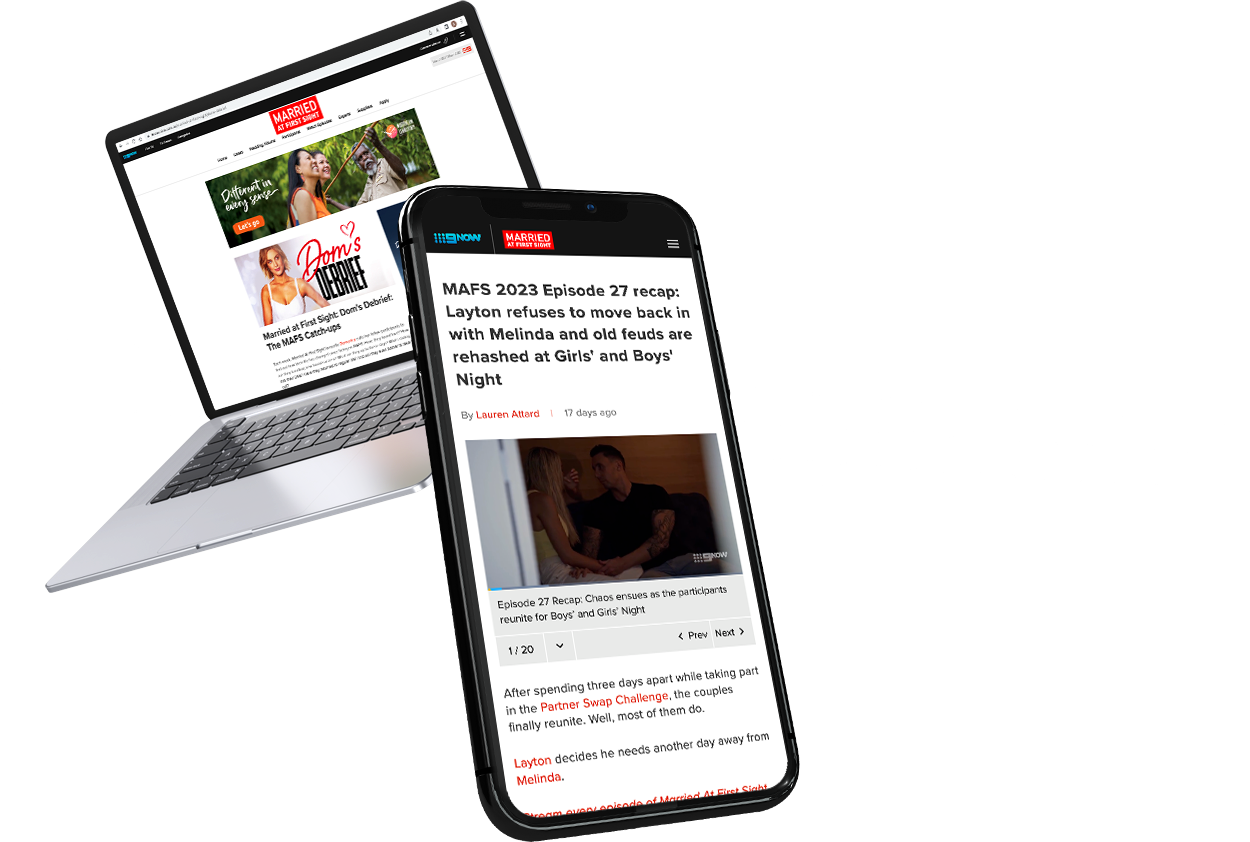
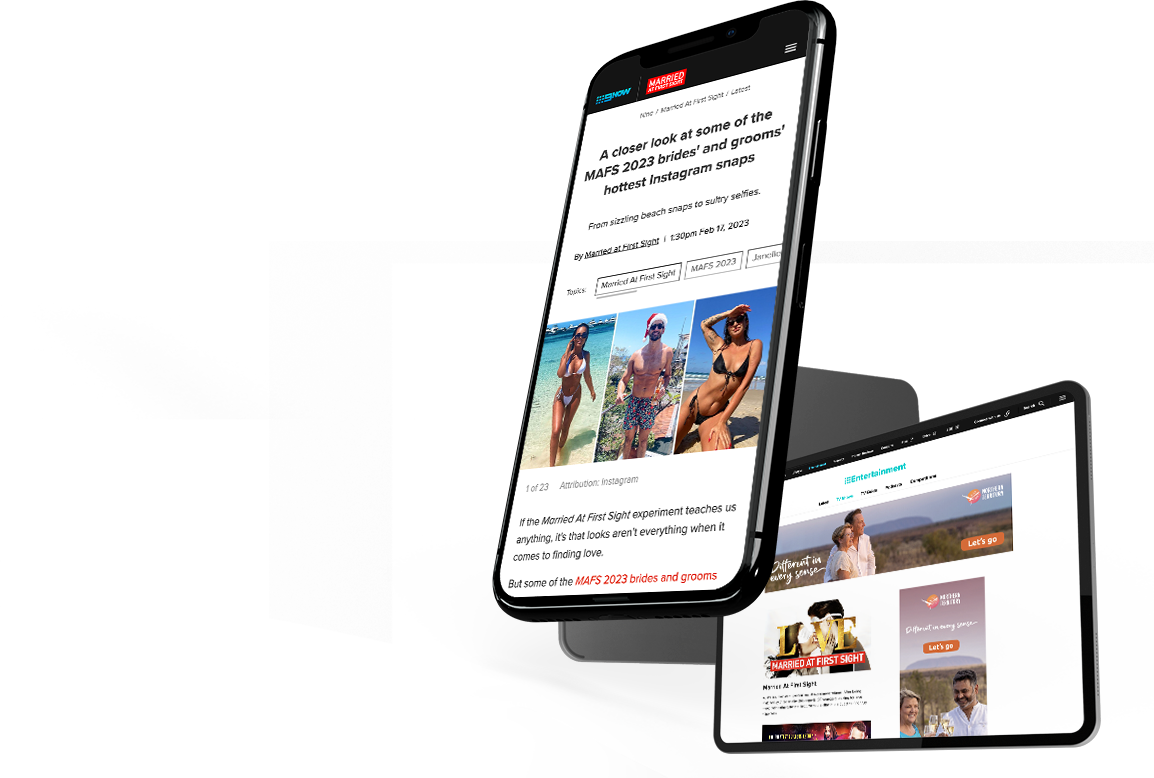
The recent series of Married at First Sight was a perfect example of how our audience is so hungry for content on the couples and how they’re doing throughout the season. We’re also focusing on how Karl and Sarah are setting the agenda for the day on TODAY and how Ally Langdon is breaking stories on A Current Affair.   

Really, that is our unique selling point: we have the content and the access that our competitors want. They are following us. They’re writing up MAFS. They’re writing up who Ally has spoken to on A Current Affair or what Ben Fordham has said on 2GB (Nine radio). To be able to work with and digitally represent the best content in Australia makes my job the best job in media. 

Right Mafs

Find out how your brand can leverage the power of Nine's Publishing assets to drive business outcomes. Request more information.

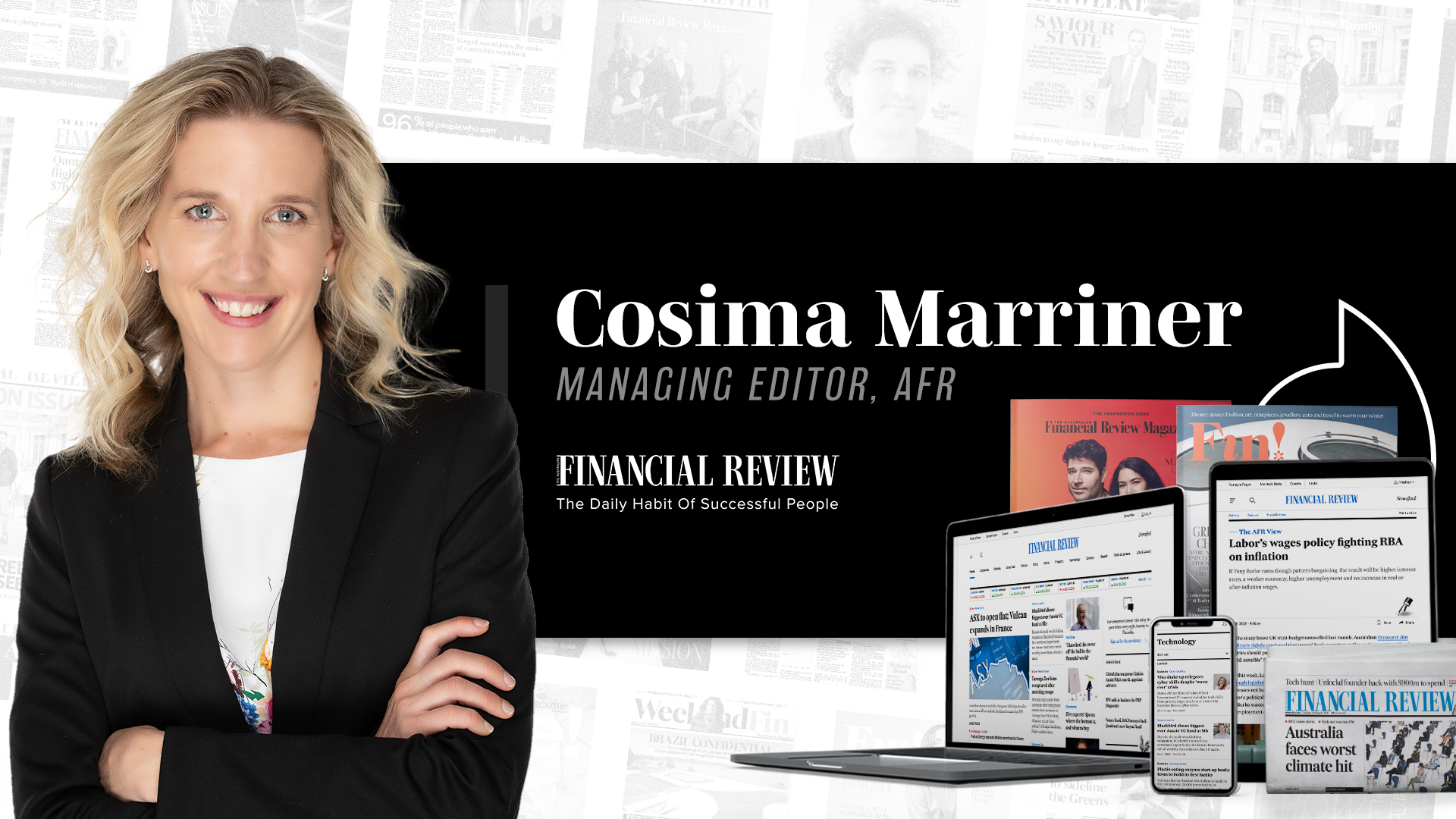
In Conversation With Cosima Marriner

InConvoWith_CosimaLockup
AFR DHOSP Logo-Inverse-RGB

Cosima Marriner started her career as a journalist at the epicentre of one of the great fevered moments in our history.

Working as a freshly graduated journalist on what was then Kerry Packer’s Australian Personal Computer magazine in 1999, Marriner found herself reporting on the frenzy of the dotcom boom as well as the near-certain doom of the Y2K bug. It was a crazy world of stupendous valuations for worthless businesses and prophecies of doom that never came to pass. It was also a foreshadowing of where her career would lead.

Like most journalists who graduated from those heady IT publishing days Marriner has certainly gone on to bigger and better things. In a recent interview with B&T's Editor-in-Chief David Hovenden, Cosima talks about jumping from the magazine world in Sydney’s Park St, and buckling up for a 20-year stint at the then Fairfax’s Sydney Morning Herald before recently being appointed managing editor of the Australian Financial Review.

// SO HOW ARE YOU FINDING THE SHIFT TO THE FINANCIAL REVIEW?

I really like it. I was at the Herald for a very long time and did a variety jobs.

So it’s been pretty refreshing and invigorating to go somewhere which is still in the family. It’s not different culturally, but different enough to be stimulating. Also, the great thing about the Financial Review is that it has a very defined audience and market niche. It makes it a lot easier when you’re trying to achieve new things because you’re not trying to appeal to everyone. You have a specific reader in mind as you’re writing.

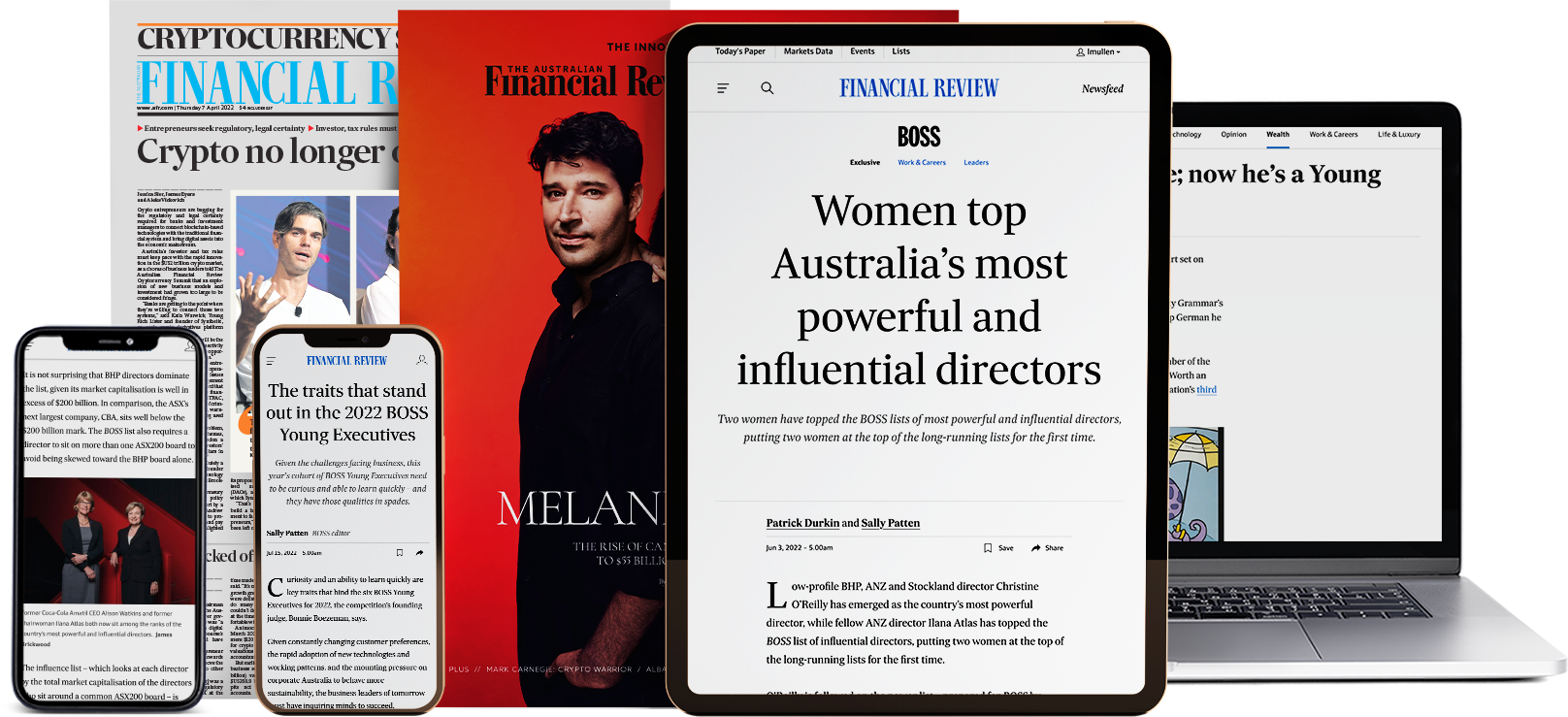
InConvoWith_Devices

// Do you think that readership has changed a great deal?

It’s definitely changing. The audience is getting younger, and it is different to the previous Financial Review audience, which was very corporate and career-path orientated.

We still have a chunk of those in professional services, legal and the like. But we also have these new investor types that are dabbling in crypto or whatever. They just want to grow their wealth independently. They’re entrepreneurially minded people with a slightly different mindset to our traditional audience.

The other thing that’s very interesting is the growth in our female audience, which I am particularly focused on.

More and more women are taking key leadership roles in business and politics. You saw the success of the Teal movement at the election. The Federal Labor cabinet has 10 women in it, Woodside, Telstra, Optus – they’re all big companies that are run by female CEOs now.

A lot more women are investing in the stock market. There is a huge market there that we need to capture and represent and appeal to.

// There hasn’t been a single woman appointed to an ASX 200 board for two years. So, there’s a lot of work to be done on the equality front.

I think the Financial Review has a key role to play in accelerating that change. Showcasing female achievements, female views. Proving that it’s not just all men in suits. I think it sort of becomes a bit of a virtuous cycle.

InConvoWith_Devices2
AFR_Weekend_Masthead

// Weekend readership is a success story for the AFR.

Speaking as a former editor of a Sunday paper, the great thing about the weekend is having an audience that has the time to sit back and engage with a print product in a way they don’t during the week. AFR Weekend  has really captured that trend, and COVID turbocharged growth in our weekend audience.

The beauty of AFR Weekend is that you not only have the C-Suite reading and engaging with our content
like they do during the week, you also have their partners. You get both members of the couple reading,
making decisions together about holidays, cars and investments. You have a broader offering in AFR
Weekend because you have a broader audience.

The editor, Andrew Burke, has done a great job in capturing the best of core Financial Review content, which is general business, politics, investment news, but also a bit of a lighter tone. Going with longer reads, wrapping up the week, including stories about the culture and the zeitgeist.

So it’s a good mix of core Financial Review with a broader remit, which resonates with readers. Two-
thirds of people who read the weekend AFR print edition buy it from their local newsagent so they have
to make a trip to get it, which is a great testament to the quality of the product.

// You’ve got a new inserted magazine, Fin!, as well. Tell me about that.

All credit goes to Matt Drummond the editor of AFR Magazine who came up with the concept of a new lifestyle magazine and managed to get a chunk of advertisers on board, which has underwritten it. It’s a great magazine doing fantastically well.

// What’s the proposition between that and the historic AFR magazine?

It’s much more lifestyle oriented – fashion, design, travel, style. And our digital audience data tells us that our subscribers really want that lifestyle content. It’s very well read and it improves subscriber retention. When we look at all our audience data we see that lifestyle content is one of the key drivers of conversion to subscription.

Readers that are into the lifestyle content are less likely to churn, which is very important. So we need to create more of this content. During the pandemic we shut a lot of our bespoke magazines and concentrated on the core ones. Fin! is the first new magazine product post-pandemic that we've done.

// What’s next in the pipeline? You must have a long list of KPIs in your new role.

Yes, the thing that attracted me to this role was the focus on subscriber growth and business development.

The good thing about the Financial Review is that it has done so well during the pandemic, but there are still so many growth opportunities available to us. If you want authority and trust you can’t beat the Financial Review. It’s just a question of prioritising what we should do first, and then what we should do next.

We want to give people bigger opportunities, more 360 opportunities to engage with the Financial Review, with more events, more lists, more podcasts, and more innovations like the NFT cover we did for the Power List in 2021.

Without giving too much commercially sensitive information away, we're going to expand our very successful events business. You’re going to see more summits this year. We’re going to be focusing on mining, workforce, investment and cybersecurity.

We’re also going to expand our successful lists business. And as part of that, which dovetails with the sharper focus on women, we’re going to extend our Rich Women list franchise, expanding the number of women that are included on that list. And we’re also going to create some additional content around that. The other focus for us is the B2B market. A lot of our growth during the pandemic came from the B2C segment, so we’ve now got a huge opportunity to drive B2B subscriptions. They’re natural Financial Review subscribers and they’re much less likely to churn. So we’re doubling down on targeting particular segments within that B2B audience.

We are also expanding our podcasts. We have recently launched two new podcasts – Chanticleer, featuring Australia’s most influential business columnists, Tony Boyd and James Thomson in conversation, and The Fin, a weekly news podcast hosted by Lisa Murray. Next year there will be new seasons of Julie-anne Sprague’s How I Made It, our very successful podcast from within the Rich List brand. And then we’ve got our Tech Zero podcast, which is all about how companies are adapting to reach net zero. That reaches a very powerful audience and has also been very successful from an advertising point of view.

Explore The Australian Financial Review here.

Find out how your brand can leverage the power of Nine's Publishing assets to drive business outcomes. Request more information.

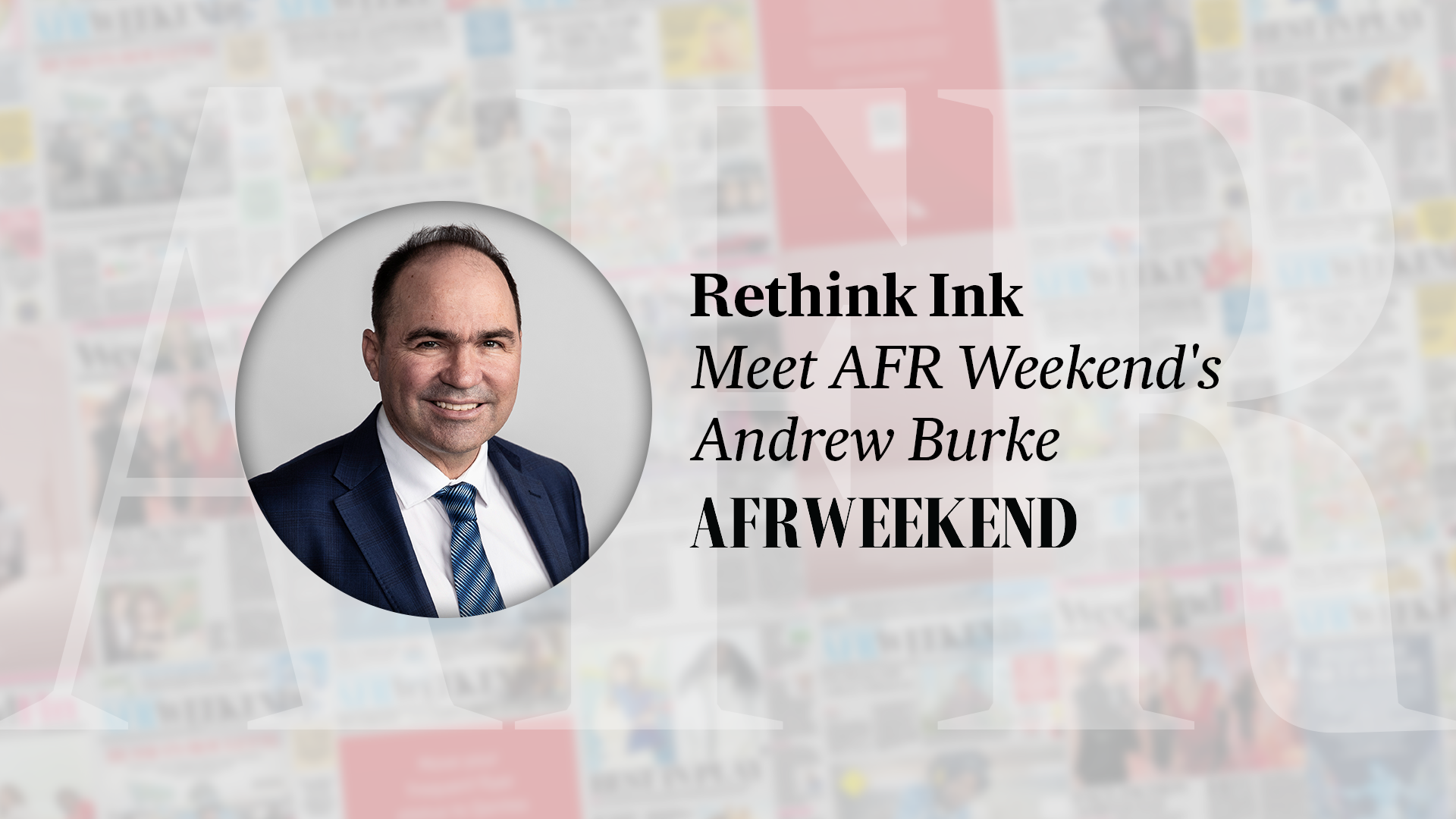
Meet AFR Weekend’s Andrew Burke

Group 5

Rethink Ink
Meet AFR Weekend Editor,
Andrew Burke

AFR_Weekend_Masthead_reversed

“We set out to provide worth to our readers every weekend." AFR Weekend’s Andrew Burke discusses how to give your readers what they need to know and what they want to read.

In B&T's ongoing Rethink Ink series, we chatted with AFR Weekend editor Andrew Burke. In his seven-year tenure, AFR Weekend has grown to be one of the most read newspapers in Australia, enjoying significant print and digital growth despite the pandemic. And As Burke reveals, its success isn't all about insider stock market tips.

Group 1

We all know the AFR during the week, but is the weekend edition all for stock market addicts who can’t switch off? The “money never sleeps” brigade?

It’s interesting and it’s hard to measure this stuff. My impression, which comes from a lot of readership surveys we’ve done, is that people read the weekend edition of the AFR as much for the investment advice as the news and political analysis.

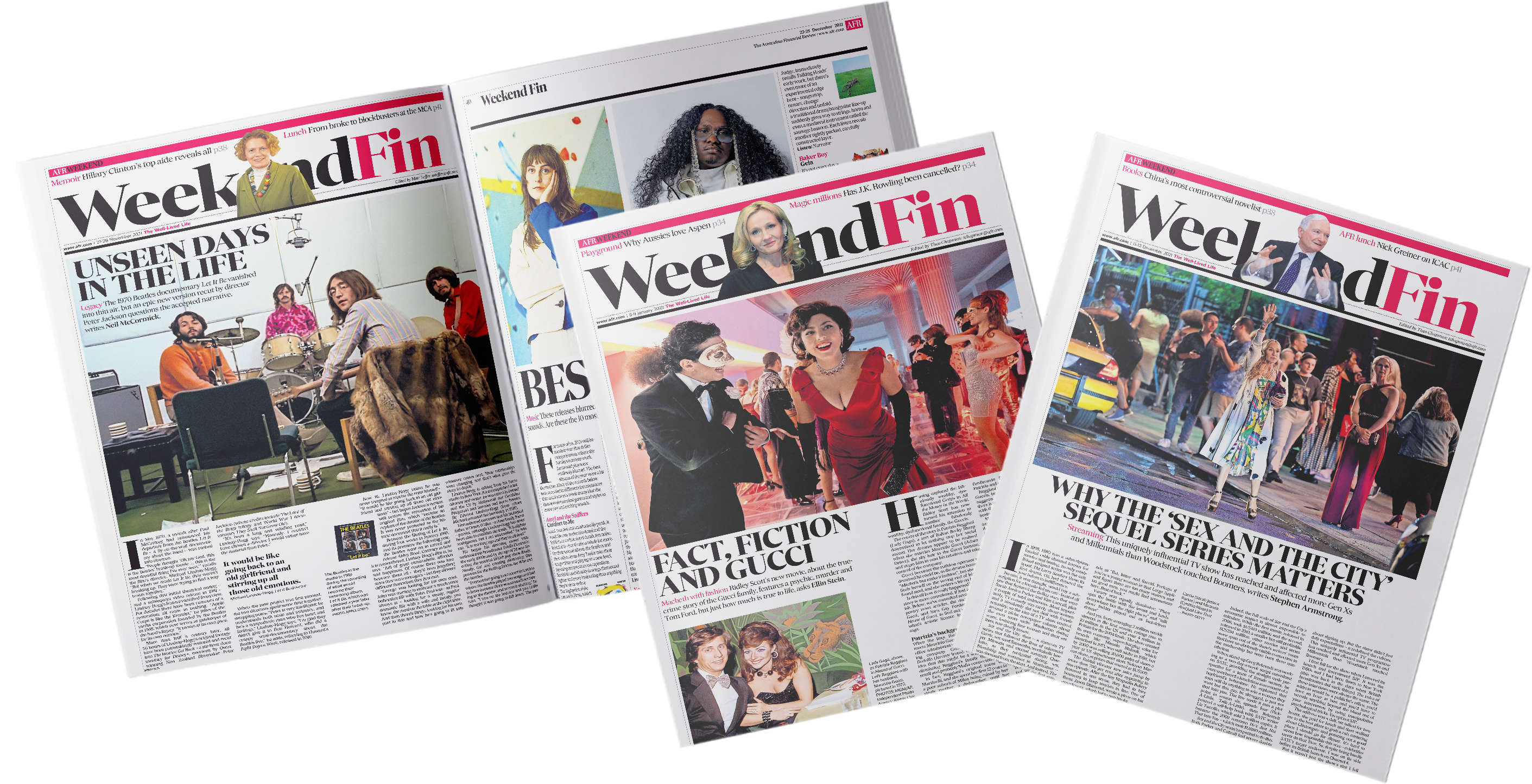
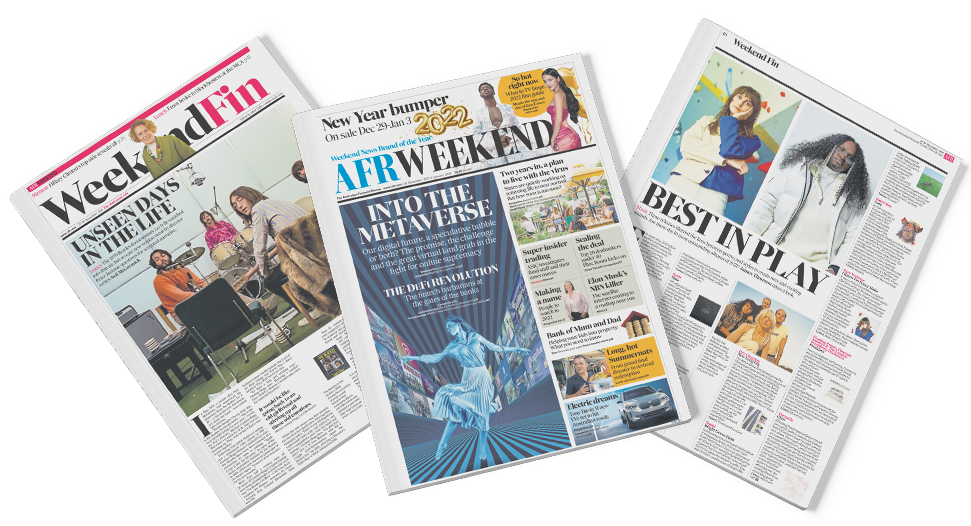
The weekend gives people more time to read things such as our news features section that they might not have time for during the week. We’ve also got the Weekend Fin down the back of the newspaper and it's a larger, colourful section that always comes back as people’s favourite thing to read.

People buy it for what they want to know, but also what they want to read.  That’s one of the more critical differences about what we do and the Monday to Friday edition.

Inner Pages Magazine

Who is the AFR Weekend reader?

I’m quite proud of the fact that with the AFR Weekend we have a position that’s in the middle of the market in terms of where more financial newspapers lie.

Sure, we believe in the markets, and we play in that centre right, but we’re in the middle of the market, as far as politics are concerned.

On a political level we want to be credible, and you never want a reader to know what they’re going to read before they get there. From that respect, I think that’s something our readers value in the product. There’s independent critical analysis that’s not necessarily coming from one side of politics or the other.

If the bookies are to be believed, Albo looks a shoo-in at the next election.
I can’t imagine AFR readers being too thrilled about that.

You’d be surprised, but our readership is only marginally more skewed to the Coalition, by a few percentage points. Our view at the AFR Weekend has always been to take each of the party’s polices on their merit and never necessarily from a political party view. We just report what’s happening and from that we draw our analysis. It’s not like we’re preordained, just because one  party comes up with a policy. We’ve been very critical of the government over lots of things recently.


Floating_MOCKS

A criticism of the AFR would be that it feels quite “male” in its style and reporting. How do you respond to that?

We’re very conscious to ensure there’s a balance in who we are interviewing. I understand that business and politics is often deemed as a very male pursuit and so we are active in trying to write about women as much as we can, never just for the sake of it. The anecdotal evidence is that a lot more women now read the AFR Weekend.


Diigtal

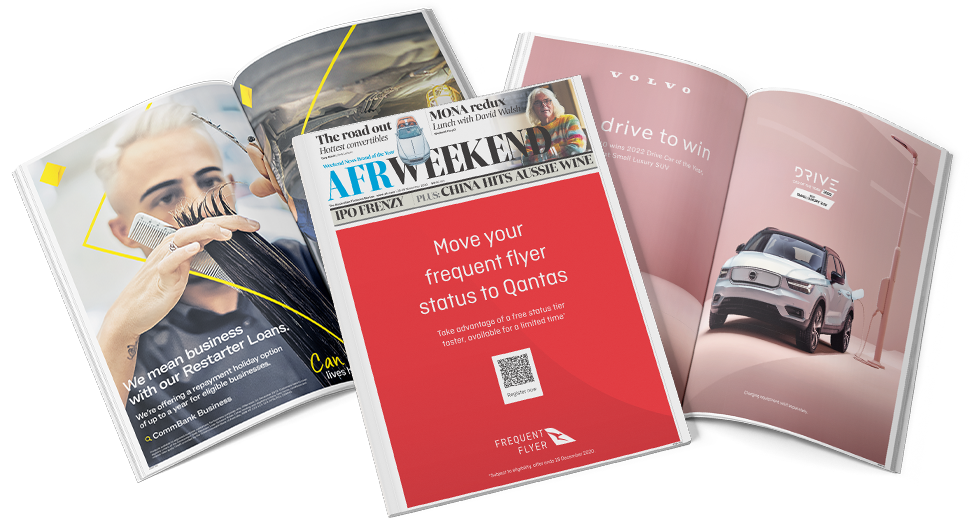
This all makes for a prestige environment for advertisers.

Obviously on the weekend you’ve got a lot more time to engage with the reader. Something I’m quite proud of is that 70 per cent of our readers aren’t subscribers. That means they’re going down to their newsagent every Saturday morning to seek us out. You always want more subscribers, but I’m proud that our readers want to seek us out, and with that comes reward for the brands that form part of our product. There’s a value exchange for a product when a reader must pay for it.

Creative_Mocks

We hear about the “death of print” all the time. But the AFR Weekend’s numbers certainly tell a different story, print sales remaining surprisingly strong.

It’s a fact of life that people are carrying a little computer around in their pocket all the time these days. News is instant. But all the stories in Saturday’s paper are online on Friday afternoon, albeit behind a paywall, and our readers are still quite happy to go into a newsagent the following morning and part with $4.50 for the printed copy. I also think we have entered a period where print is being celebrated again by brands and creatives for its ability to cut through the digital tsunami and offer consumers escapism and a focus away from the always-on digital world.

Obviously B&T’s core audience is adland. How difficult can it be to take a print product like the AFR and try and sell its merits to 20-somethings in a media agency?

People read the AFR in the office, even more so now that they  are no longer working from home as much. On the weekend people are reading it in their homes, and at the same time they’re making a lot of purchasing decisions about things like investing, holidays or cars, whatever. Those sorts of decisions are made by couples and that’s where AFR Weekend comes in. People are engaged with it around the coffee table, they’re less likely to be on the phone, on the laptop, on the emails. I like to think our content goes across the demographic divide in the house, the husband or the female executive. And so you get more eyeballs on these pages.


Mags

For all of COVID’s faults, it’s been a boon for people seeking out media. TV and radio numbers are up markedly. How has that played out for the AFR Weekend readership?

Broadly speaking, we’ve had large increases in our digital paying subscribers and that’s enabled us to hire 20 new staff in the last couple of months. In terms of print, we’ve held up our readership really well. We saw a print readership spike of 54 per cent during the height of COVID. What we’ve been really conscious about is delivering news about the pandemic that is relevant to people. You don’t want to scare readers, you want to provide worth to your readers.

Find out how your brand can leverage the power of Nine's publishing assets to drive business outcomes. Request more information.

  • This field is for validation purposes and should be left unchanged.