The “I Don’t Watch TV” Myth: Why Your “Screenager” Nephew and Local Tradie Are Actually Your Most Engaged Viewers

The "I Don’t Watch TV" Myth: Why Your "Screenager" Nephew and Local Tradie Are Actually Your Most Engaged Viewers

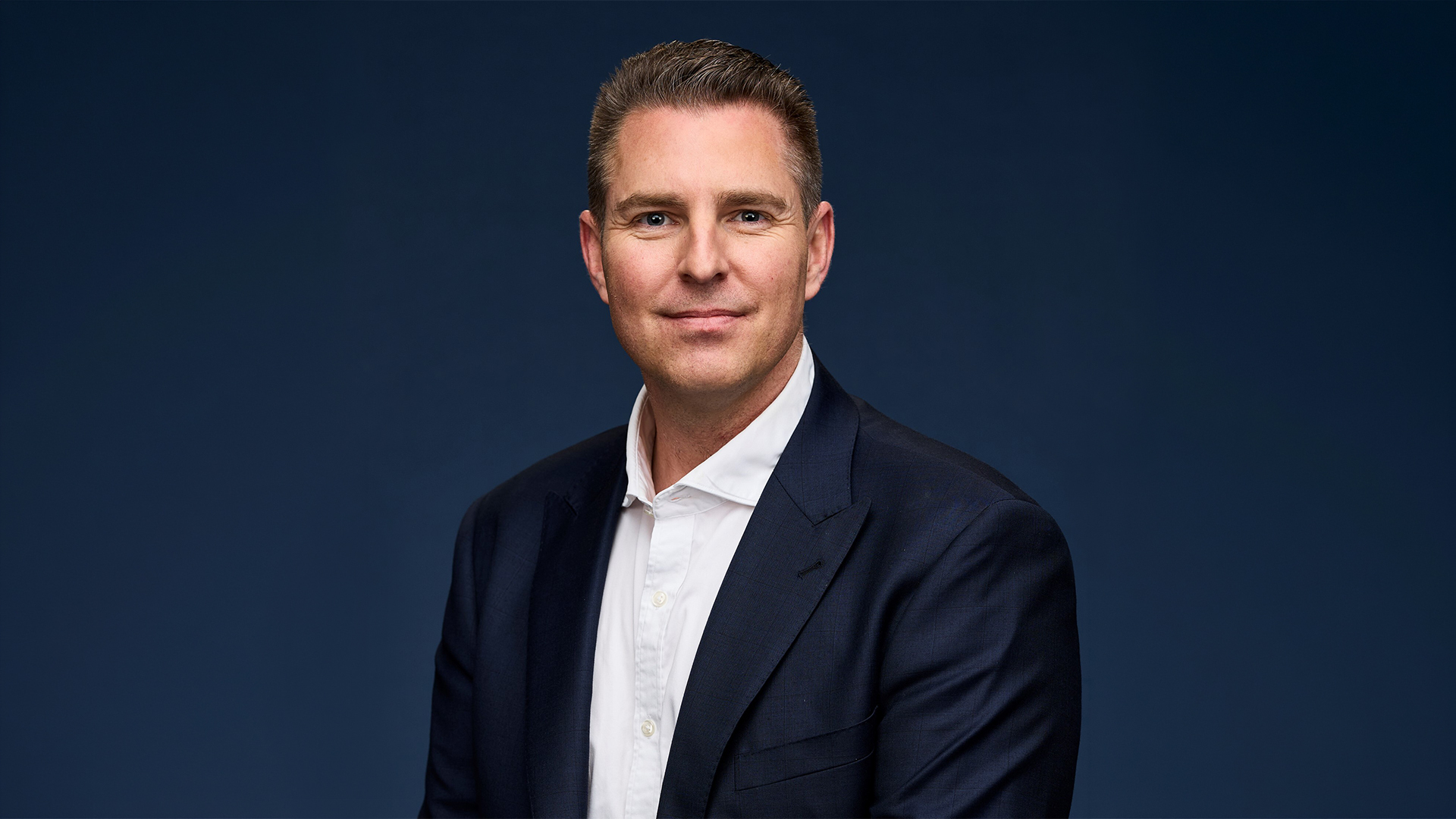
KathSroka_Headshot2

Kath Sroka

Director - Digital Commercial Strategy & Enablement

31st March, 2026

It’s time to stop defining TV by the device and start measuring it by the cultural currency of premium content. From MAFS to the Australian Open, the screen has changed, but the scale has only grown.

TV suffers from a perception issue. The "I don’t watch TV" statement has become fashionably cool, but the reality couldn’t be further from the truth. Viewers who claim to be "raised on feeds" or who don’t own a physical TV set are very often the same people captivated by live EPL on a smartphone or hooked by streaming Love Island Australia on a laptop.

Premium content remains our ultimate connector. People haven’t stopped watching, they have simply changed how they engage. This past summer has opened my eyes to content as the latest social currency.

"I don't do reality TV"

The power of the MAFS franchise never fails to spark inspiration. Take my friend – a self-confessed "news and docos only" viewer. She’s currently planning a getaway to Wineglass Bay with her husband, entirely inspired by Stella & Filip’s Tasmanian honeymoon. Meanwhile, my own husband – who “only watches” because of me – is convinced this same friend is a double for another contestant. It’s co-viewing and closet reality buffs at its finest.

"We don't watch 'regular TV channels', Aunty Kath"

This summer while holidaying with family, my 21-year-old niece spotted me reading The Housemaid. She immediately linked the film adaption starring Sydney Sweeney to the American Apparel campaign and Euphoria too, launching with a new series in April.

Meanwhile, my other niece was busy earning kudos from her parents in mastering scramble eggs learned from TikTok. It’s hardly the same cred as dropping intel on Naomi’s jellyfish AO outfit, Bad Bunny’s half-time show, or Mariah Carey’s Winter Olympics live act – was that a lip-sync?

My screenager nephews also "raised on feeds" were locked to the couch watching the drama of the Big Bash Cricket and United Cup Tennis unfold, continuing now through to winter sports, drawn in by their big sporting icons and live scores.

Then there’s the "Platform Oblivious". A young tradie helping build our alfresco proudly shared he didn't own a 'TV set'. Yet he confessed to watching Love Island Australia on his laptop, content couch-surfing in friends’ living rooms, while following the wash-up on socials.

People don't "watch TV"? It might not be via an old-school set, but they’re still watching long-form premium content when they want it. Whether it’s live sport, entertainment, or news, premium content connects people with cultural moments across all devices.

The Power of Scale in a Fragmented Market

The appetite for premium video has never been higher. The challenge today isn’t a lack of audience, but the fragmentation of choice. At Nine, we are solving this by replacing complexity with scale. Our premium content solution integrates 9Now, Stan Sport and HBO Max collectively into a single gateway. Through one dedicated sales team, Nine offers clear behavioural strategies to reach diverse BVOD and SVOD audiences backed by a market-leading data proposition and ad products designed for seamless execution.

For brands, the magic is clear in the data. Live and On-Demand are a powerful duo for full-funnel outcomes. The "water cooler" effect of live viewing drives massive awareness; in fact, Live content sees an Ad Recall of 52%. This is particularly potent in genres like Live Reality, where recall hits a staggering 67%.

On-Demand is where receptive viewers turn into buyers. On-demand moments are more personal, engaging and in control. It leads the way in brand outcomes focused on action, with 51% of viewers showing high ad receptivity compared to 44% in Live. We see this translate directly to the bottom line, with On-Demand video exposure delivering a +7.4% lift in purchase intent.

In 2026, the commitment to long-form premium content is simple: deliver these engaged audiences and the metrics that brands crave.

From the high-stakes action of the NRL to the comfort viewing of Seinfeld, Nine continues to capture the hearts of all types of viewers. You might not call it "TV" anymore, but we’ve built the ecosystem that follows the audience wherever they are and however they choose to engage.

Source: Kantar Nine Live and On-Demand Research, 2025. Study commissioned by Nine to evaluate ad recall and consumer receptivity across live and video-on-demand (VOD) platforms (Base: n=3375 for ad recall; n=1557 for attitude and action).

Read More From Our Digital Experts

DuaneHatherly_FeatureIMG

OPINION

The Privacy Pub Test: Nine, WPP & FreeWheel on AdTech Evolution

Duane Hatherly, Head of Editorial - Mediaweek

StephDrabble_FeatureIMG

OPINION

The Great Decoupling: Navigating the Post-Click Era of Search

Stephanie Drabble, Director of Digital Product Commercialisation & Strategy

JuliaEdwards_FeatureIMG

OPINION

What 20 Years in Media Taught Me About Surviving Constant Change

Julia Edwards, Director of Programmatic Sales

Looking for more efficient, effective and transparent ways to grow your business? Enquire today.

  • This field is for validation purposes and should be left unchanged.

Nick Young Unpacks an Unlikely Programmatic Partnership

Nick Young Unpacks an Unlikely Programmatic Partnership

DuaneHatherly_Headshot3

Duane Hatherly

Head of Editorial, Mediaweek

30th March, 2026

NickYoung_MR

Nick Young, Commercial Director - Digital

It’s not everyday that fierce competitors like Nine and Seven share a stage to announce significant industry collaboration. But when it comes to the programmatic supply chain, the two broadcasting giants have finally found common ground.

Last year, Nine's digital commercial director, Nick Young made industry headlines with a fiery critique of the programmatic ecosystem at the 2025 Future of TV Advertising conference.

Fast forward to today, and after wryly explaining that he has since made the appropriate apologies, Young and Seven’s national digital sales director Jordan King, are back on stage together talking up recent developments confirming they are teaming up on a programmatic joint venture.

The ultimate goal is to drive transparency and efficiency back into the buying process, so that more of every advertising dollar is directed towards delivery and advertisers can better measure the return on their investments. In essence, pushing back against an arguably bloated supply path.

Interestingly, this collaboration is aided by the fact that the two executives are familiar colleagues. Young and King previously worked closely together for years steering Nine's digital sales, so they’re already familiar with each other's ad tech playbooks.

Speaking on that panel at the 2026 Future of TV Advertising conference, and in a subsequent interview with Mediaweek, Young unpacked the technical challenges of a system that currently features more than 50 intermediaries.

Fixing The Broken Supply Chain

Young noted that while programmatic accounts for 60% of Digital Video Market, the current model leaks significant value.

“When we're getting 50 cents in the dollar, and another media owner is getting a hundred cents in the dollar,” Young explained on the panel, “Before you even start, our inventory - and this is a technical term - is gonna look shit.”

He went on to say that the sheer number of intermediaries reduces the final return on investment for publishers, making premium broadcast inventory look less effective to media buyers.

Young also pointedly called out the parity issues broadcasters face when competing against global digital platforms that bundle media assets with rich, first-party data.

He noted Amazon has already recognised this imbalance and built a product to address it in the US, but that it remains unavailable in Australia.

image

Justin Lebbon (left), Jordan King (centre), Nick Young (right)

To stem the bleeding in the meantime, Nine has already taken aggressive individual steps. Young revealed that they have consolidated their Supply-Side Platforms (SSPs) and actively removed non-transparent partners from their ecosystem. By dealing exclusively with transparent models and direct deals, Nine has managed to double its programmatic revenue in that specific pool over the past eight months.

Realising that a single publisher can only do so much to combat the global tech giants, Nine and Seven have found a way to collaborate. But it’s not a simple task in regulatory terms as they are direct competitors.

Notwithstanding those difficulties, the networks issued a Request for Information (RFI) to 13 Demand-Side Platforms (DSPs) to evaluate crucial tech capabilities, including ID resolution, data privacy, and the specific treatment of live broadcast sports.

On stage, King said live sport presents a unique and massive hurdle for standard digital ad tech. Young explained to Mediaweek that traditional ad servers are fundamentally designed to deliver campaigns evenly across a standard seven day week.

EV202546 (1)

Justin Lebbon (left), Jordan King (centre), Nick Young (right)

Live broadcast audiences simply do not behave that way. When a live sporting event suddenly draws hundreds of thousands of concurrent viewers, standard ad servers struggle to keep up and fill the inventory during those instantaneous spikes.

The networks are now actively seeking tech partners capable of handling the immense scale of live broadcast without failing.

The Green Button Reality

The industry has been buzzing about a unified green button solution, which would act as a single frictionless gateway where an agency could buy across multiple television networks at once.

However, Young cautioned that a magic button is just one of many possibilities currently on the table. He confirmed there are at least six different options being evaluated in the current RFI process.

Crucially, Young clarified that whatever solution is chosen, it will not result in a blended pool of competitor inventory.

“It's not a pooling of inventory type scenario,” Young told Mediaweek. “We will always maintain our ability to have our own individual setups.”

Broadening the Tent to SVODs

While the two networks remain fierce rivals for advertising dollars and daily ratings, Young pointed out that collaborating on major infrastructure is not a new concept for the broadcasters.

“We've owned broadcast towers together, we've even owned helicopters together,” Young laughed, pointing to their joint work in establishing industry bodies like OzTAM.

Tackling the ad tech layer is simply the next logical step.

Both executives expressed a desire to broaden the conversation to include other local premium video providers like Foxtel and SBS. However, Young explicitly broadened the horizon.

With global streaming giants aggressively entering the local ad tier market, he stated the invitation to collaborate extends to all premium video providers, be they BVOD or SVOD.

Ultimately, the networks are aiming for a simplified, unified buying experience. Programmatic television is a key part of the equation, but it is undergoing a much needed reset to clear out the wastage created by years of rapid growth.

“The core of what we're trying to do is create transparency and efficiency, by creating an ecosystem that puts more money towards working media because that drives a better result,” Young said.

Keep on top of the most important media, marketing, and agency news each day with the Mediaweek Morning Report – delivered for free every morning to your inbox.

Read More From Our Digital Experts

DuaneHatherly_FeatureIMG

OPINION

The Privacy Pub Test: Nine, WPP & FreeWheel on AdTech Evolution

Duane Hatherly, Head of Editorial - Mediaweek

StephDrabble_FeatureIMG

OPINION

The Great Decoupling: Navigating the Post-Click Era of Search

Stephanie Drabble, Director of Digital Product Commercialisation & Strategy

JuliaEdwards_FeatureIMG

OPINION

What 20 Years in Media Taught Me About Surviving Constant Change

Julia Edwards, Director of Programmatic Sales

Looking for more efficient, effective and transparent ways to grow your business? Enquire today.

  • This field is for validation purposes and should be left unchanged.

Consumer Pulse March 2026

ConsumerPulse_TT
IMAGE TILES 3

WHAT'S HOT AND WHAT'S NOT

March 2026

The national mood is generally more negative, with a continued drop in Net Positive Emotions while Net Negative Emotions has increased. Over 1 in 2 of Nine’s audience are feeling secure with their finances, however rising costs are still having an impact with 65% wanting to cut back on spending, particularly on unnecessary luxuries; all fuelling opinions and conversations this month.

A young couple checks their bank statements and mortgage contracts to determine their financial ability

6 March - 9 March, 2026

Inside this month’s Consumer Pulse dip

Mood of the Nation

The national mood

There continues to be a slight drop in positive sentiment in the national mood while negative sentiment has remained dominant, seeing a slight increase.

The top 3 moods are calm, relaxed and anxious, with people also feeling hopeful, frustrated, and safe. The contrast between these suggests that while people are feeling generally calm, emotions of anxiety and frustration remain.

NOTE: For the best viewing experience on mobile, please view landscape.

Dominant mood indicators

The top 10 dominant moods are an equal mix of positive and negative emotions. The top 3 feelings reflect this contrast with calm, relaxed and anxious topping the list this month. The mix in emotions continues through the list with hopeful, frustrated and safe, the 4th, 5th and 6th positions, and the lower half of the top 10 feelings including pessimistic, sceptical, annoyed and optimistic.

Conflicting emotions persist across Nine’s audience, while calmness remains, global unrest is contributing to heightened pessimism in comparison to last month.

NOTE: For the best viewing experience on mobile, please view landscape.

NATIONAL MOOD BREAKDOWN

of the under 45 age group feel stressed

While the top 5 feelings overall are a mix of both positive and negative emotions, those under 45 show stronger negative feelings. One third of younger audiences feel stressed (33%), anxious (32%), and frustrated (29%). Contrastingly, Nine’s audience over 45 show a higher affinity for positive emotions, with around 1 in 4 feeling calm (26%) and relaxed (25%). 

Worried businessman with head in hand at office

BRAND CONSIDERATION

Shift your messaging from a "one-size-fits-all" positive tone to one that mirrors the specific emotional reality of each demographic.

Cost of Living

Australians are secure but still concerned

More than half (56%) of Nine’s audience are currently feeling financially comfortable, which is consistent with last quarter (57%) but an increase from this time last year (up 12 percentage points).  29% feel like they are “just managing”, and 15% say they are “feeling the pressure” when it comes to their personal finances, which remains in line with this time 6 months ago, suggesting that feelings of financial security have reached a stable level. 

Most are still being affected by the rising cost of groceries (71%), insurance premiums (70%), and utilities (68%). However, the impact of the rising cost of groceries on consumers has reduced in comparison to last year (down 7 percentage points).

NOTE: For the best viewing experience on mobile, please view landscape.

Conversation Starters

DISCRETIONARY SPENDING

of Nine's audience are cutting back on spending

While personal finances have stabilised, consumers are still looking at cutting back and reducing discretionary spending  

In line with last quarter, 62% of Nine's audience are cutting back on spending due to the rising cost of living. While consumers have not yet already started reducing their spending, they are conscious about it, with a growing intent to cut spending in the next 3 months. This reduction primarily targets discretionary spending on International or Domestic Holidays, Dining out and Takeaway Food. Pet(s) and Investments categories are seen as essential with 1 in 5 considering these products and services a “must have”, consistent with last quarter. However, even as consumers plan to cut back on unnecessary spending, 4 in 5 remain willing to spend more on products they perceive as high quality and superior, suggesting that value is important.

Young woman holding card in a cafe thinking

BRAND CONSIDERATION

Even as 62% of the audience plans to cut back, the fact that 4 in 5 are willing to pay more for perceived high quality reveals that consumers are not looking for the "cheapest" option—they are looking for the "safest" investment.

Purchase Considerations

of those under 45 consider Education a "must have"

Willingness to cutback on spending differs between demographics  

Reduction on spending varies across ages, with audiences over 45 showing less concern than younger audiences to cost of living increases, maintaining spending on discretionary items such as subscription to news (34%) and International or Domestic Holidays (24%). Consumers under 45 have already reduced their spending on non-essentials such as Dining out and Takeaway Food, International or Domestic Holidays, and Apparel & Accessories. Nine’s younger audience are also more willing to reduce spending in the next 3 months on essential items such as Utilities and Insurance products. However, Education is considered a “must have” for 1 in 3 of those under 45. Additionally, Males show a willingness to spend on Investments.

BRAND CONSIDERATION

Brands must position products as "essential future-proofing" for cost-sensitive younger audiences while doubling down on "premium lifestyle preservation" for the more resilient over-45 demographic.

Mature man with backpack hiking at Dolomite.

SUBSCRIPTIONS

of consumers over 45 consider their subscription to pay-TV or streaming service a must-have expense

The value of subscriptions shift by age with news a must have for 1 in 3 of those over 45  

1 in 3 of consumers over 45 consider their subscription to ‘news’ a must-have expense, as do 1 in 4 for a subscription to pay-TV or streaming service. While for people aged under 45, a subscription to music streaming services or podcasts are more likely to be a ‘must have’. However, younger audiences have already reduced spending on subscription services, such as pay-TV or streaming service (41%), food delivery services (32%) and subscription to gym, fitness or wellness (22%).

RESIZED:Photo illustration with a TV screen overwhelmed with streaming apps. (Maggie Shannon for The Washington Post via Getty Images)

BRAND CONSIDERATION

Brands must prioritise "platform-specific loyalty" by positioning news and streaming as non-negotiable lifestyle anchors for the resilient over-45 demographic, while pivotting to low-friction, "high-utility" audio and wellness bundles to retain cost-cutting younger audiences.

GET IN TOUCH

Want to know more?

Contact your Nine representative directly, or fill out the form and we'll be in touch.

  • This field is for validation purposes and should be left unchanged.
AdobeStock_545905211

Tell your story in and around the content we know consumers are engaging with most
 

The Privacy Pub Test: Nine, WPP & FreeWheel on AdTech Evolution

The Privacy Pub Test: Nine, WPP & FreeWheel on AdTech Evolution

DuaneHatherly_Headshot3

Duane Hatherly

Head of Editorial, Mediaweek

20th March, 2026

Julia-Edwards-Future-Media-Forum

Julia Edwards, Ryan Menezes, Tess O'Brien at Future Media Forum in Sydney

With 65% of the open web untrackable, the media trade must pivot to protect privacy and reclaim our local audience data.

The Australian AdTech landscape stands at a critical juncture. We boast one of the most advanced programmatic ecosystems in the world, particularly within connected television (CTV).

However, this reliance on the open internet also brings forth certain systemic challenges. Global platforms tend to absorb a significant portion of audience attention and associated advertising value.

In parallel, the extensive audience data collected by these global entities is often used to enhance their offerings and deepen their market presence. So, how can local publishers continue to value their inventory and data without jeopardising their IP?

At this week’s Future Media Forum in Sydney, I sat in on a panel featuring Nine’s director of programmatic sales, Julia Edwards, WPP Media’s chief media and solutions officer, Ryan Menezes, and FreeWheel, a Comcast Company managing director for Australia and New Zealand, Tess O’Brien.

Together, they unpacked how the trade can keep Australian data in Australian hands.

Their proposed solution puts the power back in publishers’ hands, with a view to proving that protecting user privacy doesn’t have to ruin the bottom line.

Edwards moderated the session and framed the current dilemma:

“Australia has built one of the most sophisticated programmatic ecosystems in the world, but that success has come with a hidden data tax. We are at a critical crossroads where we must choose: do we continue feeding a fragmented global ecosystem, or do we reclaim our home ground? We need to move beyond ‘renting’ audience attention and shifting the power back to those who actually own the direct customer relationship.”

“The pact between buyers and publishers needs a reset,” Edwards added. “Buyers desperately need the transparency to power targeting and measurement, and publishers need to protect their users’ privacy. We’re here to show that these two things aren’t at odds – customer-centric decisioning is the path forward to an ecosystem that is both effective for brands and ethical for Australians.”

The 65% untrackable reality

WPP Media’s Ryan Menezes revealed just how rapidly the landscape is deteriorating.

“Around 65% of the open internet currently is untrackable,” Menezes told the room.

He noted that mobile devices generate 60% of total traffic in Australia. Apple’s intelligent tracking prevention heavily restricts this traffic. CTV accounts for another 40% of video impressions, with its own unique tracking limitations.

Add the impending 116 recommendations from the Australian privacy refresh, and the new legislation shatters the traditional cookie-based and deidentified ID playbook.

This means marketers can no longer rely on precision tracking. Menezes argued that the trade must pivot toward predictive models, including federated AI, to achieve data minimisation.

Around about here, my head started spinning.

So, as a service to people like me who failed to process most of that sentence the first time, I will break it down. What Ryan means is the advertising industry needs to stop hoarding people’s personal data to track them across the internet.

Instead they need to use smart AI to guess what they want without ever invading their privacy.

Quite.

The privacy pub test and million-dollar liabilities

This shift brings massive legal and ethical implications. Menezes warned against blindly clicking on programmatic audience segments in demand-side platforms without verifying the data source, quality or consent framework.

“It can be a problem when marketers are blindly using data, but not sense-checking it. Marketers should be asking if their targeting passes the ‘pub test,’” Menezes cautioned. “If the user doesn’t benefit from the exchange and finds it overly intrusive, it immediately becomes a liability. The financial stakes are escalating rapidly; agencies are now confronting multi-million dollar indemnities, underscoring that getting data ethics right is no longer merely optional, but an absolute imperative.”

A blueprint from global missteps

Tess O’Brien of FreeWheel, a Comcast Company, offered a global perspective. “Australia is in an enviable position – we can take the best practices from the US and EU and adapt them to our local ecosystem,” O’Brien observed. “Aligning on privacy-first foundations that can both deliver results for buyers while maintaining publisher control is essential.”

She warned the local market against repeating the mistakes of other regions, noting that Europe’s GDPR rollout turned privacy into a legal checkbox, ultimately hampering programmatic growth. Meanwhile, the US market rushed to create a fragmented mess of alternative identifiers. “There is not going to be one ID to rule them all,” O’Brien said.

Instead, she advocated for a unified infrastructure that safely connects various identifiers. By decoupling targeting from identity through publisher-side decisioning, media owners can match data without diluting its fidelity through endless third-party intermediaries.

Shaking off local protectionism

To survive this privacy revolution, the Australian market must change its collaborative mindset. Menezes argued that multilateral data collaboration provides the only viable path forward.

“You have got to shake off protectionism,” Menezes urged. He noted that while local partners have historically kept their data close to their chests for good reason, effectively addressing evolving privacy reforms and heightened customer expectations now requires a unified, collaborative approach.

The bottom line

The panel ended on a hopeful note. And it wasn’t just a sales pitch for publisher-side decisioning. It was a call to arms for the entire Australian media industry.

The hope is that local players will team up with agencies and clients to build a united, privacy-safe ecosystem.

By collaborating, the sector can actively strengthen the local advertising market, allowing more investment to benefit domestic businesses and talent.

Read More From Our Digital Experts

StephDrabble_FeatureIMG

OPINION

The Great Decoupling: Navigating the Post-Click Era of Search

Stephanie Drabble, Director of Digital Product Commercialisation & Strategy

JuliaEdwards_FeatureIMG

OPINION

What 20 Years in Media Taught Me About Surviving Constant Change

Julia Edwards, Director of Programmatic Sales

ToddFisher_FeatureIMG

OPINION

Nine Ad Manager Puts Local Advertisers in Primetime

Todd Fisher, Director - Nine Ad Manager

Looking for more efficient, effective and transparent ways to grow your business? Enquire today.

  • This field is for validation purposes and should be left unchanged.

Are You Deliberately Ignoring 37% of Australia? Insights From Nathan Patrick

Are You Deliberately Ignoring 37% of Australia?

Nathan-Patrick-headshot

Nathan Patrick

Director of Regional, Nine

I’m approaching my 20th year in this industry, which I love, and I’m often asked what keeps me up at night. The truth is … everything. All the “I should haves” are what keep me awake.

Our industry is moving and changing at a rapid pace. When you’re running that hard and fast and never stop, you are bound to miss a lot of what is around you. And right now, what many are missing is a massive segment of the consumer market.

Missing the massive consumer market

The consumer is at the heart of it all, yet 37 per cent of Australians are excluded if you don’t buy Regional. Would you deliberately ignore the population of New York City if you were launching a campaign in America?

Or, to put it another way, would you ignore a market almost twice the size of New Zealand? How about launching a new product and deliberately excluding 14 of Australia’s 19 major cities?

But perhaps it is time we stop obsessing over places and start talking about people.

Where are your consumers actually going? The latest Regional Movers Index paints a very clear picture: they are leaving the cities. Sydney and Melbourne are driving a massive exodus, accounting for 95 per cent of the net outflow from capitals.

Meanwhile, net migration to regional areas is 26 per cent higher than to capital cities. Places like the Sunshine Coast, Greater Geelong and regional NSW are booming.

The regional migration boom

And here is the kicker: the data shows they are staying. Inter-regional mobility has hit record lows, meaning these regional populations are stabilising and growing deep roots.

If your audience has literally packed up and moved, why hasn’t your media plan moved with them?

Fact: Regional Total TV (TTV) reaches 12 per cent more people today than live broadcast did 10 years ago. It is just consumed differently. Fact: 44 per cent of Regional TTV viewers are under 40, and 41 per cent of Live broadcast viewing is consumed by those under 40.

Challenging the defensive mindset

In this fast-paced environment, those accountable for growing profits for their clients or shareholders need to look at the evidence.

Chasing the easy execution or a short-term win at the expense of genuine growth is something we are all seeing too often. We have to slow down enough to look at what actually drives outcomes.

Over the past 18 months, Nine has been working with clients to prove the effectiveness of TTV, and the results are in. TTV creates a sales impact that lasts twice as long as other media channels. For one week of TV activity, advertisers can get eight weeks of sales effects.

Armed with data like this, when I ask clients what their plans are, I am asking because I care. Yes, I work for Nine. Yes, I have targets.

But it is fundamentally because I genuinely care about driving outcomes.

Time for full transparency

Over the years, I’ve watched buyer behaviour shift, often becoming defensive. I hear, “We didn’t have enough money, so Regional was pulled,” or “Metro was our focus”.

But for a partnership to truly work, I believe in full transparency. We talk about accountability a lot, but how can we be accountable if we aren’t educated on the facts?

If I’ve hit a nerve, then you’re asking yourself a question. And that is all I want our industry to do: challenge the status quo.

After all, I’ve learnt the most from colleagues I’ve disagreed with.

Source: RegTAM Regional 5 Agg Jan-Jun 2015, Nine Content Affiliates, Seven Content Affiliates, 10 Content Affiliates, SBS Network, ABV Network, Broadcast TV, Avg Monthly Reach, P18+, Consolidated 7.

Source: TVMAP VOZ Analyser, VOZ Data 5.9 © OzTAM Pty Limited 2023, Regional 5 Agg, Jan-Jun 2025, Nine, Seven, 10, SBS, ABC, Total TV, Avg Monthly Reach, P18+, Consolidated 7.

Source: TVMAP VOZ Analyser, VOZ Data 5.9 © OzTAM Pty Limited 2023, Regional Combined, 01/01/2025 – 27/09/2025, Nine, Seven, 10, SBS, ABC, Average Monthly Reach, Consolidated 7.

Source: Regional Movers Index Jun 2025 Quarter Report.

Source: Mutinex, 2025.

Looking for more efficient, effective and transparent ways to grow your business? Enquire today.

  • This field is for validation purposes and should be left unchanged.

A Wealth of Knowledge – AFR’s Cosima Marriner and Lucy Dean

Nine Publishing

Independence  |  stories that matter  |  commercial with integrity

PublishingLogos_Updated
SOTN

A WEALTH OF KNOWLEDGE//

AFR's Cosima Marriner and Lucy Dean

Join Editor Cosima Marriner and Wealth Reporter Lucy Dean as they analyse the forces shaping 2026. From the "Australian Dream" being redefined by a $3.5 trillion wealth transfer to the impact of AI on national productivity, Cosima and Lucy provide a roadmap for decision-makers. Plus, all will be revealed about a pivotal story the AFR is watching this year - one that will define the "State of the Nation."

CosimaMarriner_HS

Cosima Marriner

Editor, The Australian Financial Review

LucyDean_HS

Lucy Dean

Wealth Reporter, The Australian Financial Review

THE EXPERT LENS//

Navigating the New Australian Economy

EVOLUTION OF THE MASTHEAD//

Leadership and the Modern The Australian Financial Review

“For over 70 years, The Australian Financial Review has been the 'record of truth' for the Australian establishment, historically a very male-dominated space. How are you ensuring the masthead reflects a 2026 Australia that is more diverse in its wealth and leadership than ever before?”

Cosima: For a long time, the positions of power in Australian society were occupied by men, and the AFR reflected that both in the way it covered things and in terms of its audience. But luckily, more women are now taking up leadership positions in society, and we’re to covering the key leaders across all facets of society. This ranges from our day-to-day reporting, ensuring we seek out female voices, recognise their success and highlight the challenges they still face, to more high-level initiatives such as our Women in Leadership Awards that recognise the success of women at the top echelons of Australian society.   

We’re also continuously focused on improving the gender balance in our newsroom. Most of our senior editors and key columnists are women, and the economics correspondent. We’ve also hired a new batch of smart young, talented trainees. All of this ensures that we have many more fresh perspectives coming into our newsroom and helping to shape our reporting.   

Another key focus for the Financial Review is broadening our offering to appeal to more people. With a big proportion of our audience always coming for our core topics of business, finance and politics, they’ll now stay for the other content – wealth, lifestyle, cultural offerings. And similarly, that breadth of offering attracts a new cohort of readers that hopefully then become real core AFR types.  

“The AFR has moved from being a traditional daily newspaper to a multi-platform powerhouse. In 2026, what does a Financial Review reader look like? Is it still the C-Suite, or has the net broadened to a younger, more activist investor class?”

Cosima: Definitely has. The traditional AFR audience was the C-Suite and those aspiring to be in it. But in the last decade that has really shifted, as the younger generations are much more entrepreneurial. I’m proud that the AFR audience is evenly spread across all the age brackets, from young people starting out in their careers, seeking advice on how to get ahead in the workplace and how to grow their wealth, to retirees who are looking at protecting savings while still having a great lifestyle.

And while our audience is becoming more diverse, there’s a core tenet that unites them. They’re all very performance oriented. They are looking to the AFR to help them succeed in all facets of their life. whether it’s making them smarter, advancing their career, building their wealth, or enhancing their well-being and fitness.

As our new campaign says, it’s not for everyone. But for those people who want to get ahead in life, the AFR is absolutely for them.

“Cosima, you have taken the helm during a period of intense economic transition. What is the one structural or cultural shift you’ve implemented at the paper that you feel best prepares us for the next decade of Australian business?”

Cosima: I don’t think it’s going to surprise you when I say the key trend that’s going to shape Australian business over the next decade is artificial intelligence, the adoption of it, the use of it, and how that plays out across society in terms of the jobs people do and the way people run their lives. The AFR is an unashamedly digital-first masthead. Our audience are mad early adopters of technology and we see that with artificial intelligence as well.

Likewise, our journalists are very interested in how AI can help them work more efficiently and augment their journalism, and we encourage that curiosity and investigation.

Our journalism will always be created by a human and produced by a human, but there are ways that AI can help when you’re doing your journalism.

Whether it’s using AI to synthesise large amounts of data or research material, or write those pesky SEO headlines that a machine can do way better than many humans.

THE GREAT WEALTH TRANSFER//

A $3.5 Trillion Handover

“Lucy, you’re reporting on the $3.5 trillion transfer suggests we are standing on a precipice. How do you see this massive movement of capital rewriting the ‘Australian Dream’ in 2026, particularly for those who aren’t on the receiving end of an inheritance?”  

Lucy: One of my best read stories last year was where I took two hypothetical 24- year-old-graduates. They graduate and get well-paying jobs. But in this scenario we gave one graduate a $100,000 gift from the “Bank of Mum and Dad”, and the other graduate didn’t get anything. We tracked them over the course of their lives. The first graduate got into the property market in about two years. The second graduate got in about eight years later. By the time they were 65 the first graduate was worth about $11 million. The second about $9 million. They both did well, but that’s still a $2 million difference that came from a $100,000 gift from their parents.

The fact that this article did so well told me there’s a huge amount of interest both from the parents who are navigating how to pass down wealth, and from the people who aren’t expected to receive anything, wondering how do they build wealth in a world where the property market is really difficult now to enter if you don’t have that family support.

What we’re seeing, in terms of that “Australian Dream” story, is that people are investing more in ETFs and cryptocurrency, and redefining what it means. But to what extent are they redefining it with hope? And to what extent are they being forced to redefine it because the things that they actually want, they just cannot achieve anymore?

“We often focus on the numbers, but what about the values? Are you seeing a fundamental shift in how the next generation wants to use their wealth compared to the Post-War and Boomer generations who built it?”

Lucy: There isn’t a lot of comprehensive data in terms of the way younger people are thinking about inheritances. But anecdotally, they have a real focus on the idea of building intergenerational wealth.

They seem to really understand the value of what they’ve been given, perhaps due to an emotional element, where they are looking to structure it so their children can benefit.

We also know Baby Boomers and Gen X receive inheritances, and they are receiving the bulk of the money at this stage, with about 65 per cent flowing to women, due to “the eldest daughter effect”, where the eldest daughters are often lumped with responsibility and often are custodians of the money. We know women tend to be more interested in philanthropy and investing in female-backed businesses, and they’re more interested in bringing their family members along for the journey.

“Inheritance is often a private family matter, but at this scale it’s a national economic issue. How should the government be looking at this transfer in terms of productivity and the ‘State of the Nation’?”  

Lucy: Looking at AFR’s James Thompson’s article from November 2025, at the inheritocracy and the Rich List, he found that of the 161 billionaires on the list, 40 had inherited the business from their parent or had a parent on the Rich List.

Speaking to Alan Schwartz on the concept of “Creative Destruction”, which is the idea that innovative technologies will eventually replace inefficient ones, Schwarz is worried that as more wealth is held in the hands of people who got it from their parents, there’s all this infrastructure built around keeping that wealth in those families. So the likelihood of creative destruction occurring and new businesses being built that oust the old businesses starts to deteriorate, and we end up in a society where hard work isn’t as rewarded as it once was – that dynamism isn’t taking place, that innovation isn’t happening. It’s a bit of a depressing way of looking at it, but I think there is something to it.

So we need to be thinking seriously about the way this wealth transfer is taking place and what it’s incentivising in terms of ideas, work ethic, and where we’re putting our money.

Collage real estate selling or rental banner. Halftone hand holds house keys and giving, receiving golden coins from other hand. Collage design. Concept of real estate agent. Vector.

THE 2026 STATE OF THE NATION//

Dynamic Exchange on the Australian Landscape

“If you had to pinpoint the biggest challenge facing the Australian economy in 2026, one that perhaps the general public isn't talking about enough, what would it be?”

Cosima: Our biggest challenge is lifting productivity. That might sound like a bit of a boring, dry economic term, and the average person might think “productivity” and shut their ears off, but they know what that means when they see their living standards going backwards. Making the economy more productive is key to growing the prosperity of Australia and lifting everybody’s living standards.

Making the economy more productive is key to growing the prosperity of Australia and lifting everybody’s living standards.

Now the government has belatedly acknowledged that we’ve got a productivity problem, and they’re promising a big package of reform in the budget in May to improve this. We’ll wait and see if that happens.

“With the wealth transfer comes a transfer of influence. Do you think 2026 marks the year where Gen Z and Millennial priorities finally start to override the traditional political and economic agenda?”

Lucy: I hope so, as a Millennial, but I’m not sure. I wrote a story a couple of years ago where I spoke to Paul Bassat and Danielle Wood, about where there is a shift in the conversations we’re having. You know, a Boomer might say “You got to pull yourself up by your bootstraps and have a go”, but what’s happening now is that those baby boomers are realising their kids can’t afford to live near them, if we don’t do something about the housing market. This could start to shape some of the appetite among the electorate for actual reform.

We’re talking about the CGT discount now as Treasury is considering reducing it. If property investment becomes less lucrative there are fewer property investors, and maybe first home buyers have a bit more of a crack at getting into the market. It will be interesting to see what happens with that in the federal Budget.

But young people are ambitious, they want to achieve a lot, and they’re engaging with our content on investing and side hustles. They’re not giving up.

But there is a sense that the political debate isn’t matching the urgency of the problem.

“Cosi, as Editor you have a bird’s-eye view of the country’s productivity and policy. If you had to describe the mood of Australia in 2026 in three words, what would they be? And does the AFR have a role in shifting that mood?”

Cosima: Polarised, uncertain, and short-term.

Polarised means a fracturing of social cohesion, that people aren’t feeling united in their circumstances in life, in the things they believe in. They’re uncertain because they feel like we’ve had a really great past and they’re uncertain that their future will be as positive. That uncertainty is leading to short-termism in the way people think about things because they are trying to cling on to their prosperity.

The AFR definitely has a role to play in shifting that mood. Our readers are key decision makers with their hands on the levers of the economy and society. While part of our job is to highlight the challenges we face as a country and to hold policy makers accountable on poor decisions, an equally important role is for us to chart a path forward, and to come up with solutions for the country's challenges.

“You’re looking at the ‘Great Wealth Transfer’, but we’re also in the middle of a ‘Great Digital Transfer’ with AI. How do you think the intersection of massive inheritance and AI-driven finance will change the ‘State of the Nation’ for the average Australian worker?”  

Lucy: There are two massive trends intersecting and it can go two ways. The first one, which Danielle Wood from the Productivity Commission also believes, is that AI will be a great thing for productivity and will allow a whole lot of young people who can’t build businesses or build wealth through property to get a start.

The other side of it is what happens to those entry-level jobs, the unglamorous, hard-yakka stuff you must learn how to do to get into the room and pick up the skills and figure out what it means to have a full-time job and how to deal with people. I think a lot of those jobs are going to disappear. So there’s a big conversation to be had around making sure that young people have the opportunities they need to meet people, to be paid, and to build careers. That first rung is starting to splinter a bit.

THE AFR BREAKS A PIVOTAL STORY//

Defining the "State of the Nation" this year

What is the one story the AFR will break this year that defines the "State of the Nation" more than any other? 

Cosima: I don’t know what that story will be yet. At the end of the year, I would love to sit here and reflect on the government making some big important economic reforms that boost our living standards, redress the intergenerational inequality that people are experiencing, and secure Australia’s long-term prosperity.

Lucy: I can talk about what we’ll be tracking closely, intergenerational wealth transfer and the way that intersects with opportunity and hope. Referencing an ANU study, its annual social cohesion report where they ask people, “To what extent do you agree that Australia is a land of economic opportunity where hard work brings a better life?” In 2013, the percentage of people who said “yes”, was 82 per cent. But by 2024, that had fallen to 61 per cent.

The biggest story would be the one about a meaningful suite of reforms that actually that give younger generations a bit more hope that they can have a go.

Say hello

Let's talk about how Nine's premium publishing ecosystem can elevate your brand's impact.

READY TO CREATE? //

CONTACT //

Nine ad enquiries

This field is for validation purposes and should be left unchanged.