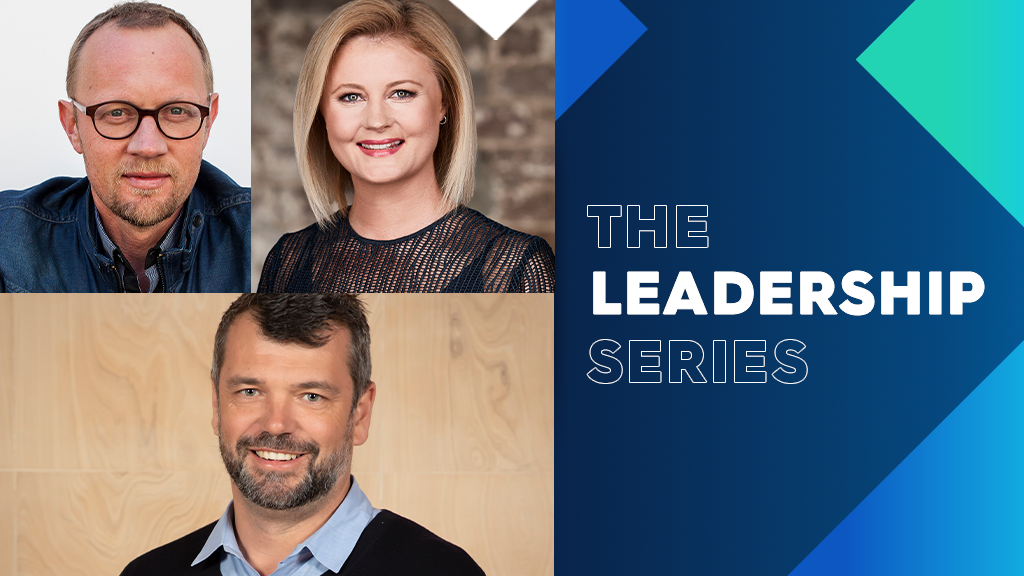

ANZ’s Head of Marketing wants to break ground and reset banking category

Banking marketing rookie Kjetil Undhjem is pledging to reset the finance category just six months into his role as Head of Marketing and Brand Strategy at ANZ, saying he wants to “break ground and do something that’s never been done”.

Speaking on Reset Now, an initiative between the Australian Association of National Advertisers (AANA), Nine and Mi3 for marketers to share their experience and evolving strategies as they manage the COVID-19 crisis, plan for the recovery, and see how deep consumer mindsets and behaviour might shift, Undhjem says his lack of banking experience has made him approach the job through a customer lens, a perspective that has proven to be valuable during COVID-19.

“What I’ve been trying to do is use other experiences I’ve had in terms of what the customers look for in a crisis. And what do our employees look for in terms of safety and security?  That really hasn’t changed, depending on what industry you’re in,” he says.

“It’s actually good to not know what you don’t know.”

Undhjem brings to ANZ a wealth of experience in FMCG: more than a decade working for Mondelez, including four years in Melbourne managing the chocolate business. He also spent four years at Oslo-based Statoil, a petroleum refining company, and while he has limited banking experience, he has plenty of curiosity.

 “You need a lot of curiosity. Curiosity should feed your creativity, but a lot of people stop there and that’s why courage is important, because I really want to break ground and do something that’s never been done,” Undhjem says.

“I want to do it across a product, across media, across creativity. I want to try to find things that nobody else has done within the banking category to reset it. That’s the ambition I feed off and it’s been my mantra from the outset. I hope that will drive stronger commercial results and happy customers.”

Having a different perspective is helping ANZ navigate its place in a banking system being disrupted not just by the findings of the royal commission but also the arrival of neobanks and the increasing competitiveness of regional banks.

Undhjem says: “I love a good fight in terms of market share and proving oneself, and I’m comfortable being uncomfortable. I’m taking it from an FMCG perspective and being much more focused again on the customer – having added-value products and services, that competitive edge, and tying it off with great creative. It challenges us every day to be better.”

Undhjem, ANZ and the entire banking industry were focused on one giant challenge in March as Australia’s economy shut down and the country entered lockdown to prevent the spread of COVID-19, and for Undhjem the focus first had to be internal.

 “It’s like safety on airplanes, you first put on your own oxygen mask before you help others. And it’s the same thing with us – we had to focus on our employees first and foremost because we needed our people to be ready for what we knew was going to be an influx of customers going into hardship,” he says.

“So with that done, we then set up programs in terms of helping our customers. None of us had ever known the scale of change that we went through. Before COVID-19, we had an average of 50 hardship calls coming through a week, and in the first 10 weeks of COVID we had an average of 10,000 calls a week.”

This explosion meant that care and empathy had to be at the heart of ANZ’s approach to customers, while ensuring the bank kept its brand tone through its messaging.

“We’re very proud of the tone and character we have. We call it playfully clever and it’s something that really sets us apart, but even more so, it’s true to who we are as a company. It was important for us as we got into COVID-19 to look at our marketing assets  to see if we should tone it down a little bit, and we did that in most of our ads,” Undhjem says.

ANZ reviewed its marketing to ensure the humour the bank is known for stayed on the right side of light-heartedness rather than being overly playful or silly.

“We made sure that we added more in terms of light-heartedness instead of playfulness. Our mantra going into COVID-19 was not to lose our DNA and who we are, but do it in a way that was more resonant in terms of what was going on in the marketplace.”

Looking to the future, Undhjem expects a refocus when it comes to money and spending.

“People will want to be have a bit more of a buffer against what else can happen going forward, being ready for a rainy day. Don’t spend more than you earn is a basic principle, but it’s important to put that front and centre as you come out of the pandemic and think through how you are going to plan your finances going forward.”

How Nine adapted its television production for a post COVID-19 world: lessons for leaders

It’s the question I get asked the most: how has this COVID situation affected Nine’s production? Can the show go on? Will we get to air?

For networks and the people who work in the industry it’s been incredibly hard, but I have learned so much from the way my colleagues – producers, camera people, editors, everyone – have all responded to a crisis wrapped in a dilemma: what do you do when your shows are all shut down, especially when more people than ever are turning to you for entertainment.

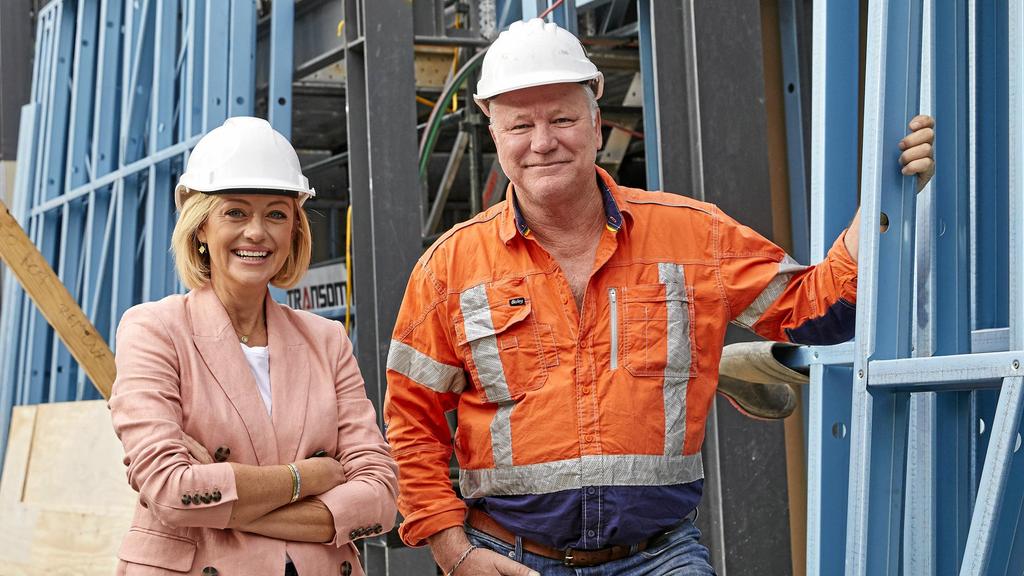
There was a moment early in the filming of The Block 2020 in Melbourne when host Scot Cam calls the contestants and the foremen, Keith and Dan, into one of the partly finished bedrooms where a TV is set up.

Together, they all watch Scott Morrison outline what will be the beginning of the COVID-19 lockdown. They hear: “No more than 100 people together at one time;”; “We want Australians to start working from home”; and that, for the time being, building construction will not be shut down. One contestant turns to her husband and says, with a quiver in her voice, “This is getting really serious, isn’t it?” He comforts her, saying “Don’t worry, darl, we’ll be OK here,” as Scotty watches the television and slowly shakes his head in disbelief.

As we now know, events moved quickly and two weeks later the site for The Block shut down, the contestants were sent home to look after their families, and it was tools down for a crew of 120 as the program came to a shuddering standstill.

For 12 years, nothing ever stopped The Block. Not real estate slumps, contestant walk-offs or even the odd heart attack. Yet our response to this situation that seemed so much bigger than just a TV show was much like everyone else’s in this industry right around the world: how quickly can we get back to making the shows our audience love the way we used to make them? And what can we make in these strange times when so many people are watching television that reflects how we are living now?


Of course, there were no easy answers. However, thanks to some brilliant producing on behalf of the makers of The Block, that emotional moment above is now a central part of the storytelling of the show in 2020. That look on Scotty’s face, when he turns to camera and realises just how big this thing is, is fascinating to watch now that we all know the trajectory COVID-19 has taken in Australia and around the world.

The Block – adhering strictly to Victorian government guidelines – is now back in full swing and I have to say it’s a better series for having the story of how this pandemic has affected all of us at its core. Our other big shows like Australian Ninja Warrior and The Voice have been fundamentally changed too, but it’s been a wonderful creative challenge that all our producers have risen to.

The Voice has started as the show we know, which Australia is loving again, but in upcoming episodes George and Kelly will be mentoring live from their loungerooms. When we get into the studio, while Delta and Guy will be in the big red chairs, George and Kelly will inhabit their chairs live from studios in LA and London. Keep watching for how we make it work. We think it’s going to be amazing.

But you’ll note that Nine is not making shows about being trapped in lockdown. Although I’ve been pitched Australia’s Loungerooms Have Got Talent and Celebrity (in their loungerooms) Squares many times over the last three months, the best of our reality shows have taken the absolute reality of what has happened to Australians, and all we’ve achieved as a society at containing this thing, and woven it into the stories we tell.

We now know that our content slate for the rest of 2020 – The Voice, Australian Ninja Warrior, The Block, Travel Guides and Halifax Retribution – is going to be as strong or stronger than ever. We were lucky to anticipate that Lego Masters would be the perfect tonic for a nation in lockdown and we’re already planning for 2021.

What the last few months have taught me is that sometimes the solution is embedded in the problem. Don’t try and find a way around the issue. It’s much more authentic to go through the middle, just like the audiences who engage with our journalism, entertainment and sport have. Australians have been incredibly resilient through all of this and it’s our job to honour that story.

Adrian Swift is Nine’s Head of Content Production and Development.

Telstra focuses on ‘economic patriotism’ as it supports Australian society through COVID-19

Telstra has taken its role in Australian society seriously throughout the COVID-19 pandemic, says the telco’s chief marketing officer, with the company focused on how “economic patriotism” can support customers and the broader community to weather the impact of the virus.

Speaking on Reset Now, an initiative between the Australian Association of National Advertisers (AANA), Nine and Mi3 for marketers to share their experience and evolving strategies as they manage the COVID-19 crisis, plan for the recovery, and see how deep consumer mindsets and behaviour might shift, Jeremy Nicholas, Telstra’s CMO, says early on in the pandemic the telco decided to take a position to “actually do something about” the suffering of Australians as a result of its impact on society.

“It’s not just important now in a crisis, it’s an important part of marketing and doing good business by doing right by your customers,” Nicholas says.

“You can say all the things you want about caring for your customers, and how we’re all in it together, but until you actually do things or change your product or your service proposition to something that actually helps people, those words really don’t matter.

“We wanted to take a position of knowing that with people and businesses suffering and things not being well in society we needed to do something positive about it, not just say that we care for everybody.”

Nicholas cites Telstra’s investment in capital expenditure, moving $800 million out of the 2021 calendar year forward to 2020, as part of its commitment to “actually doing something”.

“It was important in terms of helping the economy and stimulating jobs,” he says.

He also cites Telstra’s various initiatives designed to help individuals and businesses in need, from providing extra data in your mobile plan, unlimited data in your home internet and allowing small businesses to put their accounts on hold to discounted plans for people  on unemployment or JobKeeper benefits.

Nicholas’ comments follow on from a fiery warning by Jenni Dill, the incoming CMO of Arnott’s, for brands to back up their marketing promises with action for customers, predicting those that do will exit COVID-19 with more market share.

Nicholas says the choices Telstra has made throughout the pandemic didn’t face debate within the company, due to what CEO Andy Penn refers to as “economic patriotism”.

“It goes a lot to the charter and what Telstra sees as its identity and role in Australia,” Nicholas says.

“Our purpose is to create a connection, to connect to the future so everyone can thrive – and the ‘everyone’ is really important. We’re here to not just support our staff or our customers through this, but all of society, and we have a role to play there. When you follow that purpose it leads you to those right decisions and they become really easy.”

Nicholas says Telstra’s commitment to its 2020 sponsorships underlines this all-embracing connection.

“We did a couple of things early on with our sponsorships which were important. The CEO announced our commitment to renew any of the sponsorships due this year so that none of those organisations had to worry about it,” he says.

Telstra sponsors a number of sports and art institutions including the AFL, NRL, netball, Australian Ballet, Museum of Contemporary Art and National Gallery of Victoria, as well as the National Aboriginal and Torres Strait Islander Art Award.

“And regardless of whether the galleries have been open, be that the National Gallery of Victoria or the Museum of Contemporary Art or the art gallery in the Northern Territory, and sport not being played, we were committed to paying all our fees for the year. We supported those sponsorships because we saw that as essential,” Nicholas said. “They’re part of our long-term partnerships and we want to make sure they are there for everybody.

“We’re in these partnerships for the long haul. We want our partners to come out of this in the best shape they possibly can, and we appreciate the role that those sponsorships play in sporting codes, galleries and Australian society.

“We have a job to do, as one of the biggest companies in Australia, to support them and ensure that they continue to thrive for our customers and the broader community.”

Brands with ‘empty platitudes’ won’t win, says new Arnott’s CMO

Brands need to back up their marketing promises with action for customers or risk falling short, a veteran FMCG marketer warns, saying brands that are trying to solve customer problems will come out of COVID-19 with more market share.

Speaking on Reset Now, an initiative between the Australian Association of National Advertisers (AANA), Nine and Mi3 for marketers to share their experience and evolving strategies as they manage the COVID-19 crisis, plan for the recovery, and see how deep consumer mindsets and behaviour might shift, Jenni Dill, the newly appointed chief marketing officer for Arnott’s, says “empty platitudes” from brands have been rife during COVID-19.

Dill is set to join Arnott’s in July and was previously the former marketing officer for McDonald’s Australia and also worked for PepsiCo.

Speaking to Reset Now prior to her appointment at Arnott’s, Dill says: “People are telling me they’re here for me and we’re all in this together, and they all look and feel the same and they’re just not connecting – because I don’t know what they’re doing for me.”

“I don’t know how they’re solving a problem for me. They’re just talking at me in the TV and it feels like it’s falling a little bit short. Brands that are literally trying to solve problems and make consumers’ lives easier in these times are doing really well and they’ll come out of it with more market share and a strong brand and a better business model for it.”

Dill’s comments come a week after Kia General Manager of Marketing, Dean Norbiato, told Reset Now he believes many consumers have misattributed “we’re here for you” style messaging because many brands jumped into the territory in the early weeks of the COVID-19 pandemic in Australia.

Dill, however, is full of praise for brands using creativity to drive their businesses into new areas as industries react to restrictions and changing environments because of COVID-19.

“It’s about being creative when it comes to new business models and new ways of working, and the agility we’ve seen,” she says. “Some of my local businesses have been forced to pivot really quickly to a delivery model or a takeaway model, whether you’re a restaurant or a café or a bar. They’ve done it overnight and they’ve done it with tech that makes it pretty cool.

“There’s a lot of good things going on out there literally at the grassroots, and those businesses should be celebrated, applauded and supported.

“I think a lot of big businesses have been forced to take a long hard look at some of their forward plans and put them on ice or completely rethink them in the current environment. A lot of traditional bricks and mortar retailers have had to pivot very quickly to the delivery and takeaway businesses and click and collect. It’s been phenomenal to see how quickly that’s happened with some successful businesses.”

For marketers, Dill says COVID-19 presents a “true test” of their ability to “work through a business that’s in decline or a brand that’s in decline and turn things around”.

“It forces you to rethink everything, it forces you to focus on the stuff that matters most, and it forces you to do things differently if you want to succeed.”

Looking to the future, Dill is hopeful that client-side marketing will invest more in the development of its people.

“We need to build – the market is for the future, whether it’s using new tech platforms or new skillsets or new ways of thinking. We’ve got to invest as an industry in smarter, sharper marketers that can drive meaningful business results,” she says.

“And for me, working on the client-side in marketing roles, if you can’t prove your business results of your marketing, then you’re going to be constantly challenged, time and time again. You’ll be challenged on every budget and every decision you make.

“As soon as you can demonstrate those really strong commercial links to what you’re doing as a marketer and the business results, everything gets a lot easier, and every conversation with a CEO or a board or a CFO. It helps build positivity for marketing and further investment down the track.”

To do this, Dill stresses the need for marketers to avoid jargon and talk “in the language of business”.

“You’ve got to be talking about how investing in this brand campaign or this new product launch or this media spend or sponsorship is going to drive a real business result that’s going to impact profit and loss, market share, top-line revenue growth, and will help you reduce costs by shaping the way customers interact with your business.

“Whether you’re moving things more online and more digital, you’ve got to be able to speak the language of business boards and CEOs to be successful. You’ve got to be able to speak the language of marketing to your agencies, your teams. It is being able to shift gears between those two languages and communicate effectively with your key stakeholders.”

Brooke Corte: Money News, shares her top tips on turning renewed optimism into something tangible

Brooke Corte, host of Money News shares her three top tips on how small business owners can make the most of the economic situation we are in right now, by turning renewed optimism into something tangible.

Corte’s tips include:

Tip 1: Connect with your customers
Tip 2: Do something new
Tip 3: Adopt an optimism bias strategy

To find out more details on each of her tips, watch the short video.

Kia won’t back away from brand as it navigates impact of COVID-19, says GM of Marketing

Self-described auto brand challenger Kia is resisting the urge to pull stumps on brand marketing in the face of challenges posed by COVID-19.

Rather than now favouring performance marketing, the car maker will ensure the brand continues to build bigger foundation blocks that will elevate it in the future, says Kia’s General Manager of Marketing, Dean Norbiato.

Speaking on Reset Now, an initiative between the Australian Association of National Advertisers (AANA), Nine and Mi3 for marketers to share their experience and evolving strategies as they manage the COVID-19 crisis, plan for the recovery, and see how deep consumer mindsets and behaviour might shift, Norbiato says Kia has had “some really successful results over the last two years by starting to invest more heavily in brand, and educate the wider business about the importance and results of that”.

Norbiato is confident that Kia’s focus on brand as the automotive industry, and indeed most industries, re-examines strategies to navigate the impact of COVID-19 on the economy will allow the brand to break free of an ocean of sameness that can swell across the car sector.

“One thing we’ve done well is look at the wider market and not operate in a vacuum, and understand that our actions transpire in a bigger environment. Therefore, if everybody else is using the same data to get to campaign, we use that data a bit differently,” he says.

“With everyone coming out of COVID and retailing in high volumes, that gives us an opportunity to, again, be that challenger brand, to stand out by doing brand when there are thousands of end of financial year sales going on.

“If you go into our dealerships, absolutely you’ll get the best deal. However, we’re using brand to cut through and stand out in a market that you would see in that sea of sameness. If everyone’s retailing and we go brand, that gives us an opportunity to stand out because we don’t have the media dollars and clout of some of the bigger competitors.”

For Kia, leveraging sponsorships effectively can help the brand stand out and make waves in a highly competitive industry.

“The research we’ve found is that when someone sees a car ad, they just see another car ad and then a façade comes down. We need to ensure that when we’re marketing, we’re cutting through with the dollars we’ve got, and are also taking advantage of those big blue-chip moments, like Friday Night Footy and the partnerships with the Broncos and the Australian Open, to stand out in a very cluttered market,” Norbiato says.

“I’m still a big believer in TV and those magic moments that are omnipresent with the Australian public. You look at the numbers from the Aussie Open last year (2019), they were significant. You look at the numbers in the early rounds before the NRL stopped – there’s significant opportunity to use big platforms to make noise. We just need to ensure that we’re standing for something, being distinct, and getting cut-through.”

However, while brand is crucial for Kia, the real strategy is around the brand remaining nimble and responding quickly to changing consumer sentiment – something that was integral in how the brand responded in the early days of COVID-19 impacting on Australia.

 “We executed a campaign really early on, around the mid-to-end of March, when COVID was really kicking off. That was a stay in, stay safe campaign. We tracked that campaign and looked at the view through rate (VTR) of our campaign, especially on digital, and found it was tracking exceptionally well, if anything better than our hero brand campaign,” Norbiato says.

“That view through rate was a key indicator for us to identify that the campaign was working, but at the start of April the numbers started to significantly decrease, which was the moment we switched and went back into our hero brand campaign.

Norbiato explains the importance of keeping an eye on metrics like VTR, as with many brands jumping into a similar territory with stay safe messaging, the level of misattribution of ads to brands amongst consumers “would be quite high”.

“But we monitor it very closely. It did a really good job for us at the start, but looking at the VTR we then came off and went back to our hero campaign,” he says.

For an auto brand like Kia, data is integral to exploring opportunities and challenges presented by COVID-19, with consumers’ concerns around public transport presenting potential opportunities.

“A big one that we’re seeing is the lack of confidence around public transport. Therefore, people are looking to take power of their own transport and step into a vehicle,” says Norbiato.

“The numbers are down compared to same time last year and other metrics, however we are seeing an emerging trend around people looking to take ownership of their own transport. The information we’re getting from the dealer network at the moment is that there are still opportunities. The one around transport is something we’re monitoring.”

According to Nine’s Consumer Pulse, a weekly consumer sentiment poll conducted via short online surveys and deeper-dive monthly surveys with Nine’s audience across linear television, 9Now, nine.com.au, plus readers of The Sydney Morning Herald, The Age and The Australian Financial Review across print and digital, audiences are driving more than they were last week.

According to Consumer Pulse, 11 per cent of 9Nation audiences are driving more than last week, while readers of The Sydney Morning Herald and The Age are driving 12 per cent more than last week and 16 per cent of The Australian Financial Review readers are also driving more than last week.

Looking to the future, Norbiato remains humble on Kia’s trajectory within the auto sector.

“We’re just trying to do the best that we can in the auto market. Hopefully we can surprise a few people with the way the way we communicate and get a lot more consumers on board with our brand. But anywhere above where we are now, as we look to use momentum and continually move forward, is a win for us.”

‘If you’re just doing social, you’re missing other opportunities’, Says Koala CMO

For brands looking to grow, a marketing mix of several channels is integral, even when considering the challenges and opportunities posed by the COVID-19 pandemic, says furniture and lifestyle brand Koala’s first chief marketing officer, Peter Sloterdyk.

Speaking on Reset Now, an initiative between the Australian Association of National Advertisers (AANA), Nine and Mi3 for marketers to share their experience and evolving strategies as they manage the COVID-19 crisis, plan for the recovery, and see how deep consumer mindsets and behaviour might shift, Sloterdyk says “when you think about growing a brand globally, or even in your domestic home market, one channel isn’t going to do all the heavy lifting”.

“This is a concept that most marketers agree with but can find difficult to execute,” he explains. “The marketing channel mix, or if you want to even talk about it as a budget balance, continues to be a challenge for all of us DTC (direct-to-consumer) brands because we know that performance marketing and social can be really efficient and can deliver great results.”

While Sloterdyk believes performance marketing and social must both remain a part of the mix, indeed as a foundation as a brand like Koala looks to grow, he says Koala now “needs to lean into brand marketing channels like television and out of home to really round out the full customer experience from a marketing perspective”.

“If you’re just doing social, you’re missing all of these other opportunities to engage with your customer, and what I’ve learned is the full spectrum is always the most successful. I’ve had the chance to test it, to understand if one single channel can really do all the heavy lifting, and surprise, the testing showed me it can’t.”

But while Sloterdyk values the importance of a marketing strategy, he also acknowledges the role that magic, “the lightning in a bottle”, can play.

He says: “It’s the combination of art and science. When we think about marketing, there’s all of this amazing data available to us to inform our decision making and guide us on the right path. But we as marketers are still employing our instinct, our gut, to help make that final decision about what makes sense and what’s going to be best for the customer.

“When we can use all the levers available – including experiential marketing, multi-channel marketing – it’s taking advantage of the one-to-one communications group, customer service or social. It’s making sure that we’ve got consistent brand messaging out in the market that is clear and understandable and a part of culture.”

While in the past Koala has been focused on performance marketing, with a mix of around 70-30 performance and brand, Sloterdyk says Koala has been inching towards a 50-50 mix.

“And I might even see that go further into a 60-40 split between brand marketing and performance marketing. For a furniture and lifestyle brand like Koala, the top of the funnel and those brand marketing moments for consideration are crucial to maintaining our customer flow and continuing the influx of new folks that are experiencing Koala.”    

More consumers are being introduced to Koala with Australians spending more time at home and online because of the COVID-19 pandemic.

“Whether they are spending time on TikTok or other social media channels, or within e-commerce, we’re privileged to be able to take advantage of this crazy time in the world as our supply chain and logistics are intact and we’re still able to deliver to our customers,” Sloterdyk says.

“We’ve seen a great increase in engagement and excitement with the brand and people being exposed to Koala in a new and different way. We started as a mattress brand, but there’s so much more available now and people are really starting to see that come through.”

Sloterdyk’s observations about Koala are backed up by Nine’s Consumer Pulse, a weekly consumer sentiment poll conducted via short online surveys and deeper-dive monthly surveys with Nine’s audience across linear television, 9Now, nine.com.au, plus readers of The Sydney Morning Herald, The Age and The Australian Financial Review across both print and digital.

According to Consumer Pulse, audience activities within the home see people continuing to experiment with digital services, shop online and tackle DIY projects. Consumer Pulse shows 31 per cent of 9Nation audiences are online shopping “more than last” week, while 23 per cent of readers of The Sydney Morning Herald and The Age are online shopping “more than last week” and 21 per cent of readers of The Australian Financial Review are also online shopping “more than last week”.


Sloterdyk says that more people shopping online and connecting with DTC brands equals an opportunity for these brands to focus more on humanising their connections.

“A DTC model on face is really about efficiency and making sure that we take out all the middlemen and go directly to the consumer,” he reiterates. “I think there’s a specific opportunity and privilege for DTC brands to lean in even further to connect with their customers, and the consumer is ready and excited about that, as we’ve seen.

“One of the things I talk about is DTC being a little dehumanised, not as a category but because the digital experience can oftentimes lack the personalisation or  human contact you would get when you go into a store or you’re engaged with a sales person on the phone.

“We’ve seen the opportunity and are doubling down on that even more, to really engage with our customers one-to-one, whether that’s through customer service or social media, or through our advertising.”

Sloterdyk cites Koala’s recent Australian television campaign that was “focused on supporting local” as an example.

The TVC, created in-house and launched on the Nine Network, encouraged Australians to support local businesses throughout the COVID-19 crisis via an initiative to reward customers who have bought Koala furniture with a $200 Deliveroo voucher.

The spot features business owners from around Sydney sitting on a Koala sofa explaining the deal. For Koala it was about highlighting their furniture offering, but more importantly reminding the audience to order in some takeaway and support local businesses under pressure.

“We had the opportunity to partner with several local businesses to feature them in that spot, to get them a little airtime, to take our privilege and extend it to those businesses that don’t  have the ability to take advantage of television advertising at this point,” says Sloterdyk.

“That’s what I mean about leaning in to the brand side of things and to our brand offering.”

For Koala, growth is still something that feels possible despite the pressures related to COVID-19.

“From a domestic perspective, we are able to continue to lean in on our expansion plans when it comes to products specifically,” Sloterdyk says. “We’re talking about introducing upwards of 30 to 50 additional products within the Koala range in this coming financial year.

“We’re really grateful and privileged that our supply chain and logistics are in place. We continue to have fantastic product designers and developers in-house that are doing incredible work. And on the domestic front, we’re able to continue down that path and we haven’t seen a material impact again, a privilege for us in terms of those plans.”

Similarly, for Koala’s international plans, COVID-19’s impact has been more around its thinking in relation to expansion and launching in different markets.

 “When it comes to international expansion, when we look at each of the markets we’re targeting for launch, we have to continue to think ‘Is COVID-19 going to impact our ability to launch successfully?’ In some markets you might think, ‘Okay, we know that this is a really tactile consumer and that a pop-up shop and a launch event is going to make the difference in terms of our ability to launch successfully.’ And it’s obviously quite difficult to do that kind of experiential marketing during COVID-19,” Sloterdyk says.

“We continue to have those conversations, keeping our fingers on the pulse of when things start to ease up and are a little bit more friendly for things like experiential marketing events.  But we are still moving full steam ahead. We’re just having to augment our plans a bit.”

The Voice returns bigger and better in its ninth season

After a massive season last year, where it was the number one entertainment show every night it was on air, The Voice returns bigger and better in its ninth season.

It is one of Australia’s biggest reality shows, making dreams come true and unearthing great voices for the whole country to appreciate. Nine’s Head of Content Production and Development, Adrian Swift, says: “What makes The Voice so appealing to audiences is that it speaks to the power of people’s dreams and it really is a show about making dreams come true. It’s also because this is music, and music is a universal language. The show discovers people who can genuinely sing, and it supports Australian talent.

“This season is going to be one of the biggest we’ve ever had, with some of the best singers we’ve ever had, and coaches fighting harder than they’ve ever had to.”

For the first time, all the superstar coaches from last season will return to the spinning red chairs to battle it out and choose the best voices for their teams: Delta Goodrem, Boy George, Kelly Rowland and Guy Sebastian.

“All four of our coaches are back this year which is amazing, as we’ve never had two seasons with the same lineup,” Swift said. “What this means is that they are free to play, and they are not trying to get the measure of each other. They genuinely like each other as a group of four.

“They’re all fighting much harder for the artist they want, which makes for a better show. This year as The Voice goes on, the coaches have the chance to save and steal different artists, and each coach ends up with a very strong team.”

New to the format is the dynamic hosting duo Darren McMullen and Renee Bargh, with their big presenting style set to perfectly match the big voices on the show.

Swift said: “McMullen rejoins us this year. He is your constant TV show professional and he knows all the coaches personally, which really helps. Bargh and McMullen are friends, after working in LA together, and two of the best presenters in the country. When you’ve got a stage as big as The Voice, you need big presenters to go with it.”

The search for raw and amazing talent in 2020 will once again be super-competitive as the All-Stars component returns.

“Some of our greatest singers return this year, itching to have another go, doing it bigger and better the second time after what they learnt from their first auditions,” Swift said.

With almost a decade-long history, The Voice proves to be an all-time viewer favourite that is never short of incredible talent, emotion and competition – and now fans can look forward to the best season yet.

The Voice returns on Sunday, May 24, at 7.00pm on Nine and 9Now.

Nestle marketing boss says now is a good time to invest in brand building

While it may feel right for brands to “go dark” when it comes to marketing during the COVID-19 pandemic, Nestle’s director of e-business, strategy and marketing, Martin Brown, says for brands that can afford it, now is a “really good time to be investing in advertising and building brands”.

Brown was speaking on Reset Now, the Leadership Series, an initiative between the Australian Association of National Advertisers (AANA), Nine and Mi3 for marketers to share their experience and evolving strategies as they manage the COVID-19 crisis, plan for the recovery, and see how deep consumer mindsets and behaviour might shift.

“If you look at the lessons of the global financial crisis, those brands that were able to continue to invest during that period not only did better during the crisis but did better and outperformed the market in growth over the next decade,” Brown said.

“I think the rules remain the same about getting value out of your marketing investment.  You need to find a way to be relevant and also distinctive. If you do that well now you can engage with consumers that might otherwise have not discovered your brand, or those rediscovering your brand for the first time in a long time. Then you can start reinforcing that relationship and build something really incredibly valuable over time.

“So if you can afford it, now is a really good time to be investing in advertising and building brands.”

Brown says Nestle is doing just that by continuing to invest in building its brands. However, he acknowledges that there have also been “fundamental changes” in media plans and content strategy.

“But it’s absolutely a determination to continue to invest,” he asserts. “Brands play a really important part in people’s lives right now and there’s lots of people watching screens and looking for brands to still play a role in the content they engage with.

“When you take something right away from someone they will miss it. People enjoy great advertising, so it’s beholden on us to be relevant, useful and engaging, and if we’re doing so right now, we can get a better ROI than ever.”

Brown has worked for Nestle for 17 years, starting in confectionery before moving to Nestle’s headquarters in Switzerland to become the global brand director for KitKat in 2002. In 2006, he returned to Australia as general manager of the beverages division and in 2012 he became general manger of confectionery and snacks. He shifted to his current role in September 2018 as director of strategy, marketing and e-commerce.

“E-commerce is definitely driven by a need to avoid some of the challenge, particularly during the early stages of the health crisis, of getting into supermarkets, and it’s unsurprising that we saw the surge in need,” Brown said.

“The difficulty was in the supply chain being overloaded during the panic-buying crisis and this meant the suspension of online deliveries. They are coming back online now and this is very important – a big opportunity for FMCG brands to respond to.

“We’ve seen an increased surge in sales through Amazon as well, and also in some of our direct-to-consumer businesses. What we all need to focus on right now is getting online availability right if you want to succeed, as more shoppers are moving online.”

Brown believes there is a chance this consumer behaviour pattern could be permanent. Nestle, for one, is seeing an increase in customers moving online because of COVID-19.

He said: “Right now it is incredibility convenient and that convenience is going to stick. It’s not for everyone, but once people have tested an alternative to their normal behaviour and seen it work they’re going to stick with it.

“We will see a whole bunch of positive behaviour experiments that have come through this pandemic becoming the kind of things that consumers want to stick with because they’re working for them now.”

The standard rules of e-commerce will, however, remain “absolutely true”, Brown declared.

“Online availability is absolutely essential, and getting a good search strategy is too. But I think increasingly, as a different shopper profile is coming online, finding the right way to bundle brands together into specific occasions and needs is also going to be a real differentiator.

“The greater insight you can bring to that, based on the different typologies of households, the better you’re likely to serve out something of value and interest in an online environment.”

For brands navigating the COVID-19 crisis, Brown emphasised the role of the consumer insights team helping to understand the weekly cycle.

“Get an understanding about how this crisis is playing out on households and individuals in emotional terms,” he advises. “How is it affecting the way they feel? What are their drivers of anxiety? What are their confidence levels? How is it changing their behaviour? And particularly, when you know what that behaviour is, what are the needs they have that we can respond to?

“We’ve had a huge challenge in the way we can stay relevant and topical with quite fast turnaround consumer communications. We’ve had to deploy completely different production techniques, as others have. And we’ve had to engage ourselves more in the conversation, as opposed to broadcasting with long pre-prepared messages.

“All of that’s actually going to make for better marketing communications. It’s going to deliver increased levels of relevance.”

Brown also acknowledged the challenge for brands to deliver distinctive communications “on the fly” and said Nestle is “doing a lot of testing and learning and getting better at it”.

“But some brands have a natural role to play at a time like this,” he said. “So a brand which is an essential one for families, delivering great-tasting nutritious meals conveniently, is helping these families because they are doing much more home cooking than ever before, and inspiring them with new cooking ideas. 

“And to make it even more accessible, that’s all been done with user-generated content from home cooks that love the brands, have their own special solutions, and are sharing those with home- cooking classes.”

Looking to the future, Brown is positive the industry will be better for the challenges posed by COVID-19.

“Working through a crisis builds your skills and we will have better marketers and better-run brands for it,” he said.

“Things that are really important during a time like this not only make you recognise that you have to change your plan, you also need to be more agile in developing something that’s more relevant to where you are – you have to get closer to your consumer.

“This is not working at arm’s length, this is getting into direct connections, to really empathise with what people are going through and understanding how you can make their lives better and the role your brand can play in that.

“People are going to remember, long after the crisis has finished, how you acted. That’s true of companies and true of brands and true of leaders. Marketers now have a great opportunity to be very influential leaders in their organisation and drive a greater sense of optimism and positivity as well as true consumer connection.

“Brands can really be distinctive right now by being useful, and also being kind.”

Brooke Corte: Money News, shares her four top tips for small business recovery

Brooke Corte, host of Money News shares her four top tips for small business recovery and the reopening of our economy.

Corte’s four tips include:

Tip 1: Survival in the short term
Tip 2: Planning for long term sustainability
Tip 3: A new consumer mindset
Tip 4: Appreciation of small businesses

To find out more details on each of her tips, watch the short video.