
Nine Publishing
Independence | stories that matter | commercial with integrity


A WEALTH OF KNOWLEDGE//
AFR's Cosima Marriner and Lucy Dean
Join Editor Cosima Marriner and Wealth Reporter Lucy Dean as they analyse the forces shaping 2026. From the "Australian Dream" being redefined by a $3.5 trillion wealth transfer to the impact of AI on national productivity, Cosima and Lucy provide a roadmap for decision-makers. Plus, all will be revealed about a pivotal story the AFR is watching this year - one that will define the "State of the Nation."

Cosima Marriner
Editor, The Australian Financial Review
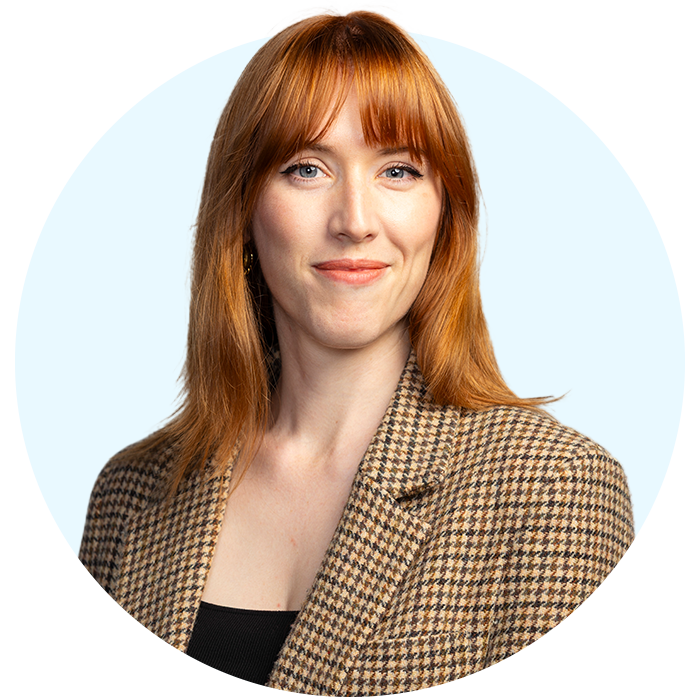
Lucy Dean
Wealth Reporter, The Australian Financial Review
THE EXPERT LENS//
Navigating the New Australian Economy
EVOLUTION OF THE MASTHEAD//
Leadership and the Modern The Australian Financial Review

“For over 70 years, The Australian Financial Review has been the 'record of truth' for the Australian establishment, historically a very male-dominated space. How are you ensuring the masthead reflects a 2026 Australia that is more diverse in its wealth and leadership than ever before?”
Cosima: For a long time, the positions of power in Australian society were occupied by men, and the AFR reflected that both in the way it covered things and in terms of its audience. But luckily, more women are now taking up leadership positions in society, and we’re to covering the key leaders across all facets of society. This ranges from our day-to-day reporting, ensuring we seek out female voices, recognise their success and highlight the challenges they still face, to more high-level initiatives such as our Women in Leadership Awards that recognise the success of women at the top echelons of Australian society.
We’re also continuously focused on improving the gender balance in our newsroom. Most of our senior editors and key columnists are women, and the economics correspondent. We’ve also hired a new batch of smart young, talented trainees. All of this ensures that we have many more fresh perspectives coming into our newsroom and helping to shape our reporting.
Another key focus for the Financial Review is broadening our offering to appeal to more people. With a big proportion of our audience always coming for our core topics of business, finance and politics, they’ll now stay for the other content – wealth, lifestyle, cultural offerings. And similarly, that breadth of offering attracts a new cohort of readers that hopefully then become real core AFR types.
“The AFR has moved from being a traditional daily newspaper to a multi-platform powerhouse. In 2026, what does a Financial Review reader look like? Is it still the C-Suite, or has the net broadened to a younger, more activist investor class?”
Cosima: Definitely has. The traditional AFR audience was the C-Suite and those aspiring to be in it. But in the last decade that has really shifted, as the younger generations are much more entrepreneurial. I’m proud that the AFR audience is evenly spread across all the age brackets, from young people starting out in their careers, seeking advice on how to get ahead in the workplace and how to grow their wealth, to retirees who are looking at protecting savings while still having a great lifestyle.
And while our audience is becoming more diverse, there’s a core tenet that unites them. They’re all very performance oriented. They are looking to the AFR to help them succeed in all facets of their life. whether it’s making them smarter, advancing their career, building their wealth, or enhancing their well-being and fitness.
As our new campaign says, it’s not for everyone. But for those people who want to get ahead in life, the AFR is absolutely for them.
“Cosima, you have taken the helm during a period of intense economic transition. What is the one structural or cultural shift you’ve implemented at the paper that you feel best prepares us for the next decade of Australian business?”
Cosima: I don’t think it’s going to surprise you when I say the key trend that’s going to shape Australian business over the next decade is artificial intelligence, the adoption of it, the use of it, and how that plays out across society in terms of the jobs people do and the way people run their lives. The AFR is an unashamedly digital-first masthead. Our audience are mad early adopters of technology and we see that with artificial intelligence as well.
Likewise, our journalists are very interested in how AI can help them work more efficiently and augment their journalism, and we encourage that curiosity and investigation.
Our journalism will always be created by a human and produced by a human, but there are ways that AI can help when you’re doing your journalism.
Whether it’s using AI to synthesise large amounts of data or research material, or write those pesky SEO headlines that a machine can do way better than many humans.
THE GREAT WEALTH TRANSFER//
A $3.5 Trillion Handover
“Lucy, you’re reporting on the $3.5 trillion transfer suggests we are standing on a precipice. How do you see this massive movement of capital rewriting the ‘Australian Dream’ in 2026, particularly for those who aren’t on the receiving end of an inheritance?”
Lucy: One of my best read stories last year was where I took two hypothetical 24- year-old-graduates. They graduate and get well-paying jobs. But in this scenario we gave one graduate a $100,000 gift from the “Bank of Mum and Dad”, and the other graduate didn’t get anything. We tracked them over the course of their lives. The first graduate got into the property market in about two years. The second graduate got in about eight years later. By the time they were 65 the first graduate was worth about $11 million. The second about $9 million. They both did well, but that’s still a $2 million difference that came from a $100,000 gift from their parents.
The fact that this article did so well told me there’s a huge amount of interest both from the parents who are navigating how to pass down wealth, and from the people who aren’t expected to receive anything, wondering how do they build wealth in a world where the property market is really difficult now to enter if you don’t have that family support.
What we’re seeing, in terms of that “Australian Dream” story, is that people are investing more in ETFs and cryptocurrency, and redefining what it means. But to what extent are they redefining it with hope? And to what extent are they being forced to redefine it because the things that they actually want, they just cannot achieve anymore?
“We often focus on the numbers, but what about the values? Are you seeing a fundamental shift in how the next generation wants to use their wealth compared to the Post-War and Boomer generations who built it?”
Lucy: There isn’t a lot of comprehensive data in terms of the way younger people are thinking about inheritances. But anecdotally, they have a real focus on the idea of building intergenerational wealth.
They seem to really understand the value of what they’ve been given, perhaps due to an emotional element, where they are looking to structure it so their children can benefit.
We also know Baby Boomers and Gen X receive inheritances, and they are receiving the bulk of the money at this stage, with about 65 per cent flowing to women, due to “the eldest daughter effect”, where the eldest daughters are often lumped with responsibility and often are custodians of the money. We know women tend to be more interested in philanthropy and investing in female-backed businesses, and they’re more interested in bringing their family members along for the journey.
“Inheritance is often a private family matter, but at this scale it’s a national economic issue. How should the government be looking at this transfer in terms of productivity and the ‘State of the Nation’?”
Lucy: Looking at AFR’s James Thompson’s article from November 2025, at the inheritocracy and the Rich List, he found that of the 161 billionaires on the list, 40 had inherited the business from their parent or had a parent on the Rich List.
Speaking to Alan Schwartz on the concept of “Creative Destruction”, which is the idea that innovative technologies will eventually replace inefficient ones, Schwarz is worried that as more wealth is held in the hands of people who got it from their parents, there’s all this infrastructure built around keeping that wealth in those families. So the likelihood of creative destruction occurring and new businesses being built that oust the old businesses starts to deteriorate, and we end up in a society where hard work isn’t as rewarded as it once was – that dynamism isn’t taking place, that innovation isn’t happening. It’s a bit of a depressing way of looking at it, but I think there is something to it.
So we need to be thinking seriously about the way this wealth transfer is taking place and what it’s incentivising in terms of ideas, work ethic, and where we’re putting our money.

THE 2026 STATE OF THE NATION//
Dynamic Exchange on the Australian Landscape
“If you had to pinpoint the biggest challenge facing the Australian economy in 2026, one that perhaps the general public isn't talking about enough, what would it be?”
Cosima: Our biggest challenge is lifting productivity. That might sound like a bit of a boring, dry economic term, and the average person might think “productivity” and shut their ears off, but they know what that means when they see their living standards going backwards. Making the economy more productive is key to growing the prosperity of Australia and lifting everybody’s living standards.
Making the economy more productive is key to growing the prosperity of Australia and lifting everybody’s living standards.
Now the government has belatedly acknowledged that we’ve got a productivity problem, and they’re promising a big package of reform in the budget in May to improve this. We’ll wait and see if that happens.
“With the wealth transfer comes a transfer of influence. Do you think 2026 marks the year where Gen Z and Millennial priorities finally start to override the traditional political and economic agenda?”
Lucy: I hope so, as a Millennial, but I’m not sure. I wrote a story a couple of years ago where I spoke to Paul Bassat and Danielle Wood, about where there is a shift in the conversations we’re having. You know, a Boomer might say “You got to pull yourself up by your bootstraps and have a go”, but what’s happening now is that those baby boomers are realising their kids can’t afford to live near them, if we don’t do something about the housing market. This could start to shape some of the appetite among the electorate for actual reform.
We’re talking about the CGT discount now as Treasury is considering reducing it. If property investment becomes less lucrative there are fewer property investors, and maybe first home buyers have a bit more of a crack at getting into the market. It will be interesting to see what happens with that in the federal Budget.
But young people are ambitious, they want to achieve a lot, and they’re engaging with our content on investing and side hustles. They’re not giving up.
But there is a sense that the political debate isn’t matching the urgency of the problem.
“Cosi, as Editor you have a bird’s-eye view of the country’s productivity and policy. If you had to describe the mood of Australia in 2026 in three words, what would they be? And does the AFR have a role in shifting that mood?”
Cosima: Polarised, uncertain, and short-term.
Polarised means a fracturing of social cohesion, that people aren’t feeling united in their circumstances in life, in the things they believe in. They’re uncertain because they feel like we’ve had a really great past and they’re uncertain that their future will be as positive. That uncertainty is leading to short-termism in the way people think about things because they are trying to cling on to their prosperity.
The AFR definitely has a role to play in shifting that mood. Our readers are key decision makers with their hands on the levers of the economy and society. While part of our job is to highlight the challenges we face as a country and to hold policy makers accountable on poor decisions, an equally important role is for us to chart a path forward, and to come up with solutions for the country's challenges.
“You’re looking at the ‘Great Wealth Transfer’, but we’re also in the middle of a ‘Great Digital Transfer’ with AI. How do you think the intersection of massive inheritance and AI-driven finance will change the ‘State of the Nation’ for the average Australian worker?”
Lucy: There are two massive trends intersecting and it can go two ways. The first one, which Danielle Wood from the Productivity Commission also believes, is that AI will be a great thing for productivity and will allow a whole lot of young people who can’t build businesses or build wealth through property to get a start.
The other side of it is what happens to those entry-level jobs, the unglamorous, hard-yakka stuff you must learn how to do to get into the room and pick up the skills and figure out what it means to have a full-time job and how to deal with people. I think a lot of those jobs are going to disappear. So there’s a big conversation to be had around making sure that young people have the opportunities they need to meet people, to be paid, and to build careers. That first rung is starting to splinter a bit.
THE AFR BREAKS A PIVOTAL STORY//
Defining the "State of the Nation" this year
What is the one story the AFR will break this year that defines the "State of the Nation" more than any other?
Cosima: I don’t know what that story will be yet. At the end of the year, I would love to sit here and reflect on the government making some big important economic reforms that boost our living standards, redress the intergenerational inequality that people are experiencing, and secure Australia’s long-term prosperity.
Lucy: I can talk about what we’ll be tracking closely, intergenerational wealth transfer and the way that intersects with opportunity and hope. Referencing an ANU study, its annual social cohesion report where they ask people, “To what extent do you agree that Australia is a land of economic opportunity where hard work brings a better life?” In 2013, the percentage of people who said “yes”, was 82 per cent. But by 2024, that had fallen to 61 per cent.
The biggest story would be the one about a meaningful suite of reforms that actually that give younger generations a bit more hope that they can have a go.
Say hello
Let's talk about how Nine's premium publishing ecosystem can elevate your brand's impact.
READY TO CREATE? //
CONTACT //
Nine ad enquiries